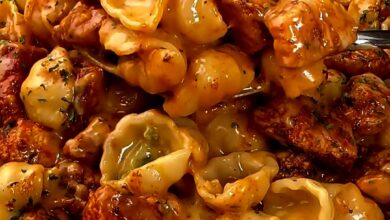
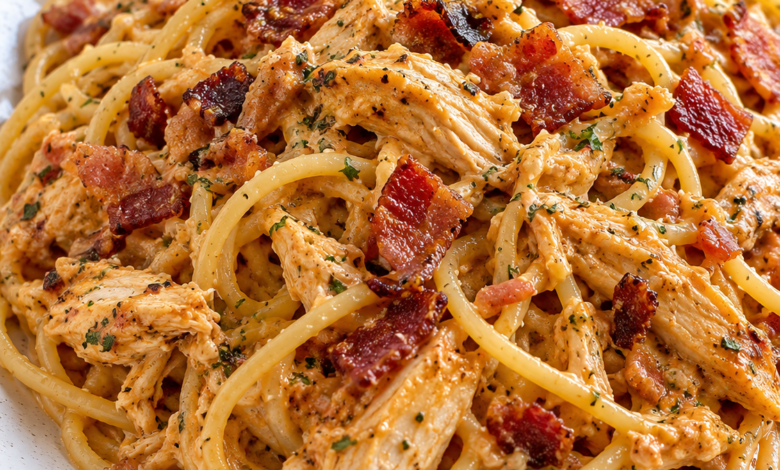
Crockpot Parmesan Garlic Chicken Spaghetti is a comforting dinner made with tender slow-cooked chicken, spaghetti, crispy bacon, and a creamy homemade Parmesan garlic sauce. The chicken cooks gently in the slow cooker while the pasta and sauce are prepared separately, giving you juicy chicken, perfectly cooked noodles, and a smooth, cheesy sauce without relying on bottled Alfredo.
There’s something especially satisfying about a bowl of spaghetti coated in a rich garlic-Parmesan sauce, with pieces of tender chicken tucked between the noodles and crispy bacon scattered over the top.
This Crockpot Parmesan Garlic Chicken Spaghetti with Bacon brings those flavors together in a practical family dinner. The slow cooker takes care of the chicken, leaving you to prepare the pasta and sauce closer to serving time.
Unlike recipes that use bottled garlic-Parmesan or Alfredo sauce, this version combines fresh garlic, Parmesan, cream cheese, and heavy cream. The result is a smooth, savory sauce with a warm golden color and enough richness to coat the spaghetti without overwhelming it.
For a faster stovetop alternative, try 30 Minute Garlic Parmesan Chicken Pasta. Both are comforting chicken pasta dinners, but this version uses slow-cooked shredded chicken and adds crispy bacon for extra flavor and texture.
Why This Recipe Works
Slow cooking keeps preparation manageable. The chicken cooks in seasoned broth until tender enough to shred. You don’t need to stand over the stove while it cooks, making this a convenient choice when you can start dinner earlier in the day.
The sauce is made from scratch. Butter, garlic, cream cheese, heavy cream, and freshly grated Parmesan produce a rich sauce without bottled ingredients. A little smoked paprika adds warmth and helps create the golden color.
The spaghetti cooks separately. Boiling the pasta until al dente helps prevent the soft, swollen noodles that can result from leaving spaghetti in a slow cooker for too long.
Crispy bacon adds contrast. Some bacon gets folded into the pasta, while the rest is added just before serving. This gives the dish smoky flavor throughout while preserving some crunch.
Reserved pasta water improves the finish. Adding small amounts of starchy pasta water makes it easier to toss the noodles evenly in the sauce. It also helps loosen the sauce if it thickens before serving.
Recipe Card
Crockpot Parmesan Garlic Chicken Spaghetti with Bacon
Tender shredded chicken, creamy homemade Parmesan garlic sauce, spaghetti, and crispy bacon come together in this satisfying American-style comfort food dinner.
- Prep Time: 15 minutes
- Cook Time: 3–4 hours in the slow cooker, plus approximately 30 minutes to finish
- Total Time: Approximately 3 hours 45 minutes–4 hours 45 minutes
- Servings: 6
- Course: Main Course, Dinner
- Cuisine: American
- Difficulty: Easy
- Calories: Approximately 740 per serving
Nutrition is an estimate and varies with ingredient brands, bacon thickness, and portion size.
Ingredients You’ll Need
For the Slow-Cooked Chicken
- 2 pounds boneless, skinless chicken breasts
- 1 cup low-sodium chicken broth
- 1 teaspoon Italian seasoning
- 1 teaspoon garlic powder
- ½ teaspoon onion powder
- ½ teaspoon kosher salt
- ½ teaspoon freshly ground black pepper
For the Parmesan Garlic Sauce
- 4 tablespoons unsalted butter
- 5 cloves garlic, minced
- 1 cup heavy cream
- 4 ounces cream cheese, softened and cubed
- 1 cup freshly grated Parmesan cheese, loosely packed (about 3 ounces)
- ½ teaspoon smoked paprika
For the Spaghetti and Topping
- 12 ounces dry spaghetti
- 8 slices thick-cut bacon
- 2 tablespoons chopped fresh parsley
- ½–1 cup reserved pasta cooking water, as needed
Important Ingredient Notes
Chicken breasts: Boneless, skinless chicken breasts are easy to shred after slow cooking. Choose pieces of similar thickness when possible so they finish cooking at approximately the same time.
Parmesan cheese: Freshly grated Parmesan is worth using here. Packaged pre-shredded cheese may contain anti-caking ingredients that make a smooth sauce harder to achieve.
Cream cheese: Softened, cubed cream cheese blends into the warm cream more easily. Adding a cold block straight from the refrigerator can leave lumps that take longer to dissolve.
Thick-cut bacon: Bacon gives the dish its smoky flavor and crisp texture. Its rendered fat also adds flavor to the garlic butter sauce.
Smoked paprika: This provides a subtle smoky note and contributes to the sauce’s golden-orange appearance without making it taste like tomato sauce.
Pasta water: Don’t pour all the pasta cooking water down the drain. You’ll use a small amount to adjust the finished sauce.
Equipment
You’ll need a 5- to 6-quart slow cooker, a large pot for the spaghetti, a skillet large enough to hold the finished pasta, a colander, a whisk or wooden spoon, two forks for shredding chicken, and an instant-read meat thermometer.
Tongs are helpful for tossing the spaghetti without breaking the noodles, although a large spoon and fork can also work.
How to Make Crockpot Parmesan Garlic Chicken Spaghetti
Step 1: Season the Chicken
Arrange the chicken breasts in a single layer in the slow cooker.
Sprinkle them with Italian seasoning, garlic powder, onion powder, salt, and black pepper. Pour the chicken broth around the chicken.
The broth should surround the meat without necessarily covering it completely. As the chicken cooks, it releases additional juices.
Step 2: Slow-Cook Until Tender
Cover the slow cooker and cook on LOW for 3–4 hours.
Begin checking toward the early end of the cooking range, especially if the chicken breasts are small or thin.
The thickest part of each breast must reach an internal temperature of 165°F (74°C).
The chicken should look opaque throughout and separate easily with a fork. Avoid continuing to cook it unnecessarily after it reaches a safe temperature, since lean breast meat can become dry.
Step 3: Shred the Chicken
Transfer the cooked chicken to a cutting board and shred it with two forks.
Aim for medium-sized shreds, leaving a few larger pieces for a hearty texture.
Return the shredded chicken to the slow cooker with about ½ cup of its cooking liquid. Cover and keep warm briefly while finishing the remaining ingredients.
Step 4: Cook the Bacon
Place the bacon in a large skillet over medium heat.
Cook for approximately 8–12 minutes, turning occasionally, until the fat has rendered and the edges are browned and crisp.
Transfer the bacon to a paper towel-lined plate. Once cool enough to handle, chop it into irregular bite-sized pieces.
Keep 1 tablespoon of bacon drippings in the skillet and discard the excess.
Step 5: Cook the Spaghetti
Bring a large pot of water to a boil and season lightly with salt.
Add the spaghetti and cook according to package directions until al dente, usually 9–11 minutes.
Before draining, reserve 1 cup of pasta water.
Drain the spaghetti without rinsing. The thin coating of starch left on the noodles helps the sauce cling to them.
Step 6: Prepare the Garlic Butter
Place the skillet containing the reserved bacon drippings over medium-low heat.
Add the butter and allow it to melt.
Stir in the minced garlic and cook for 30–60 seconds, just until fragrant.
The garlic should soften without turning dark brown. Burned garlic can give the entire sauce an unpleasant bitter flavor.
Step 7: Make the Creamy Sauce
Pour the heavy cream into the skillet and stir.
Add the softened cream cheese a few pieces at a time, whisking gently over low heat until it melts into a smooth mixture.
This usually takes 3–5 minutes.
The sauce should look creamy and uniform, without visible cream cheese lumps.
Step 8: Add Parmesan and Paprika
Remove the skillet from the heat.
Gradually stir in the freshly grated Parmesan cheese, allowing each addition to incorporate before adding more.
Stir in the smoked paprika.
The sauce should become creamy, savory, and lightly golden. If it looks too thick, loosen it with a few tablespoons of warm reserved pasta water.
Avoid boiling the sauce after adding the Parmesan.
Step 9: Add the Shredded Chicken
Transfer the shredded chicken to the Parmesan garlic sauce.
Fold gently until the chicken is coated, adding a little reserved slow cooker liquid if necessary.
The chicken should remain tender and distinct, rather than breaking into tiny pieces.
Step 10: Toss With Spaghetti
Add the cooked spaghetti to the skillet.
Use tongs to lift and turn the noodles until the creamy sauce coats them evenly.
Add reserved pasta water 2 tablespoons at a time until the sauce is glossy and moves easily through the spaghetti.
The sauce should cling to the noodles without pooling heavily at the bottom of the skillet.
Step 11: Add Crispy Bacon
Fold approximately two-thirds of the chopped bacon into the spaghetti.
Reserve the remaining bacon for the topping.
This allows the pasta to develop a smoky flavor while keeping some bacon pieces crisp.
Step 12: Garnish and Serve
Transfer the spaghetti to a large serving bowl or divide it among six plates.
Scatter the remaining bacon over the pasta and finish with chopped fresh parsley.
Serve immediately while the sauce is warm, creamy, and easy to toss.
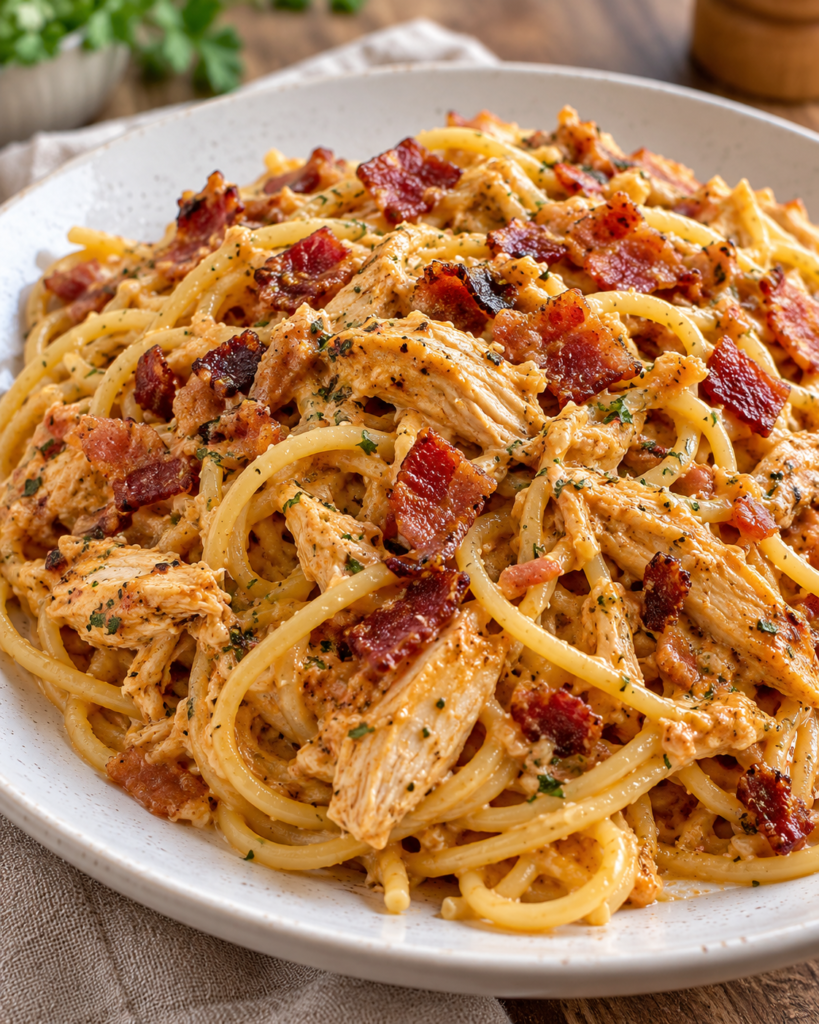
The finished dish should have distinct spaghetti strands, tender chicken pieces, crispy browned bacon, and a golden garlic-Parmesan coating.
Chef Tips
- Check chicken temperature early. Slow cookers vary in how quickly they heat. A thermometer is more reliable than the clock alone.
- Use chicken breasts of similar thickness. This helps prevent smaller pieces from becoming dry while larger breasts are still cooking.
- Shred the chicken while warm. Warm chicken separates more easily and retains a tender appearance when folded into the sauce.
- Save the bacon drippings. A tablespoon adds flavor without making the sauce excessively greasy.
- Grate Parmesan just before cooking. Finely grated cheese incorporates more easily into the warm cream.
- Keep the sauce below a boil. Gentle heat helps prevent dairy from separating and Parmesan from developing a grainy texture.
- Reserve more pasta water than you expect to need. You may not use it all, but it’s difficult to replace once the pasta has been drained.
- Don’t rinse the spaghetti. Surface starch makes it easier for the sauce to coat the strands.
- Taste before adding more salt. Parmesan and bacon already contribute salt, so the finished dish may need very little adjustment.
- Serve promptly. Creamy pasta thickens as it stands. If needed, loosen it with a splash of warm pasta water immediately before serving.
Common Mistakes to Avoid
1. Overcooking the Chicken
Chicken breasts can become dry when left in the slow cooker longer than necessary.
Begin checking early and stop cooking once the chicken reaches 165°F and is tender. If it already seems dry, folding it into the sauce with a little reserved cooking liquid can improve its moisture.
2. Adding Parmesan Over High Heat
Excessive heat can cause Parmesan to clump or produce a grainy sauce.
Remove the skillet from the heat before adding the cheese. Stir it in gradually. If the sauce starts tightening, add a little warm pasta water and whisk gently.
3. Using Cold Cream Cheese
Cold cream cheese takes longer to melt and may leave small lumps.
Allow it to soften and cut it into cubes before adding it to the cream. If lumps remain, continue whisking over low heat.
4. Overcooking the Spaghetti
Very soft spaghetti can become mushy when mixed with the warm sauce.
Cook until al dente and drain promptly. Once spaghetti is badly overcooked, its original firm texture can’t be restored.
5. Adding Too Much Chicken Broth
The slow cooker produces more liquid than the sauce needs.
Use only the specified amount of cooking liquid when returning the shredded chicken, and add extra gradually if needed. Pouring all the remaining broth into the sauce may make it watery.
6. Letting the Bacon Soften
Bacon loses crispness when it sits in a creamy sauce.
Keep part of the bacon separate until plating. If making components ahead, store cooked bacon separately.
7. Allowing the Sauce to Become Too Thick
Spaghetti continues absorbing liquid after the ingredients are combined.
If the sauce becomes sticky or heavy, add warm reserved pasta water a little at a time and toss gently until it loosens.
Variations
Spicy Parmesan Garlic Chicken Spaghetti
Add ¼–½ teaspoon crushed red pepper flakes to the garlic butter.
The dish keeps its creamy consistency but develops a gentle heat that works well with the smoky bacon.
Chicken Thigh Version
Replace the chicken breasts with 2 pounds boneless, skinless chicken thighs.
Thighs contain more fat and generally remain moist more easily. Cooking time may differ, so check temperature and tenderness rather than relying only on the stated range.
Gluten-Free Version
Replace the spaghetti with 12 ounces of gluten-free spaghetti.
Follow the package directions carefully. Gluten-free pasta can become soft quickly, especially after being tossed with warm sauce. Check the broth and other packaged ingredients for gluten if necessary.
Lighter Cream Sauce
Replace ½ cup heavy cream with ½ cup additional low-sodium chicken broth.
The sauce will be thinner and less rich than the original. Add reserved pasta water sparingly to avoid making it watery.
Extra-Garlic Version
Increase the fresh garlic from five cloves to seven.
This strengthens the garlic flavor without requiring a different cooking method. Keep the heat gentle so the extra garlic doesn’t burn.
Storage Instructions
Room Temperature
Don’t leave cooked chicken spaghetti at room temperature longer than 2 hours.
If the surrounding temperature is above 90°F, refrigerate it within 1 hour.
Refrigerator
Transfer leftovers to shallow airtight containers and refrigerate promptly.
Store at 40°F or below for up to 3–4 days.
Shallow containers help the food cool more quickly and make individual portions easier to reheat.
Freezer
Freeze cooled portions in tightly sealed freezer-safe containers for up to 2 months for best quality.
The food can remain safe longer when continuously frozen at 0°F, but the creamy sauce may separate and the spaghetti may soften after thawing.
For the best texture, enjoy this recipe fresh or refrigerated rather than frozen.
How to Reheat
Best Method: Stovetop
A skillet is the best choice for controlling the temperature and restoring the creamy consistency.
Place a portion of spaghetti in a nonstick skillet over medium-low heat.
Add 2–3 tablespoons of milk, chicken broth, or water. Cover briefly to warm the pasta, then gently toss until the sauce loosens.
Reheat the leftovers thoroughly to 165°F (74°C).
Avoid prolonged high heat, which may cause the dairy sauce to separate.
Microwave Method
Place the spaghetti in a microwave-safe container with a splash of milk or broth.
Cover loosely and heat in short intervals, stirring between each one.
Continue until the pasta reaches 165°F throughout.
Adding a little liquid helps prevent the noodles from becoming dry around the edges.
Make-Ahead Instructions
Some components can be prepared ahead without sacrificing the finished pasta’s texture.
Bacon: Cook and refrigerate the bacon in a sealed container up to 3 days ahead. Re-crisp it briefly in a skillet before serving.
Parmesan and seasonings: Grate the cheese and measure the dry seasonings the day before. Refrigerate the Parmesan in a sealed container.
Chicken: Cook the chicken ahead if necessary, then refrigerate it promptly in a shallow covered container with some of its cooking liquid. Use within 3–4 days and reheat thoroughly before combining with the freshly made sauce.
For the best results, cook the spaghetti and prepare the creamy Parmesan garlic sauce shortly before serving.
This prevents the noodles from absorbing too much sauce during storage.
Serving Suggestions
Because this chicken spaghetti is rich and creamy, simple vegetable sides and fresh salads are especially good choices.
Garlic bread: Warm, crisp garlic bread complements the Parmesan flavor and makes the meal feel extra comforting.
Roasted broccoli: Lightly browned broccoli adds a pleasant contrast to the creamy spaghetti.
Green salad: Romaine, cucumber, and a light vinaigrette help balance the richness.
Steamed green beans: A lightly seasoned vegetable side works well without competing with the sauce.
Drinks: Unsweetened iced tea, sparkling water with lemon, or chilled lemonade are simple options.
For another creamy pasta dinner, Marry Me Chicken Pasta offers a different flavor profile with sun-dried tomatoes and Parmesan.
Frequently Asked Questions
Can I put uncooked spaghetti directly in the Crockpot?
This recipe cooks spaghetti separately. Boiling it on the stovetop provides better control over the texture and prevents it from becoming too soft while the chicken slow-cooks.
How long should chicken breasts cook in the slow cooker?
For this recipe, plan on approximately 3–4 hours on LOW. Actual time depends on chicken thickness and the slow cooker. Always check that the thickest part reaches 165°F.
Can I use chicken thighs instead of chicken breasts?
Yes. Boneless, skinless chicken thighs are a suitable substitute. They have a slightly richer flavor and tend to remain tender during longer cooking. Check their internal temperature and tenderness before shredding.
Can I make this recipe without bottled Alfredo sauce?
Yes. The original recipe uses a homemade sauce made with butter, garlic, heavy cream, cream cheese, and Parmesan. No bottled Alfredo sauce is required.
Why is my Parmesan sauce grainy?
Graininess can occur when cheese is overheated or added too quickly. Remove the skillet from the heat before stirring in Parmesan and add it gradually. Freshly grated cheese generally produces a smoother result.
Can I replace heavy cream with half-and-half?
Half-and-half can work, but the sauce will be thinner and more sensitive to overheating. Keep the heat low and avoid adding too much pasta water.
Can I make this recipe ahead of time?
You can prepare the bacon, seasonings, and chicken ahead. For the best finished texture, prepare the spaghetti and cream sauce shortly before serving.
Can I freeze creamy chicken spaghetti?
Yes, although freezing may change the texture. The cream sauce can separate, and the noodles may become softer after thawing. Freeze in airtight portions and use within 2 months for best quality.
How do I keep leftover spaghetti creamy?
Reheat gently in a skillet with a small splash of milk, broth, or water. Toss as it warms and avoid excessive heat. Reheat leftovers thoroughly to 165°F.
Key Takeaways
- Slow-cook the seasoned chicken until tender and safely cooked, then shred into medium-sized pieces.
- Make the creamy Parmesan garlic sauce separately using fresh garlic, cream, cream cheese, and Parmesan.
- Cook spaghetti until al dente and use reserved pasta water to adjust the sauce.
- Add some crispy bacon just before serving to preserve its texture.
- Refrigerate leftovers promptly and reheat gently with a splash of liquid to restore creaminess.
Quick Recipe Summary
Crockpot Parmesan Garlic Chicken Spaghetti with Bacon is a creamy American comfort-food dinner made with slow-cooked shredded chicken, spaghetti, homemade Parmesan garlic sauce, and crispy bacon. Chicken breasts cook in seasoned broth on LOW for approximately 3–4 hours until they reach 165°F. Meanwhile, spaghetti is boiled separately, bacon is crisped, and a smooth sauce is prepared with garlic, butter, cream cheese, heavy cream, and Parmesan. The ingredients are combined, adjusted with reserved pasta water, and finished with bacon and parsley. Serve immediately for the best texture. Refrigerate leftovers for up to 3–4 days.
More Recipes and Helpful Guides
If you enjoy creamy chicken dinners and comforting pasta recipes, these related Botainfo recipes offer useful alternatives.
- Crockpot Garlic Parmesan Chicken Pasta — Another slow cooker version with a different sauce approach.
- 30 Minute Garlic Parmesan Chicken Pasta — A faster stovetop chicken pasta option.
- Marry Me Chicken Pasta — Creamy chicken pasta with sun-dried tomatoes.
- Creamy White Chicken Lasagna — A layered baked chicken pasta dinner.
- Slow Cooker Garlic Butter Chicken & Ribeye with Parmesan Mashed Potatoes — Another rich, savory slow cooker meal.
For reliable food safety information, consult the USDA Food Safety and Inspection Service for poultry handling and cooking temperatures, and FoodSafety.gov’s Cold Food Storage Charts for leftover storage recommendations.