Spicy Garlic Pepper Shrimp Recipe
Quick Answer
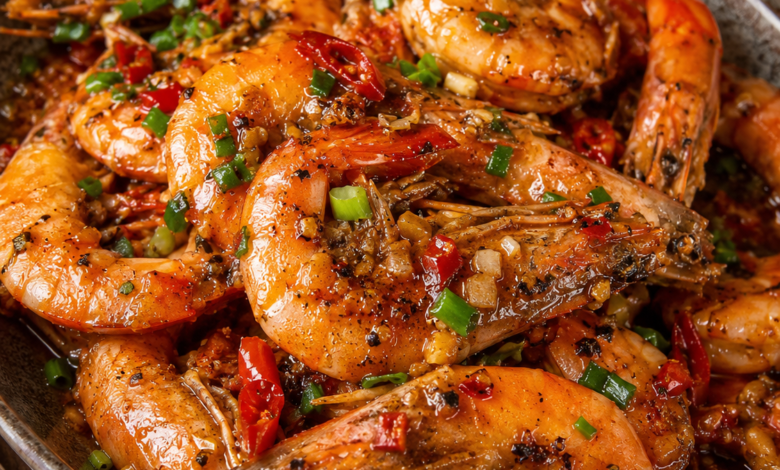
This spicy garlic pepper shrimp recipe combines juicy shell-on shrimp with garlic, cracked black pepper, fresh chiles, lime, scallions, and a concentrated savory skillet sauce. Searing the shrimp in batches helps the shells brown instead of steam, while finishing them briefly in the sauce keeps the meat tender and gives every shrimp a flavorful coating.
Pepper shrimp cooks quickly, but the difference between juicy shrimp and rubbery shrimp comes down to heat management and timing. This version uses a two-stage method: the shrimp are partially seared first, then returned to the pan only after the pepper-garlic sauce is ready.
The result is a generous family-style dish with coral-orange shrimp, browned aromatics, visible black pepper, red chile pieces, fresh scallions, and just enough sauce to cling to the shells.
If you enjoy quick seafood dinners, Botainfo also has a Chinese-style shrimp and vegetables stir-fry built around fast skillet cooking.

Why This Pepper Shrimp Recipe Works
Shell-on shrimp stay juicy and flavorful
Leaving the shells on gives the shrimp a little protection from direct skillet heat. That matters because shrimp cook very quickly. The shells also hold onto the garlic, pepper, chile, and buttery cooking juices, which makes this style of pepper shrimp especially flavorful.
Head-on shrimp provide the closest match to the finished dish, but large shell-on shrimp without heads are a practical alternative.
Cooking in batches improves browning
Putting 2½ pounds of shrimp into one skillet at once would release too much moisture. Instead of searing, the shrimp would begin steaming in their own juices.
Working in two batches gives each shrimp more contact with the hot pan. Look for coral-orange shells with a few browned or caramelized areas rather than perfectly uniform color.
Black pepper is added twice
Some of the black pepper seasons the shrimp before cooking. The rest is briefly bloomed in butter before the garlic and chiles are added.
That gives the finished dish pepper flavor in two layers: seasoning directly on the shrimp and a deeper aroma throughout the sauce.
The sauce is concentrated, not soupy
This isn’t meant to be shrimp swimming in broth. Worcestershire sauce, lime juice, butter, garlic, shrimp juices, and a small amount of water form a concentrated sauce that should coat the shells and leave only a modest amount beneath the shrimp.
Recipe Summary
| Prep Time | 15 minutes |
| Cook Time | 15 minutes |
| Rest Time | 5 minutes |
| Total Time | 35 minutes |
| Servings | 4 |
| Course | Main Course |
| Cuisine | Caribbean-inspired |
| Difficulty | Easy |
| Estimated Calories | About 320 per serving |
Ingredients
For the Shrimp
- 2½ pounds jumbo whole shrimp, shell-on and preferably head-on
- 1 teaspoon kosher salt
- 1½ teaspoons coarsely ground black pepper, divided
- 1 teaspoon smoked or sweet paprika
- ½ teaspoon garlic powder
- 2 tablespoons neutral cooking oil
For the Pepper-Garlic Sauce
- 3 tablespoons unsalted butter
- 7 large garlic cloves, finely chopped
- 1 small red Fresno chile or red jalapeño, thinly sliced
- 1 small habanero or Scotch bonnet pepper, finely minced, seeds removed for less heat
- ½ teaspoon crushed red pepper flakes
- 1 tablespoon Worcestershire sauce
- 2 tablespoons fresh lime juice
- 2 tablespoons water
- 4 scallions, thinly sliced, white and green parts separated
- ½ teaspoon kosher salt, plus more if needed
- Remaining ¾ teaspoon coarsely ground black pepper
Ingredient Notes
Shrimp: Jumbo shrimp are easier to sear without overcooking than very small shrimp. Whole head-on shrimp give the dish its most dramatic presentation, but headless shell-on shrimp also work.
Black pepper: Coarsely ground pepper is important here. Fine pepper disappears into the sauce and can taste harsher when used in the same quantity.
Scotch bonnet or habanero: Both peppers can be intensely hot, and individual peppers vary. Removing the seeds and inner membrane helps reduce the heat. For a milder version, use only part of the pepper.
Garlic: Seven cloves may sound generous, but this is a large quantity of shrimp. Keep the garlic moving once it hits the skillet so it becomes fragrant without burning.
Lime juice: The acidity balances the butter and savory Worcestershire sauce. Add extra lime only after tasting the finished sauce.
Equipment
- 12-inch heavy skillet
- Large mixing bowl
- Tongs
- Cutting board
- Sharp knife
- Measuring spoons
How to Make Pepper Shrimp
1. Dry the shrimp thoroughly
Rinse the shrimp briefly if necessary, then dry them very well with paper towels. Trim excessively long antennae while leaving the shells, heads, and tails intact.
Surface moisture is the enemy of browning. The shrimp should feel dry rather than wet before seasoning.
2. Season the shrimp
Toss the shrimp with 1 teaspoon kosher salt, ¾ teaspoon black pepper, paprika, and garlic powder.
You want a light, even coating. There shouldn’t be a heavy spice paste covering the shells.
3. Heat the skillet
Place the skillet over medium-high heat and add the neutral oil. Let it heat until shimmering.
The pan needs to be properly hot before the first shrimp go in, but the oil shouldn’t be smoking heavily.
4. Sear the first batch
Add half of the shrimp in a single layer. Cook for about 1½ to 2 minutes on the first side.
Turn and cook for another 1 to 2 minutes. The shells should turn coral-orange and show a few browned areas.
Transfer the shrimp to a plate while they’re still slightly underdone in the center.
5. Cook the second batch
Repeat with the remaining shrimp.
If browned bits are forming on the pan, that’s useful. If those bits start becoming black, lower the heat slightly before continuing.
6. Bloom the black pepper
Reduce the heat to medium. Add the butter and remaining ¾ teaspoon coarsely ground black pepper.
Stir for about 20 seconds, just until fragrant.
7. Cook the garlic and peppers
Add the chopped garlic, white parts of the scallions, sliced red chile, minced habanero or Scotch bonnet, and crushed red pepper.
Cook for 45 to 60 seconds while stirring.
The garlic should smell fragrant and may become lightly golden around the edges. If it turns dark brown, the heat is too high.
8. Build the sauce
Stir in the Worcestershire sauce, lime juice, water, and ½ teaspoon salt.
Let the mixture bubble for about 30 seconds while scraping the browned bits from the bottom of the skillet.
The sauce will still look fairly loose at this stage. That’s normal.
9. Finish the shrimp in the sauce
Return the shrimp and any juices from the plate to the skillet.
Toss for 1 to 2 minutes, allowing the shrimp to finish cooking as the sauce coats the shells.
The finished sauce should look glossy and concentrated rather than watery.
10. Check the shrimp
Remove the skillet from the heat once the flesh is opaque through the thickest part and the shrimp feel firm but still juicy.
If checking the edible portion with a food thermometer, the validated recipe uses 145°F as its doneness target.
11. Add the scallions
Fold in most of the green scallion slices.
Taste the sauce before adjusting it. Depending on your Worcestershire sauce and shrimp, you may need only a small pinch of additional salt.
12. Rest briefly and serve
Let the shrimp stand for about 5 minutes. This short rest gives the shells time to pick up more of the pepper-garlic sauce.
Spoon the garlic, chile pieces, scallions, and cooking juices over the shrimp before serving.
Should You Leave the Shells on for Pepper Shrimp?
For this recipe, shell-on shrimp are the preferred choice.
| Shell-On Shrimp | Peeled Shrimp | |
|---|---|---|
| Flavor | More pronounced | Milder |
| Protection from heat | Better | Lower |
| Cooking speed | Slightly slower | Faster |
| Ease of eating | Messier | Easier |
| Match to this recipe | Best | Good alternative |
Peeled shrimp can still be used. Watch them closely because exposed shrimp meat cooks faster, and shorten the first searing stage as needed.
How Spicy Is Pepper Shrimp?
This version has noticeable heat because it combines fresh chile, habanero or Scotch bonnet, red pepper flakes, and black pepper.
For mild pepper shrimp, leave out the habanero or Scotch bonnet and use a mild red jalapeño or Fresno chile.
For medium heat, use part of a seeded habanero or Scotch bonnet.
For a hot version, use the full pepper and leave some of the seeds or membrane intact.
Remember that chile heat and black-pepper flavor aren’t the same thing. You can reduce the hot chile without removing the black pepper that gives the recipe much of its character.
Chef Tips
- Dry shell-on shrimp especially well because water can hide between the shells and meat.
- Use the widest skillet you have so fewer shrimp overlap.
- Don’t repeatedly move the shrimp during the initial sear; pan contact creates browning.
- Keep the first cooking stage short because the shrimp will return to the heat.
- Mince the hot pepper finely so its heat distributes more evenly.
- Add garlic only after reducing the skillet heat to lower the risk of bitterness.
- Scrape up browned shrimp bits when adding the liquid; they’re useful flavor.
- Don’t add extra water unless the sauce is actually sticking before the shrimp return.
- Taste before adding additional salt because Worcestershire sauce contributes seasoning.
- Add the green scallion tops late so they retain their fresh color and flavor.
- Serve immediately after the short rest; shrimp don’t improve by sitting hot for long periods.
- Use a wide serving bowl so the seasoned garlic, chile, and scallions remain visible instead of sinking underneath the shrimp.
Common Mistakes to Avoid
1. Crowding the skillet. Too many shrimp trap steam. Cook in batches so the shells can brown.
2. Starting with wet shrimp. Excess moisture cools the pan and dilutes the seasoning. Pat them thoroughly dry.
3. Fully cooking the shrimp during the first sear. They’ll cook again in the sauce and can become rubbery. Stop the first stage early.
4. Burning the garlic. Garlic can go from golden to bitter quickly. Reduce the heat before adding it and stir constantly.
5. Making the sauce too watery. Stick to the small amount of added water. The shrimp themselves will release some liquid.
6. Using too much hot pepper immediately. Scotch bonnet and habanero heat varies. It’s easier to add heat than remove it.
7. Continuing to simmer after the shrimp are done. Remove the pan from the heat as soon as the shrimp are opaque and tender.
8. Adding too much fat. Extra butter or oil can make the sauce greasy instead of glossy.
For another spicy shrimp idea with a very different texture, see Botainfo’s hot honey fried shrimp.
Variations
Milder Pepper Shrimp
Leave out the habanero or Scotch bonnet and use another Fresno chile. The dish remains garlicky and peppery but has much gentler chile heat.
Extra-Spicy Pepper Shrimp
Use a full Scotch bonnet or habanero with some seeds intact and increase the crushed red pepper to 1 teaspoon.
Peeled Pepper Shrimp
Use peeled and deveined jumbo shrimp with the tails attached. Reduce the initial cooking time because the shrimp are directly exposed to the pan.
Citrus Pepper Shrimp
Increase the lime juice to 3 tablespoons and add ½ teaspoon finely grated lime zest after removing the skillet from the heat.
Storage Instructions
Room temperature: Don’t leave cooked shrimp at room temperature longer than 2 hours.
Refrigerator: Transfer leftovers to an airtight container and refrigerate for up to 3 days.
Freezer: Freeze in a tightly sealed freezer-safe container for up to 2 months for best quality.
Best container: Use a shallow airtight container so leftovers cool and store efficiently.
For the best eating quality, refrigerate only what you expect to use within a few days and avoid reheating the same batch repeatedly.
How to Reheat Pepper Shrimp
A skillet works best because reheating can be kept brief.
Place the shrimp and a spoonful of sauce in a skillet over medium-low heat. Add about 1 tablespoon of water, cover for 30 seconds, then uncover and toss just until heated through.
The goal is to warm the shrimp, not cook them again.
For a microwave, use reduced power and short 20- to 30-second intervals.
Make-Ahead Instructions
Pepper shrimp is best cooked shortly before serving, but most of the preparation can be done earlier.
Clean and dry the shrimp, slice the scallions and red chile, and prepare the garlic ahead of time. Keep the shrimp refrigerated separately from the vegetables and seasonings.
The sauce can also be measured in advance, but wait to sear the shrimp and cook the garlic until close to serving time. That preserves the shrimp’s texture and the fresh flavor of the aromatics.
Serving Suggestions
Steamed white rice is one of the easiest pairings because it absorbs the pepper-garlic cooking juices without competing with the shrimp.
Other good options include coconut rice, rice and peas, fried plantains, cabbage slaw, roasted vegetables, or warm crusty bread.
For a heartier seafood meal, Botainfo’s hearty shrimp stew with sausage and potatoes offers a different comfort-food approach to shrimp.
Cold ginger beer, lime sparkling water, lemonade, or iced tea pair naturally with the spicy, peppery sauce.
Frequently Asked Questions
Can I use peeled shrimp?
Yes. Peeled jumbo shrimp work, but cook more quickly and won’t have quite the same shell-infused flavor. Shorten the initial sear and watch them closely during the final toss.
Can I make pepper shrimp without Scotch bonnet?
Yes. Fresno chile, red jalapeño, or another pepper you enjoy can be used for a milder version. The flavor changes, but the garlic and black pepper still give the dish plenty of character.
Why did my shrimp become rubbery?
They were most likely cooked too long. Shrimp need only a short initial sear followed by a brief finish in the sauce.
Why isn’t my shrimp browning?
The usual causes are excess surface moisture, a pan that isn’t hot enough, or too many shrimp in the skillet at once.
Why is my sauce watery?
Shrimp can release a surprising amount of liquid. Dry them well, avoid crowding the pan, and don’t add more water than the recipe calls for.
Can I make pepper shrimp less spicy?
Yes. Omit the habanero or Scotch bonnet and reduce or eliminate the crushed red pepper. Keep the black pepper for the recipe’s characteristic peppery flavor.
Can I freeze pepper shrimp?
Yes, for up to 2 months for best quality, though freshly cooked or refrigerated shrimp will generally have a better texture after reheating.
What goes well with pepper shrimp?
Rice, coconut rice, rice and peas, plantains, slaw, roasted vegetables, and crusty bread all work well.
Can I make it ahead?
Prepare the ingredients ahead, but cook the shrimp near serving time. Fully cooked shrimp are more likely to become firm when reheated.
Key Takeaways
- Sear the shrimp in two batches so they brown instead of steam.
- Keep the first sear brief because the shrimp finish cooking in the sauce.
- Add black pepper in two stages for a fuller pepper flavor.
- The finished sauce should cling to the shrimp, not form a large pool.
- Refrigerate leftovers promptly and reheat gently to protect the shrimp’s texture.
Quick Recipe Summary
Spicy garlic pepper shrimp is made by seasoning jumbo shell-on shrimp with salt, paprika, garlic powder, and black pepper, then briefly searing them in batches. The shrimp are removed while slightly underdone. Butter and more black pepper are added to the skillet, followed by garlic, scallions, fresh chiles, Worcestershire sauce, lime juice, and a small amount of water. The shrimp return to the pan for a short final toss until opaque and juicy. Fresh scallions finish the dish. Serve immediately with rice, plantains, vegetables, slaw, or crusty bread.
More Recipes
- Shrimp Scampi Linguine
- Chinese-Style Shrimp and Vegetables Stir-Fry
- Hot Honey Fried Shrimp
- Zesty Cajun Shrimp Sausage Pasta
- Rasta Pasta With Chicken, Sausage and Blackened Shrimp
Useful Links
- USDA Safe Minimum Internal Temperatures
- USDA Leftovers and Food Storage
- FDA Food Safety During Preparation
- Cooperative Extension Guide to Baking Potatoes
- MyPlate Vegetable Serving Guidance