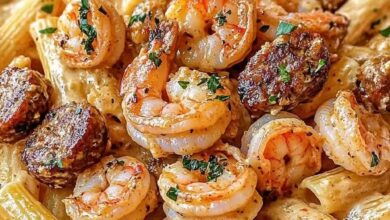
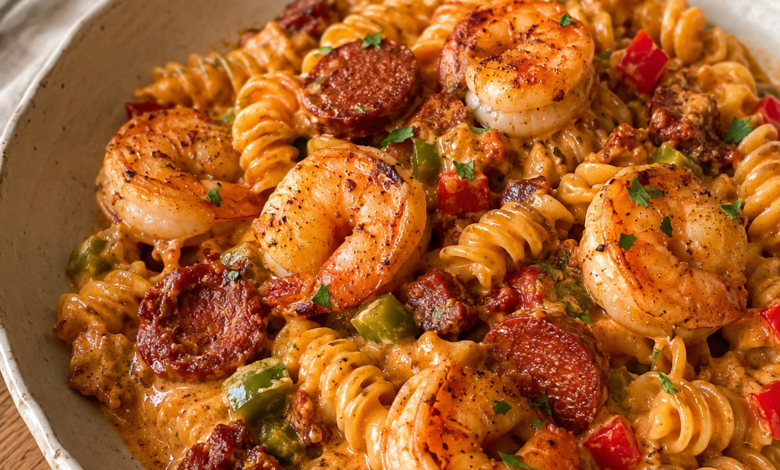
Creamy Chipotle Shrimp and Chorizo Pasta
Quick Answer: Creamy chipotle shrimp and chorizo pasta combines seared shrimp, browned Spanish-style chorizo, rotini, bell peppers, and a smoky chipotle cream sauce. The shrimp cooks separately so it stays tender, while reserved pasta water keeps the Parmesan sauce silky. The full dinner takes about 45 minutes and serves six.
This is the kind of pasta to make when you want something richer than a basic weeknight dinner without turning dinner into an all-evening project. The sauce is creamy but balanced by smoky chipotle, savory chorizo, garlic, peppers, and plenty of Parmesan.
Rotini works especially well because its spirals catch the sauce and small pieces of chorizo and pepper. Large shrimp stay visible throughout the finished dish, which gives every serving a good balance of pasta and protein.
The key is cooking the components in stages instead of leaving everything in the skillet from beginning to end. That little bit of organization prevents rubbery shrimp and gives the chorizo time to develop browned, flavorful edges.
Easy Weeknight Pasta Recipes
Why This Creamy Chipotle Shrimp and Chorizo Pasta Works
The shrimp is seared separately. Shrimp only needs a few minutes of cooking. Removing it from the skillet before making the sauce prevents it from becoming firm and rubbery.
Chorizo builds the flavor base. Browning firm Spanish-style chorizo leaves seasoned fat and caramelized bits in the pan. The vegetables, tomato paste, and chipotle cook in those drippings instead of starting in a flavorless skillet.
Chipotle is balanced with cream. Chipotle peppers in adobo bring both heat and smokiness. Heavy cream and Parmesan soften the sharp edges without covering the chipotle flavor completely.
Rotini holds onto the sauce. The twists and grooves collect the creamy sauce better than very smooth pasta shapes, so the pasta remains well coated rather than leaving most of the sauce at the bottom of the bowl.
Reserved pasta water gives you control. Cream sauces continue thickening as they sit. A splash of starchy pasta water loosens the sauce while helping it remain cohesive instead of watery.
Recipe Summary
| Prep Time | 20 minutes |
| Cook Time | 25 minutes |
| Total Time | 45 minutes |
| Servings | 6 |
| Course | Dinner, Main Course |
| Cuisine | Southwestern-Inspired American |
| Difficulty | Easy–Intermediate |
| Estimated Calories | About 680 per serving |
Ingredients
Pasta and Shrimp
- 12 ounces rotini pasta
- 1 pound large shrimp, peeled, deveined, and tails removed
- 1/2 teaspoon kosher salt
- 1/2 teaspoon freshly ground black pepper
- 1/2 teaspoon smoked paprika
- 1 tablespoon olive oil
Chorizo and Vegetables
- 6 ounces fully cooked Spanish-style chorizo, sliced about 1/4-inch thick
- 1/2 medium yellow onion, diced
- 1/2 red bell pepper, diced
- 1/2 green bell pepper, diced
- 3 garlic cloves, minced
Creamy Chipotle Sauce
- 2 tablespoons tomato paste
- 1 tablespoon finely minced chipotle peppers in adobo, plus more to taste
- 1 teaspoon adobo sauce
- 1 cup low-sodium chicken broth
- 1 cup heavy cream
- 1/2 cup finely grated Parmesan cheese
- 1/4–1/2 cup reserved pasta water, as needed
- Salt and black pepper, to taste
Finishing
- 2 tablespoons finely chopped fresh parsley
Ingredient Notes
Spanish-style chorizo: Use a firm, fully cooked sausage if you want distinct browned slices throughout the pasta. Fresh Mexican chorizo breaks apart as it cooks and will give the dish a different texture.
Chipotle peppers in adobo: The peppers provide most of the heat, while the surrounding adobo sauce adds concentrated smoky flavor. Start conservatively; you can add more before serving.
Parmesan: Finely grated Parmesan melts more evenly into the warm cream. Add it over low heat rather than boiling it.
Shrimp: Large shrimp work best here because they remain substantial beside the rotini and chorizo. Pat them dry before seasoning so they sear rather than steam.
Equipment
- Large pot
- Large deep skillet or sauté pan
- Colander
- Cutting board
- Chef’s knife
- Wooden spoon or silicone spatula
- Tongs
How to Make Creamy Chipotle Shrimp and Chorizo Pasta
1. Cook the rotini
Bring a large pot of well-salted water to a boil. Cook the rotini until about 1 minute shy of al dente.
The pasta should still have a slight bite because it will finish cooking in the sauce. Before draining, reserve at least 1/2 cup of the pasta water.
2. Season the shrimp
Pat the shrimp thoroughly dry with paper towels. Season with kosher salt, black pepper, and smoked paprika.
Removing surface moisture is important. Wet shrimp releases water into the skillet and steams instead of developing browned edges.
3. Sear the shrimp
Heat the olive oil in a large skillet over medium-high heat. Add the shrimp in a single layer and cook for about 1–2 minutes per side.
Look for lightly browned edges and opaque flesh. Transfer the shrimp to a plate as soon as it is cooked; it will return to the skillet later.
4. Brown the chorizo
Add the sliced chorizo to the same skillet. Cook over medium heat for 2–3 minutes, turning occasionally.
The edges should become slightly crisp and caramelized, and a little seasoned fat should render into the skillet. Transfer most of the chorizo to the plate with the shrimp.
5. Cook the peppers and onion
Add the diced onion and bell peppers to the skillet. Cook for 3–4 minutes, stirring occasionally.
The onion should become translucent while the peppers soften slightly but still hold their shape.
6. Add the garlic
Stir in the minced garlic and cook for about 30 seconds.
As soon as it smells fragrant, continue with the recipe. Garlic can turn bitter if it is allowed to brown heavily.
7. Toast the chipotle base
Stir in the tomato paste, minced chipotle pepper, and adobo sauce. Cook for about 1 minute, stirring continuously.
Cooking them briefly in the chorizo drippings deepens their flavor and takes away the raw taste of the tomato paste.
8. Deglaze with broth
Pour in the chicken broth and scrape the bottom of the skillet to release the browned bits.
Simmer for about 2 minutes. Those caramelized bits add savory depth to the finished sauce.
9. Add the cream
Reduce the heat to medium-low and stir in the heavy cream.
Let the sauce simmer gently for 2–3 minutes. It should begin thickening slightly, but avoid a hard boil.
10. Melt in the Parmesan
Lower the heat and add the Parmesan gradually, stirring until smooth.
The sauce should be creamy enough to coat a spoon while still flowing easily. If the cheese begins clumping, the skillet is probably too hot.
11. Toss in the pasta
Add the drained rotini and toss until every spiral is coated.
If the sauce looks too thick, add reserved pasta water a few tablespoons at a time. Remember that the pasta will continue absorbing sauce after it leaves the heat.
12. Return the shrimp and chorizo
Gently fold the shrimp and chorizo back into the pasta.
Heat for only 1–2 minutes—just enough to warm everything through without continuing to cook the shrimp substantially.
13. Adjust the sauce
Taste and add salt, pepper, or a little more chipotle if needed.
The finished sauce should cling to the rotini but remain creamy enough to settle lightly between the pasta spirals.
14. Serve
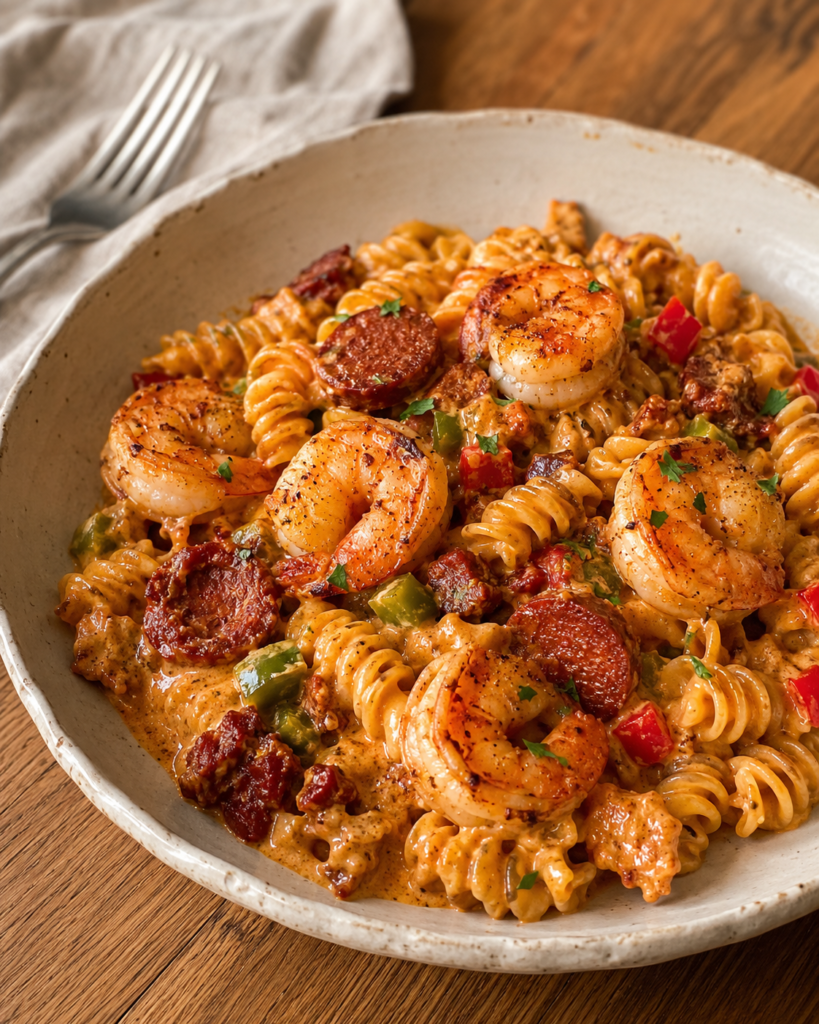
Spoon the pasta into a wide bowl, keeping several shrimp and browned chorizo slices visible on top. Finish with a light sprinkle of chopped parsley and serve immediately.
Shrimp should be opaque and reach 145°F in the thickest portion before serving.
Chef Tips
- Patting shrimp dry is one of the easiest ways to improve browning.
- Give shrimp enough room in the skillet. Crowding lowers the pan temperature and encourages steaming.
- Use firm Spanish-style chorizo when you want visible sausage slices rather than a crumbled meat sauce.
- Toast the tomato paste and chipotle in the chorizo drippings before adding broth. It builds a deeper smoky flavor without requiring more chipotle.
- Finely grate the Parmesan so it melts quickly and evenly.
- Keep the heat low once the cheese goes into the sauce.
- Save more pasta water than you expect to need. The sauce can thicken considerably within a few minutes.
- Add extra chipotle only after tasting the nearly finished sauce. Cream softens some of the initial heat.
- Return the shrimp at the last possible moment so it only needs reheating.
- Serve the pasta promptly. Cream sauces are at their smoothest before they sit and tighten.
Common Mistakes to Avoid
1. Overcooking the shrimp. Leaving shrimp in the pan during the entire sauce-making process makes it increasingly firm. Sear it first, remove it, and add it back at the end. If it has already cooked a little too far, stop heating the dish and serve immediately.
2. Crowding the shrimp. A packed skillet traps moisture. Use a sufficiently large skillet or sear the shrimp in two batches if necessary.
3. Boiling the cream aggressively. High heat can make the sauce oily or unstable. Once the cream goes in, use a gentle simmer.
4. Adding Parmesan over high heat. Excessive heat can make melted cheese clump or become grainy. Turn the heat down before adding it gradually.
5. Making the sauce too thick too early. Rotini absorbs liquid after it enters the skillet. Keep the sauce slightly looser than your ideal final consistency and adjust with pasta water.
6. Adding too much chipotle at once. Heat levels vary by brand and pepper. Begin with the specified amount and adjust after cream and Parmesan have been added.
7. Skipping the chorizo browning. Simply warming the sausage misses the caramelized edges and flavorful drippings that help season the sauce.
Variations
Mild Chipotle Version
Reduce the minced chipotle to about 1 teaspoon while keeping some adobo sauce for smokiness. The pasta will retain its chipotle character with noticeably less heat.
Extra-Spicy Version
Increase the minced chipotle to 2 tablespoons and add another teaspoon of adobo sauce. Taste before adding more because the heat can build quickly.
Smoked Sausage Version
Replace the Spanish chorizo with an equal amount of smoked sausage. The cooking method stays the same, but the final flavor will be milder and less paprika-forward.
Gluten-Free Version
Use a sturdy gluten-free rotini and cook according to the package instructions. Save some pasta water before draining just as you would with regular pasta.
Extra-Vegetable Version
Use one whole red pepper and one whole green pepper. Keep the remaining ingredients unchanged so vegetables add volume without overwhelming the cream sauce.
Storage Instructions
Room temperature: Refrigerate leftovers within 2 hours.
Refrigerator: Store in an airtight container for up to 3 days.
Freezer: Freezing is possible for up to 1 month, but it is not the preferred option. Cream sauce may separate after thawing, and shrimp can become firmer during reheating.
Best container: Use a shallow airtight food-safe container so the pasta cools evenly and is protected from drying out.
For the best texture, refrigerate only what you expect to eat within a few days rather than freezing the whole batch.
How to Reheat
The skillet is the best reheating method for this pasta.
Place leftovers in a skillet over medium-low heat and add 1–2 tablespoons of broth, water, or cream per serving. Cover briefly to warm the center, then stir gently until heated through.
That extra liquid restores some of the moisture the rotini absorbed during refrigeration. Keep the temperature moderate so the sauce does not separate and the shrimp does not toughen.
For a smaller portion, the microwave works too. Add a splash of liquid, cover loosely, and heat in 30-second intervals, stirring between each interval.
Make-Ahead Instructions
This pasta is best assembled close to serving, but several components can be prepared earlier.
Dice the peppers and onion and refrigerate them in an airtight container for up to 1 day. Slice the chorizo and grate the Parmesan ahead as well.
The shrimp can be peeled and deveined in advance and kept refrigerated according to safe seafood-handling practices, but season it shortly before cooking.
For the best texture, cook the pasta, shrimp, and cream sauce shortly before serving rather than assembling the entire dish hours ahead.
Serving Suggestions
Because this pasta is rich, sides are best kept simple.
A crisp green salad with vinaigrette adds acidity and freshness. Roasted broccoli, asparagus, or sautéed green beans add vegetables without competing with the smoky chipotle sauce.
Garlic bread or warm crusty bread is useful for catching any sauce left in the bowl, although the meal is substantial enough to serve without bread.
For drinks, try sparkling water with lime, iced tea, or lemonade. A simple fruit-based dessert works better afterward than another heavy cream-based dish.
Creamy Shrimp Pasta Recipes
Frequently Asked Questions
What kind of chorizo is best for shrimp pasta?
Firm, fully cooked Spanish-style chorizo works best when you want browned slices that remain distinct in the finished pasta. Fresh Mexican chorizo can be used, but it crumbles and renders differently, so both the texture and appearance will change.
How spicy is creamy chipotle shrimp pasta?
This version is moderately spicy. Most of the heat comes from the minced chipotle pepper. Reduce it to about 1 teaspoon for a milder sauce or increase it gradually after tasting for more heat.
How do I keep shrimp from becoming rubbery?
Cook it quickly in a hot skillet, remove it as soon as it becomes opaque, and return it to the pasta only at the end. The shrimp should spend as little time as possible reheating in the finished sauce.
Why did my creamy pasta sauce become grainy?
The skillet was likely too hot when the Parmesan was added. Lower the heat before stirring in finely grated cheese, and avoid boiling the sauce afterward.
What can I use instead of rotini?
Fusilli, cavatappi, or penne are good choices. Look for a pasta shape with curves, ridges, or openings that can hold the creamy chipotle sauce.
Can I use half-and-half instead of heavy cream?
Yes, but the sauce will be lighter and somewhat thinner. Keep the heat gentle and use less pasta water at first because half-and-half does not provide the same richness as heavy cream.
Can I make this pasta ahead?
You can prepare the vegetables, cheese, and chorizo in advance, but the complete dish is better freshly cooked. Cream sauce thickens as it sits, while reheating can overcook the shrimp.
Can creamy shrimp and chorizo pasta be frozen?
It can be frozen, but quality will decline. Cream sauce may separate and shrimp can become firmer after thawing and reheating. Refrigerating leftovers for up to 3 days is the better option.
How do I fix sauce that became too thick?
Add reserved pasta water, broth, or a little cream one tablespoon at a time over low heat. Toss between additions until the sauce once again coats the rotini smoothly.
Key Takeaways
- Sear the shrimp separately and return it only at the end to protect its tender texture.
- Brown Spanish-style chorizo before making the sauce so its drippings add flavor.
- Chipotle peppers provide heat and smokiness; add more only after tasting.
- Keep Parmesan and cream away from high heat for a smoother sauce.
- Refrigerate leftovers for up to 3 days and reheat gently with a splash of liquid.
Quick Recipe Summary
Creamy chipotle shrimp and chorizo pasta is a 45-minute dinner made with rotini, large seared shrimp, browned Spanish-style chorizo, bell peppers, and a smoky cream-Parmesan sauce. Cook the shrimp first and remove it from the skillet, brown the chorizo, then build the sauce from the flavorful pan drippings with tomato paste, chipotle, broth, cream, and Parmesan. Toss in slightly undercooked rotini and use reserved pasta water to control the consistency. Return the shrimp and chorizo only long enough to heat through. Serve immediately for the smoothest sauce and most tender shrimp.
More Recipes
- Creamy Spicy Miso Ramen with Steak & Shrimp (30-Min Luxury Bowl)
- This Creamy Million Dollar Spaghetti Will Ruin All Other Pasta
- You Won’t Believe This Creamy Shrimp Pasta Salad
- 30 Minute Garlic Parmesan Chicken Pasta (Creamy Family Favorite)
- Steak and Shrimp Boil with Cajun Garlic Butter Sauce
Useful links
- USDA Safe Minimum Internal Temperatures
- USDA Leftovers and Food Storage
- FDA Food Safety During Preparation
- Cooperative Extension Guide to Baking Potatoes
- MyPlate Vegetable Serving Guidance