Baked Sausage Rigatoni
Quick Answer
Baked sausage rigatoni combines slightly undercooked pasta with browned Italian sausage, a rich tomato sauce, mozzarella, and Parmesan, then bakes everything at 400°F until bubbling. A brief broil creates the golden cheese topping without overcooking the pasta. Keeping the sauce slightly loose before assembly is the key to a saucy rather than dry casserole.
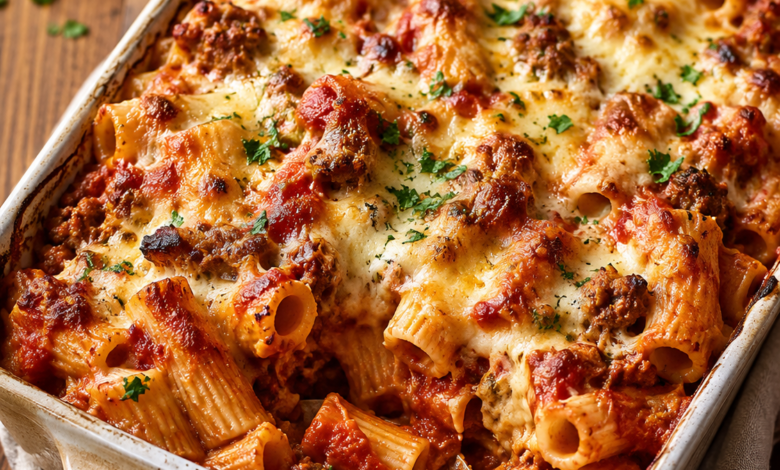
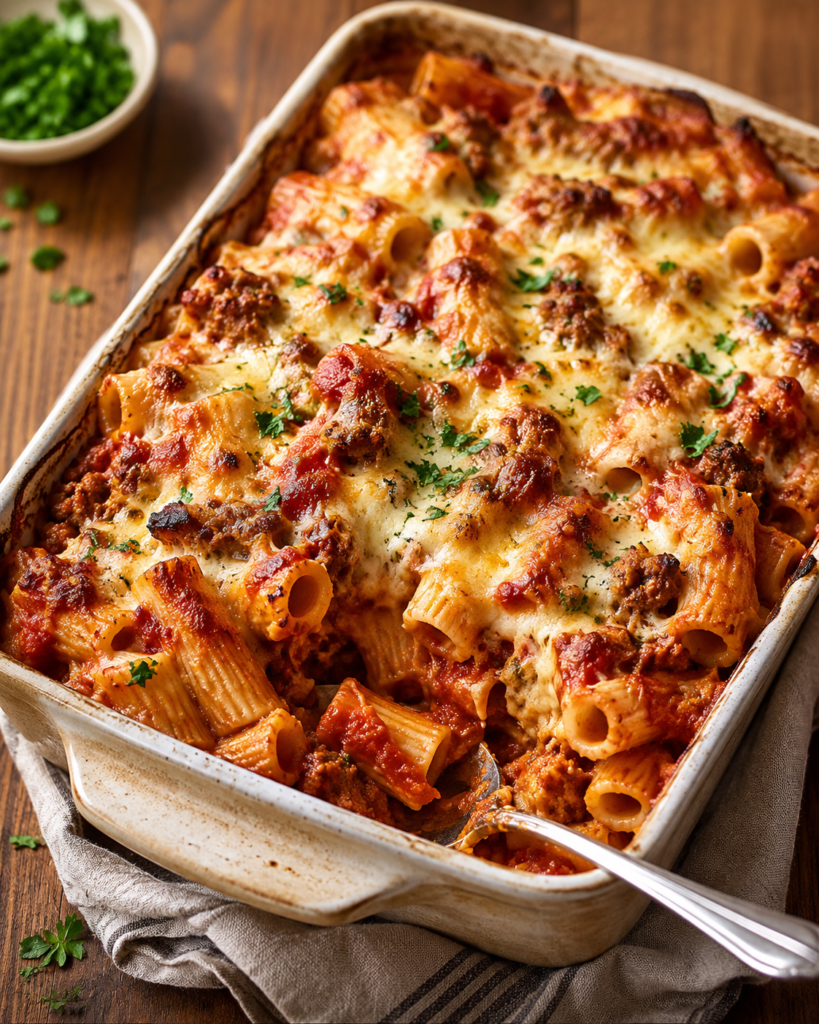
Baked sausage rigatoni is the kind of dinner that delivers plenty of comfort without requiring complicated techniques. The ridges and wide centers of rigatoni catch the tomato sauce, while irregular pieces of browned Italian sausage give every serving plenty of savory flavor.
The cheese works in two places. A smaller amount is folded into the pasta for pockets of mozzarella and Parmesan throughout, while most stays on top, where it melts into a bubbling layer with browned, blistered spots.
This is especially useful for a family dinner because it serves eight, can be assembled ahead, and reheats well when handled properly. If baked pasta is a regular part of your dinner rotation, Creamy Garlic Parmesan Shrimp Alfredo Bake (Easy Family Dinner) is a natural place to find similar meals.
Why This Recipe Works
The most important detail is undercooking the rigatoni before it goes into the oven. Pasta continues absorbing moisture as the casserole bakes. Cooking it about two minutes short of the package’s al dente time gives it room to finish in the sauce without becoming overly soft.
The sauce is also intentionally a little looser than a standard pasta sauce. Reserved pasta water adds enough moisture to compensate for what the rigatoni absorbs in the oven. You want generously coated pasta going into the baking dish, not pasta sitting in a watery sauce.
Browning the sausage before building the sauce develops more flavor and gives it a better texture. Keeping some pieces larger also prevents the sausage from disappearing into the tomatoes.
Finally, low-moisture mozzarella provides reliable melting and browning without introducing the extra water that fresh mozzarella can release. A short broil at the end gives the casserole its toasted cheese surface while allowing the main baking time to focus on heating the pasta evenly.
Recipe at a Glance
| Prep Time | 20 minutes |
| Cook Time | 45 minutes |
| Rest Time | 10 minutes |
| Total Time | 1 hour 15 minutes |
| Servings | 8 |
| Course | Main Course |
| Cuisine | Italian-American |
| Difficulty | Easy to Moderate |
| Estimated Calories | About 610 per serving |
| Oven Temperature | 400°F |
Ingredients
Pasta
- 1 pound rigatoni
- 1 tablespoon kosher salt, for the pasta water
Sausage Tomato Sauce
- 1 tablespoon olive oil
- 1 pound mild Italian sausage, casings removed if using links
- 1 medium yellow onion, finely diced
- 4 garlic cloves, minced
- 2 tablespoons tomato paste
- 1 can (28 ounces) crushed tomatoes
- 1 can (14.5 ounces) diced tomatoes, drained
- 1 teaspoon dried Italian seasoning
- 1/2 teaspoon crushed red pepper flakes, optional
- 3/4 teaspoon kosher salt, plus more to taste
- 1/2 teaspoon freshly ground black pepper
- 1/2 cup reserved pasta cooking water, as needed
Cheese and Finish
- 12 ounces whole-milk low-moisture mozzarella, shredded and divided
- 3/4 cup freshly grated Parmesan cheese, divided
- 2 tablespoons chopped fresh Italian parsley or basil
Ingredient Notes
Rigatoni: Its large tubes and ridged exterior hold a chunky sausage sauce particularly well. Don’t fully cook it before assembling the casserole.
Italian sausage: Mild sausage keeps the dish family-friendly. Hot Italian sausage works if you prefer more heat.
Tomatoes: Crushed tomatoes provide the sauce base, while drained diced tomatoes add texture without making the casserole excessively watery.
Mozzarella: Whole-milk low-moisture mozzarella is the best fit here because it melts smoothly and browns well. Grating it from a block generally produces a creamier melt than pre-shredded cheese.
Parmesan: Freshly grated Parmesan adds savory depth and helps create the browned surface.
Equipment
You’ll need a large pot, large deep skillet or Dutch oven, colander, wooden spoon, measuring cups and spoons, cheese grater if needed, and a 9 × 13-inch baking dish.
How to Make Baked Sausage Rigatoni
1. Prepare the oven
Preheat the oven to 400°F with a rack in the center. Lightly grease a 9 × 13-inch baking dish.
Bring a large pot of water to a rolling boil and season it with 1 tablespoon kosher salt.
2. Brown the Italian sausage
Heat 1 tablespoon olive oil in a large skillet over medium-high heat. Add the sausage and cook for 6–8 minutes.
Break it into irregular bite-size pieces rather than very fine crumbs. Letting the sausage sit against the hot pan briefly before stirring helps develop browned, caramelized surfaces.
It should be thoroughly cooked with no pink remaining.
3. Build the tomato sauce
Reduce the heat to medium. Add the onion and cook for 4–5 minutes, until softened and translucent.
Stir in the garlic and cook for about 30 seconds. Don’t let it brown.
Add the tomato paste and cook for another 1–2 minutes. It should darken slightly to a brick-red color before you add the tomatoes.
Stir in the crushed tomatoes, drained diced tomatoes, Italian seasoning, optional red pepper flakes, 3/4 teaspoon salt, and black pepper.
Bring the sauce to a gentle simmer, reduce the heat, and cook uncovered for 12–15 minutes. You’re looking for a thick, rustic sauce that will cling to the rigatoni.
4. Undercook the rigatoni
Cook the pasta for approximately 2 minutes less than the package’s al dente time.
Before draining, reserve 1/2 cup of the pasta cooking water.
The drained rigatoni should be flexible but still noticeably firm in the center. If it’s already completely tender, it can become too soft during baking.
5. Get the sauce consistency right
Stir approximately 1/4 cup of reserved pasta water into the sausage sauce.
Check the consistency before adding more. The sauce should cling to the pasta while remaining slightly looser than sauce you’d serve directly from the stovetop.
This extra moisture matters because the rigatoni continues absorbing liquid in the oven.
6. Combine the pasta, sauce, and cheese
Gently toss the drained rigatoni with the sausage sauce until thoroughly coated.
Fold in 4 ounces mozzarella and 1/4 cup Parmesan. Distributing this smaller portion through the pasta creates creamy cheese pockets without turning the entire casserole into a heavy cheese layer.
7. Assemble the casserole
Transfer everything to the prepared baking dish and spread it into an even layer.
Top with the remaining 8 ounces mozzarella, followed by the remaining 1/2 cup Parmesan. Scatter the cheese loosely rather than pressing it down.
8. Bake until bubbling
Bake uncovered for 20–25 minutes.
Look for bubbling sauce around the edges and completely melted cheese across the surface.
9. Brown the cheese
Switch the oven to broil and broil for approximately 1–3 minutes.
Stay near the oven. The cheese can move from golden to burned quickly. Remove the casserole when you see irregular golden-brown areas and a few deeper toasted spots.
10. Rest and serve
Let the casserole rest for 10 minutes before serving.
This short rest allows the bubbling sauce to settle and cling more effectively to the rigatoni. Finish with a restrained scattering of chopped parsley or basil.
How to Keep Baked Rigatoni From Drying Out
Dry baked pasta usually comes down to the relationship between pasta doneness, sauce consistency, and baking time.
Start by undercooking the rigatoni. Pasta that is already completely tender before baking continues absorbing liquid and can become both soft and dry-tasting.
Next, make sure the pasta is generously sauced. The sauce should be slightly looser before baking than you’d want for a stovetop pasta dish. Reserved pasta water makes it easy to adjust without diluting the tomato flavor excessively.
Finally, don’t leave the casserole in the oven simply because the cheese isn’t brown enough. Once the sauce is bubbling and everything is hot, use the broiler briefly to brown the top instead of extending the regular baking time.
Fried Hot Honey Garlic Shrimp Alfredo – Creamy Southern Pasta with a Crispy Kick
The Secret to a Golden, Bubbly Cheese Topping
For this recipe, whole-milk low-moisture mozzarella provides the right balance of melt and moisture.
Fresh mozzarella contains substantially more water, so substituting it directly can make the casserole wetter. Low-moisture mozzarella gives you a more predictable melted layer.
The Parmesan contributes flavor and additional browning.
Most importantly, separate baking from browning. Bake until the casserole is thoroughly hot and bubbling, then use a short 1–3 minute broil for those toasted patches. That keeps you from overbaking the pasta while waiting for the cheese to develop color.
Chef Tips
- Use a large enough skillet. Giving sausage room to contact the pan helps it brown rather than steam.
- Leave some sausage pieces chunky. Irregular bite-size pieces provide better texture than uniformly tiny crumbles.
- Drain the diced tomatoes. Their texture is useful, but unnecessary liquid can make the finished casserole watery.
- Grate mozzarella from a block when possible. It generally melts more smoothly than cheese coated with anti-caking ingredients.
- Taste the sauce before assembly. Once it is mixed with a pound of pasta and cheese, correcting underseasoning becomes harder.
- Reserve pasta water before draining. It’s easy to forget, and it gives you precise control over the final sauce consistency.
- Don’t rinse the rigatoni. You want its surface ready to hold onto the sauce.
- Watch the broiler continuously. Browning can change dramatically in less than a minute.
- Give the casserole its full 10-minute rest. Serving immediately can leave more sauce behind in the baking dish.
- For the best balance of cheese, mix a smaller amount into the pasta and reserve most for the surface. This provides cheese throughout while preserving the distinct browned topping.
Common Mistakes to Avoid
1. Fully cooking the pasta before baking.
The rigatoni can become overly soft because it continues cooking in the oven. Drain it approximately two minutes before normal al dente doneness.
2. Using too little sauce.
The pasta absorbs moisture as it bakes. If the mixture looks dry before it enters the oven, add a little reserved pasta water.
3. Leaving the sauce too watery.
Excess liquid can collect at the bottom of the casserole. Simmer the tomato sauce until thick before making the final adjustment with pasta water.
4. Breaking the sausage into tiny crumbs.
Very fine sausage tends to disappear into the sauce. Leave irregular bite-size pieces for a heartier result.
5. Using fresh mozzarella as a direct replacement.
Its higher water content can change the casserole’s consistency. Low-moisture mozzarella is more predictable for this particular preparation.
6. Baking longer just to brown the cheese.
That can dry the pasta. Once the casserole is bubbling, switch briefly to the broiler instead.
7. Walking away during broiling.
Cheese browns rapidly under intense direct heat. Watch continuously and remove the dish when the surface reaches the color you want.
8. Serving immediately from the oven.
The sauce will still be actively bubbling and loose. Ten minutes of resting gives it time to settle.
Variations
Spicy Sausage Rigatoni
Use hot Italian sausage and keep the 1/2 teaspoon crushed red pepper flakes. The preparation and baking method stay the same.
Beef and Sausage Rigatoni
Replace half of the sausage with 1/2 pound lean ground beef. Brown the meats together before continuing with the sauce. The result has a milder sausage flavor while retaining the hearty meat sauce.
Extra-Cheesy Rigatoni
Add up to 4 additional ounces of mozzarella. Going much further can overwhelm the tomato sauce and change the balance of the casserole.
Vegetarian Rigatoni
Omit the sausage and brown 12 ounces of chopped mushrooms before adding the onion. Mushrooms won’t duplicate the flavor or texture of Italian sausage, but they work naturally with the tomato-and-cheese base.
Make-Ahead Instructions
You can assemble the entire baked rigatoni up to 24 hours ahead.
Prepare the casserole through the cheese-topping stage, cover it, and refrigerate. When you’re ready to cook, let the baking dish lose some of its refrigerator chill while the oven preheats.
Bake at 400°F until bubbling and thoroughly heated. A refrigerated casserole may require roughly 10–15 additional minutes compared with one assembled warm.
Add the final broiling step only after the center is hot and the sauce is bubbling.
Storage Instructions
Room temperature: Don’t leave the casserole at room temperature for more than 2 hours.
Refrigerator: Cool leftovers promptly and refrigerate them in an airtight container for up to 3–4 days.
Freezer: Freeze cooled portions in airtight freezer-safe containers for up to 2–3 months for best quality. Individual portions are easier to thaw and reheat than an entire casserole.
Best container: A shallow airtight container works well for refrigerated leftovers and helps them cool and reheat more evenly.
USDA Leftover Food Safety Guidance
How to Reheat Baked Rigatoni
The oven is the best choice when preserving the casserole’s original texture matters.
Place the rigatoni in an oven-safe dish and add a spoonful of water or tomato sauce around the pasta. Cover loosely with foil and heat at 350°F until hot throughout, generally 15–25 minutes depending on the amount.
Remove the foil for the final few minutes if you’d like the cheese surface to firm up again.
For a single serving, the microwave is more convenient. Add a small spoonful of water or sauce, cover the portion, and heat in short intervals until steaming hot throughout.
Viral Baked Spaghetti Recipe
Serving Suggestions
A rich sausage pasta bake benefits from something lighter or crisp alongside it. A simple green salad with vinaigrette, Caesar salad, roasted broccoli, or green beans all work well.
For a heartier dinner, add garlic bread or warm crusty Italian bread. Keep any garnish simple—a little parsley, basil, or freshly grated Parmesan is enough.
Sparkling water with lemon or unsweetened iced tea pairs easily with the rich tomato, sausage, and cheese flavors.
Frequently Asked Questions
Do I need to cook rigatoni before baking it?
Yes. Boil it first, but stop approximately two minutes before the package’s normal al dente time. It will finish cooking in the sauce while the casserole bakes.
Why did my baked rigatoni turn out dry?
Common causes include fully cooking the pasta before baking, using too little sauce, making the sauce too thick before assembly, or baking the casserole too long.
Can I make baked rigatoni without ricotta?
Yes. This recipe is intentionally made without ricotta. Mozzarella and Parmesan provide the cheese component while allowing the sausage and tomato sauce to remain prominent.
What mozzarella is best for baked rigatoni?
Whole-milk low-moisture mozzarella works particularly well because it melts smoothly and browns without releasing as much water as fresh mozzarella.
Should baked rigatoni be covered or uncovered?
This version is baked uncovered. That allows the mozzarella and Parmesan topping to melt properly before the final brief broiling step.
Can I make sausage rigatoni a day ahead?
Yes. Assemble it, cover, and refrigerate for up to 24 hours before baking. A chilled casserole may need approximately 10–15 extra minutes in the oven.
Can you freeze baked sausage rigatoni?
Yes. Cool the pasta and freeze individual portions in airtight freezer-safe containers for up to 2–3 months for best quality.
Can I use another pasta shape?
Another sturdy tubular pasta suitable for baking can work, although the finished texture and sauce distribution may differ. Choose a shape substantial enough to withstand boiling followed by baking.
How do I reheat rigatoni without drying it out?
Add a small amount of water or tomato sauce before reheating. For larger portions, cover loosely with foil and warm at 350°F until hot, uncovering near the end if desired.
Key Takeaways
- Cook the rigatoni about two minutes short of al dente so it doesn’t become overly soft during baking.
- Keep the tomato-sausage sauce slightly loose because the pasta absorbs additional moisture in the oven.
- Low-moisture mozzarella provides reliable melting and browning without adding excessive water.
- Bake until bubbling, then broil for only 1–3 minutes to develop the golden cheese topping.
- Refrigerate leftovers for up to 3–4 days and add a little moisture when reheating to keep the pasta from drying out.
Quick Recipe Summary
Baked sausage rigatoni is an Italian-American pasta casserole made with rigatoni, browned Italian sausage, tomato sauce, mozzarella, and Parmesan. Cook the pasta about two minutes short of al dente, combine it with a slightly loose sausage tomato sauce and some of the cheese, then transfer it to a 9 × 13-inch baking dish. Top with mozzarella and Parmesan and bake uncovered at 400°F for 20–25 minutes. Broil for 1–3 minutes to brown the cheese, then rest for 10 minutes before serving. The recipe serves eight and can be assembled up to 24 hours ahead.
Suggested Internal Links
- Cheesy Baked Spaghetti Recipe Everyone Loves
- Sticky, Saucy Baked Ziti & Honey Garlic Wings Plate You’ll Crave Tonight
- This Creamy Million Dollar Spaghetti Will Ruin All Other Pasta
- Spaghetti Cornbread Casserole That Breaks the Internet
- 30 Minute Garlic Parmesan Chicken Pasta (Creamy Family Favorite)