

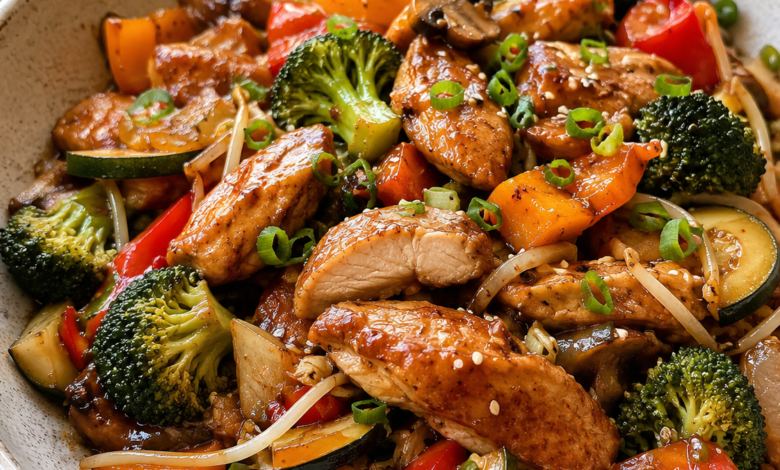
Chicken Stir-Fry with Colorful Vegetables
Quick Answer
This chicken stir-fry with vegetables combines tender golden-browned chicken, crisp-tender broccoli, peppers, zucchini, mushrooms, onions, and bean sprouts with a savory homemade sauce. Cooking the chicken in batches and adding the vegetables in stages keeps everything properly browned instead of watery. It’s a practical choice for a colorful weeknight dinner.
Chicken stir-fry moves quickly once the pan gets hot, so most of the work happens before cooking starts. Having the chicken sliced, vegetables cut, and sauce mixed makes the actual stir-frying straightforward.
The sauce has a savory soy-and-oyster-sauce base balanced with rice vinegar, a little brown sugar, garlic, ginger, and sesame oil. Cornstarch gives it enough body to cling lightly to the chicken and vegetables without turning the dish into a thick, sticky glaze.
If you enjoy simple chicken-and-broccoli meals, Botainfo’s one-pan cheesy chicken and broccoli rice is another useful dinner option.
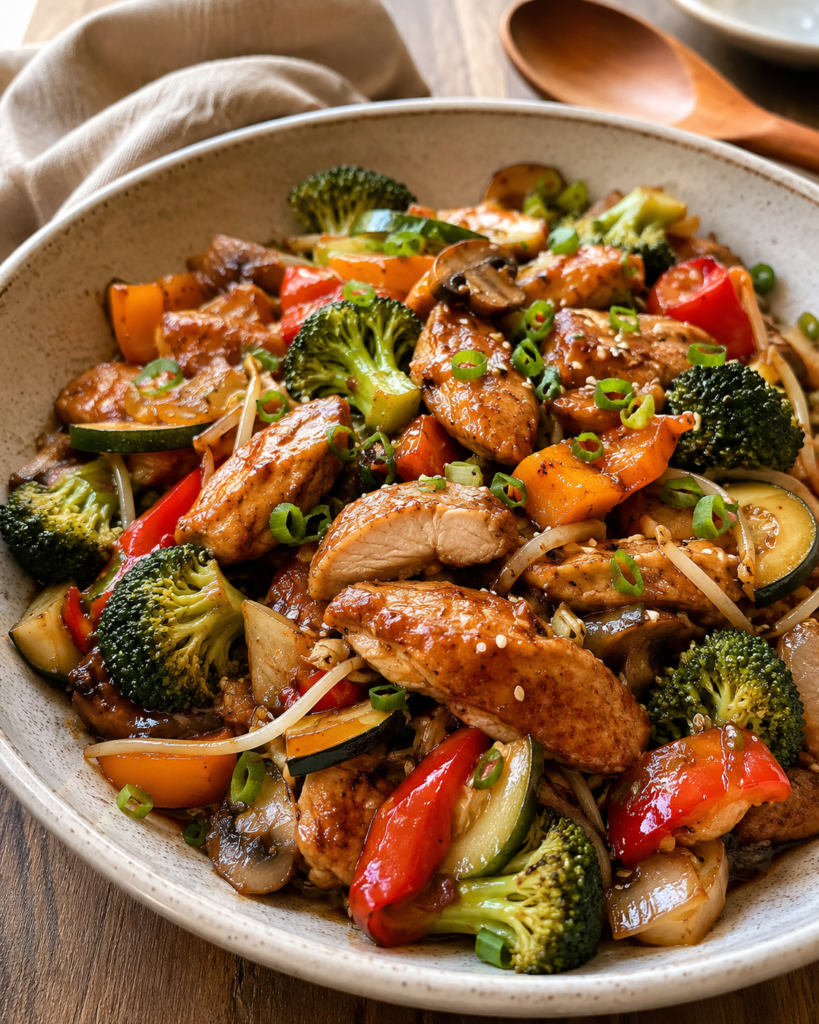
Why This Recipe Works
The biggest challenge with chicken stir-fry isn’t making it complicated—it’s managing moisture and timing.


The chicken gets a light cornstarch coating. Tossing the chicken with soy sauce, cornstarch, and a small amount of oil helps the surface brown while protecting lean chicken breast from drying out.
The chicken cooks in batches. Adding all 1½ pounds at once would cool the skillet and trap steam. Smaller batches have more contact with the hot cooking surface, which gives the chicken better caramelized edges.
The vegetables go in according to cooking time. Broccoli and onions start first. Peppers and mushrooms follow, while zucchini and bean sprouts wait until the end. That keeps delicate vegetables from becoming limp before the firmer vegetables are ready.
The sauce is added only after the chicken and vegetables are mostly cooked. This lets the ingredients sear instead of simmering in liquid.
The recipe works in either a wok or a large skillet. A wok is useful, but a wide 12-inch skillet gives home cooks enough surface area to make a successful stir-fry.
How to Keep Chicken Tender in Stir-Fry
Cut the chicken across the grain and keep the pieces close to the same thickness. The light cornstarch coating adds another layer of protection, but temperature matters just as much: use a properly heated pan and remove each batch once it reaches 165°F internally.
How to Keep the Vegetables Crisp
Different vegetables need different amounts of heat. Broccoli can handle several minutes in the pan; bean sprouts cannot. Adding them in stages prevents the common combination of undercooked broccoli and overcooked zucchini.
Recipe Summary
| Prep Time | 20 minutes |
| Cook Time | 15 minutes |
| Rest Time | 10 minutes |
| Total Time | 45 minutes |
| Servings | 4 |
| Course | Main Course |
| Cuisine | Asian-inspired American |
| Difficulty | Easy |
| Estimated Calories | About 390 per serving, without rice |
Ingredients
For the Chicken
- 1½ pounds boneless, skinless chicken breasts
- 1 tablespoon low-sodium soy sauce
- 1 tablespoon cornstarch
- 1 teaspoon neutral oil, such as avocado or canola oil
- ¼ teaspoon black pepper
For the Stir-Fry Sauce
- ⅓ cup low-sodium soy sauce
- ⅓ cup low-sodium chicken broth
- 2 tablespoons oyster sauce
- 1 tablespoon rice vinegar
- 1 tablespoon packed light brown sugar
- 2 teaspoons cornstarch
- 1 teaspoon toasted sesame oil
- 2 cloves garlic, finely minced
- 1 teaspoon freshly grated ginger
For the Vegetables
- 2 tablespoons neutral oil, divided
- 2 cups broccoli florets, cut into bite-size pieces
- 1 medium red bell pepper, cut into 1-inch pieces
- 1 medium orange bell pepper, cut into 1-inch pieces
- 1 small zucchini, sliced into ¼-inch half-moons
- 8 ounces cremini or white mushrooms, sliced
- 1 small yellow onion, cut into 1-inch pieces
- 1 cup fresh bean sprouts
For Garnishing
- 3 green onions, thinly sliced
- 1 teaspoon sesame seeds
Ingredient Notes
Chicken breast: Slice across the grain into pieces about ½ inch thick. Similar-sized pieces are easier to cook evenly.
Cornstarch: It serves two purposes here. One tablespoon lightly coats the chicken, while another 2 teaspoons thicken the sauce.
Low-sodium soy sauce: There is enough soy sauce in both the chicken mixture and sauce that using a lower-sodium version gives you better control over seasoning.
Oyster sauce: This adds concentrated savory flavor and body. For a gluten-free version, use a sauce specifically labeled gluten-free along with gluten-free tamari.
Zucchini and bean sprouts: These cook quickly and release moisture easily, so they belong near the end.
Equipment
- Cutting board
- Sharp knife
- 2 mixing bowls
- Whisk
- Large wok or 12-inch skillet
- Wooden spoon or heatproof spatula
- Instant-read thermometer
A wok isn’t mandatory. The important part is having a pan large enough to prevent the ingredients from piling into a deep, steaming layer.
How to Make Chicken Stir-Fry with Vegetables
1. Cut the chicken
Slice the chicken across the grain into strips or bite-size pieces about ½ inch thick. Consistent thickness is more important than perfectly identical shapes.
2. Coat and rest the chicken
Toss the chicken with 1 tablespoon soy sauce, 1 tablespoon cornstarch, 1 teaspoon neutral oil, and the black pepper.
Let it rest for 10 minutes while you finish the vegetables. The chicken should look lightly coated, not covered in a thick paste.
3. Make the stir-fry sauce
Whisk together the soy sauce, chicken broth, oyster sauce, rice vinegar, brown sugar, cornstarch, sesame oil, garlic, and ginger.
Make sure no dry cornstarch remains at the bottom. Whisk it again immediately before using because the starch will settle while it sits.
4. Heat the pan thoroughly
Place your wok or large skillet over medium-high to high heat. Let it become properly hot before adding 1 tablespoon oil.
Starting with sufficient heat is one of the best ways to avoid a watery stir-fry.
5. Sear the chicken in batches
Add about half the chicken in a single layer.
Leave it undisturbed for roughly 1 minute so the first side can brown, then stir-fry until cooked through, about 3–4 minutes total.
Transfer it to a clean plate and repeat with the remaining chicken. Check that the thickest pieces reach 165°F.
6. Start with broccoli and onion
Add the remaining tablespoon of oil, followed by the broccoli and onion.
Stir-fry for about 2 minutes. The broccoli should become brighter green, while the onion begins softening but still holds its shape.
7. Add peppers and mushrooms
Add the red pepper, orange pepper, and mushrooms.
Cook for another 2–3 minutes. Look for light browning on the mushrooms and slightly softened peppers that haven’t collapsed.
8. Add the zucchini
Stir in the zucchini and cook for about 1 minute.
It only needs enough time to become slightly tender. Cooking it longer at this stage can cause it to release excess water.
9. Return the chicken
Add the cooked chicken and any juices from the plate back to the skillet.
Toss briefly so the meat is evenly distributed among the vegetables.
10. Add the sauce
Whisk the sauce once more, then pour it around the hot skillet.
Stir continuously for 1–2 minutes. As the cornstarch activates, the sauce should turn glossy and lightly coat the food.
If the sauce becomes thicker than you want, stir in 1 tablespoon chicken broth or water at a time.
11. Finish with bean sprouts
Fold in the bean sprouts and cook for only 30–60 seconds.
They should be hot while retaining some fresh crunch.
12. Garnish and serve
Remove the skillet from the heat. Scatter the green onions and sesame seeds over the top and serve immediately.
The best stir-fry texture is right out of the pan, while the vegetables are still crisp-tender.
Chef Tips
- Dry the vegetables after washing. Surface water cools the skillet and encourages steaming.
- Cut everything before cooking. There isn’t enough downtime during stir-frying to safely stop and chop.
- Use a neutral high-heat oil for the pan; toasted sesame oil belongs in the sauce for flavor.
- Don’t keep moving the chicken immediately. Brief contact with the hot pan helps create browned surfaces.
- Give mushrooms space when possible. Crowded mushrooms release water faster than it can evaporate.
- Keep broccoli pieces similar in size so larger florets don’t remain raw while smaller ones soften.
- Use fresh ginger if available. Its clean, sharp flavor works particularly well in a quickly cooked sauce.
- Whisk the sauce twice: once when mixing it and again just before it enters the pan.
- Keep the finished sauce light. It should coat the food rather than create a deep pool at the bottom.
- Serve promptly. Residual heat continues softening zucchini, peppers, and bean sprouts even after the burner is off.
Common Mistakes to Avoid
1. Crowding the Chicken
What happens: The meat turns pale and releases liquid.
Why: Too much chicken lowers the pan temperature.
Fix: Divide it into two batches and let the pan regain heat between them.
2. Starting With a Cool Pan
Without enough initial heat, both the chicken and vegetables steam. Preheat the pan before adding oil and food.
3. Adding All the Vegetables Together
Broccoli needs more cooking than zucchini or bean sprouts. Add vegetables in stages instead of treating them as one ingredient.
4. Using Wet Vegetables
Water clinging to freshly washed broccoli, mushrooms, or peppers adds unnecessary moisture. Drain and dry them well.
5. Adding Zucchini Too Early
Zucchini can become soft and watery quickly. Keep it near the end of the cooking sequence.
6. Forgetting to Re-Whisk the Sauce
Cornstarch sinks to the bottom as the sauce waits. Adding the liquid without whisking can produce uneven thickening.
7. Cooking the Thickened Sauce Too Long
Once the sauce is glossy and clings to the ingredients, the dish is ready. Prolonged simmering softens the vegetables and can make the sauce overly thick.
Variations
Spicy Chicken Stir-Fry
Add 1–2 teaspoons chili-garlic sauce or sambal oelek to the sauce. The basic cooking method stays unchanged.
Chicken Thigh Stir-Fry
Use 1½ pounds boneless, skinless chicken thighs instead of breasts. Thigh meat has a richer flavor and remains especially juicy, although its texture will be slightly different.
Gluten-Free Version
Replace regular soy sauce with certified gluten-free tamari and use a gluten-free oyster-style sauce.
Extra-Vegetable Stir-Fry
Add another cup of broccoli, mushrooms, or peppers. If you’re increasing the vegetables substantially, make about 25% more sauce so everything receives a light coating.
Cashew Chicken Stir-Fry
Fold in ½ cup roasted unsalted cashews just before serving. They add crunch without changing the cooking process.
For another savory chicken dinner with a different sauce profile, see Easy Mongolian Chicken.
Storage Instructions
Room temperature: Don’t leave cooked chicken stir-fry at room temperature for more than 2 hours.
Refrigerator: Cool promptly and refrigerate in a shallow airtight container for up to 4 days.
Freezer: Freeze for up to 2 months. The chicken and sauce freeze reasonably well, but zucchini and bean sprouts will be noticeably softer after thawing.
Best container: Use an airtight glass or food-safe plastic container.
For the best leftovers, refrigerate the stir-fry instead of leaving it in the warm wok or skillet after dinner.
How to Reheat
A skillet gives you the best chance of preserving the texture.
Heat a skillet over medium-high heat with a small amount of oil. Add the leftover stir-fry and cook for about 2–4 minutes, stirring frequently, until thoroughly hot.
If the refrigerated sauce has become very thick, add a tablespoon of water before reheating.
For individual portions, the microwave works too. Heat in short 30-second intervals and stir between them rather than microwaving continuously for several minutes.
Make-Ahead Instructions
The best way to make this recipe ahead isn’t to fully cook it early. Prepare the components separately instead.
Up to a day ahead, you can slice the chicken, cut the vegetables, and mix the sauce. Store each component in its own covered container in the refrigerator.
Keep the bean sprouts and green onions separate so they stay fresh.
When it’s time to cook, whisk the sauce again and proceed with the stir-fry. This approach saves preparation time without sacrificing the crisp texture that makes the dish work.
Serving Suggestions
Steamed jasmine rice is the simplest match because it absorbs a little of the savory sauce without competing with the vegetables.
Other good choices include:
- Brown rice
- Fried rice
- Rice noodles
- Steamed edamame
- Cucumber salad
- Asian-style cabbage slaw
For another rice-based dinner idea, try Botainfo’s Easy Hibachi Steak Bites and Fried Rice.
Unsweetened iced tea, iced green tea, sparkling water, or sparkling water with lime all work well alongside the savory sauce.
Frequently Asked Questions
What vegetables are best for chicken stir-fry?
Vegetables that tolerate quick high-heat cooking work especially well. Broccoli, bell peppers, mushrooms, onions, zucchini, snap peas, carrots, and bean sprouts are common choices. Add firmer vegetables before delicate ones.
How do you keep chicken tender when stir-frying?
Slice chicken across the grain, use similarly sized pieces, lightly coat it with cornstarch, and cook it quickly in a properly heated pan. Avoid overcrowding and remove chicken breast once it reaches 165°F.
Why is my chicken stir-fry watery?
Common causes include overcrowding the pan, using wet vegetables, cooking over insufficient heat, or adding too much sauce. Cook in batches and allow moisture to evaporate rather than trapping steam.
Do you cook chicken or vegetables first?
For this recipe, cook the chicken first and transfer it to a plate. Stir-fry the vegetables separately, then return the chicken before adding the sauce. This gives you better control over both textures.
How do you thicken chicken stir-fry sauce?
Cornstarch thickens the sauce as it reaches a simmer. Always dissolve it in the sauce before adding it and whisk again immediately before cooking.
Can I use chicken thighs instead of chicken breasts?
Yes. Use the same amount of boneless, skinless thighs. They’ll give the stir-fry a slightly richer flavor and are naturally more forgiving if cooked a little longer.
Can I use frozen vegetables?
You can, but the texture won’t be identical. Frozen vegetables release additional water and tend to soften more. Cook them from frozen in a very hot pan and avoid overcrowding.
Can chicken stir-fry be frozen?
Yes, but some vegetables freeze better than others. Chicken, sauce, broccoli, and peppers generally hold up better than bean sprouts and zucchini, which become softer after thawing.
What should I serve with chicken stir-fry?
Steamed jasmine rice is the classic easy option. Brown rice, fried rice, noodles, cucumber salad, edamame, or cabbage slaw also pair naturally with the dish.
Key Takeaways
- Cook the chicken in batches so it browns instead of steaming.
- Add vegetables according to how quickly they cook.
- Cornstarch helps keep the chicken tender and gives the sauce a light glossy consistency.
- Add zucchini and bean sprouts late to protect their texture.
- For leftovers, refrigerate promptly and reheat quickly in a skillet whenever possible.
Quick Recipe Summary
Chicken stir-fry with vegetables is made by quickly searing lightly cornstarch-coated chicken, cooking vegetables in stages, and finishing everything with a savory homemade sauce of soy sauce, chicken broth, oyster sauce, rice vinegar, garlic, ginger, sesame oil, and a small amount of brown sugar. Broccoli and onions cook first, followed by peppers and mushrooms, while zucchini and bean sprouts are added near the end. Cook chicken breast to 165°F and serve the stir-fry immediately for the best combination of tender chicken, crisp-tender vegetables, and glossy sauce.
More Recipes
- One-Pan Cheesy Chicken and Broccoli Rice
- Easy Mongolian Chicken
- Bourbon Chicken with Broccoli
- Easy Hibachi Steak Bites and Fried Rice
- Beef and Broccoli Stir-Fry
Useful links
- USDA Safe Minimum Internal Temperatures
- USDA Leftovers and Food Storage
- FDA Food Safety During Preparation
- Cooperative Extension Guide to Baking Potatoes
- MyPlate Vegetable Serving Guidance



One Comment