

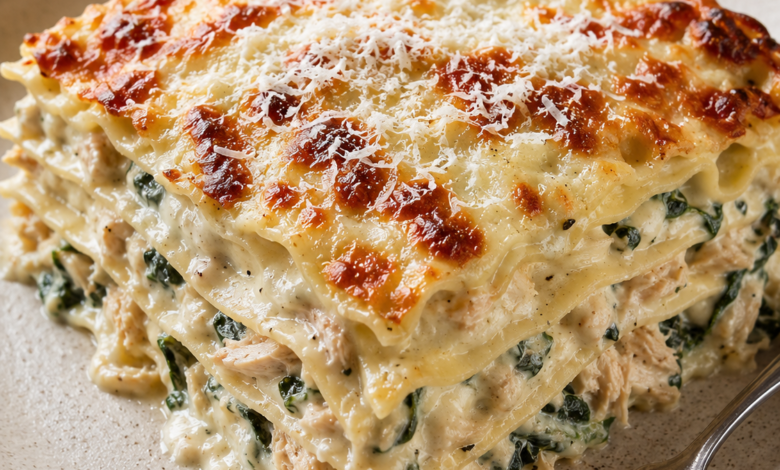
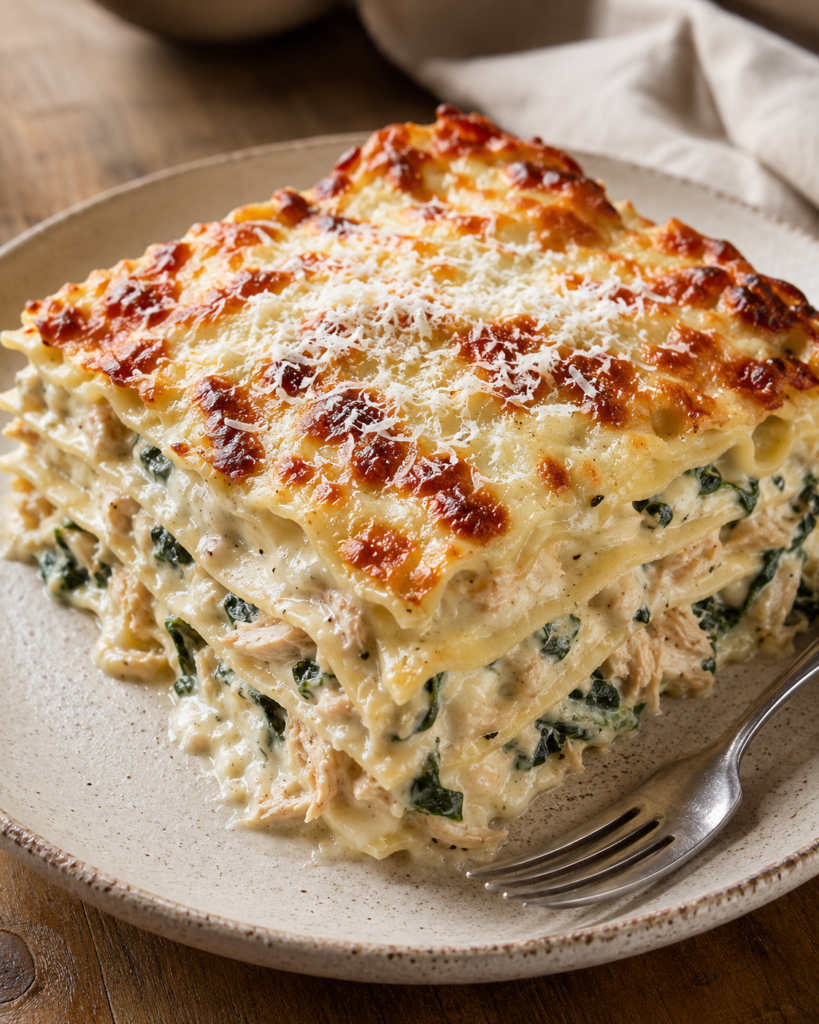
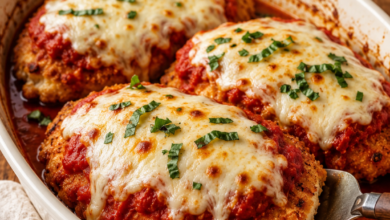
White Chicken Lasagna is a creamy baked pasta dish made with layers of tender shredded chicken, spinach, ricotta, Parmesan garlic béchamel, mozzarella, and lasagna noodles. This version focuses on a rich but balanced white sauce, reliable layering, and practical techniques that help home cooks achieve a beautifully golden, creamy lasagna that’s perfect for family dinners, meal prep, or entertaining.
Creamy White Chicken Lasagna Recipe You’ll Want to Make Again
If you’re looking for a comforting dinner that’s creamy without feeling overly heavy, White Chicken Lasagna is an excellent choice. Instead of a traditional tomato-based meat sauce, this recipe layers tender shredded chicken, fresh spinach, creamy ricotta, and a homemade Parmesan garlic béchamel that creates a rich, velvety texture in every bite.
Although this lasagna looks impressive when it comes out of the oven with its bubbling golden cheese, the process is surprisingly approachable. Each step builds on the last, making it suitable for beginners while still producing results experienced home cooks will appreciate.
One of the biggest advantages of this recipe is how well it fits into real life. You can prepare it ahead of time, refrigerate or freeze it for later, and enjoy leftovers that reheat beautifully. If you enjoy hearty baked pasta dishes, you may also like Creamy Baked Spaghetti, which offers another comforting dinner option with a rich, cheesy finish.
Whether you’re serving it for a weekend family dinner, a holiday gathering, or simply preparing meals for the week ahead, this White Chicken Lasagna delivers creamy layers, balanced flavors, and dependable results every time.

Why This White Chicken Lasagna Recipe Works
There are plenty of White Chicken Lasagna recipes available, but small details make the difference between a casserole that’s merely good and one that’s consistently creamy, structured, and satisfying.
A Homemade Parmesan Béchamel Creates Better Texture
Rather than relying on jarred Alfredo sauce, this recipe uses a homemade Parmesan garlic béchamel. The sauce coats every noodle evenly, melts smoothly into the cheeses, and creates distinct creamy layers without becoming overly thick or greasy.
Tender Shredded Chicken Stays Moist
Using cooked shredded chicken allows the meat to distribute evenly throughout every slice. Mixing it with the warm spinach before assembling also helps keep the filling juicy while preventing dry pockets.
Balanced Cheese Prevents a Heavy Lasagna
Ricotta adds creaminess, mozzarella provides the classic stretchy melt, and freshly grated Parmesan contributes savory depth. Together they create a rich flavor without overwhelming the other ingredients.
Spinach Adds Freshness and Balance
Fresh spinach brings color, mild earthiness, and moisture control while complementing the creamy sauce instead of competing with it.
Layering Creates Clean Slices
Evenly distributing the sauce, filling, and cheese between each layer helps the lasagna bake uniformly. Allowing it to rest after baking gives the sauce time to set, making each serving easier to slice and serve neatly.
Beginner-Friendly Technique
Every stage of the recipe uses familiar ingredients and straightforward methods. The visual cues throughout the instructions help you recognize when each component is ready, making the recipe approachable even if this is your first homemade lasagna.
Recipe Summary
| Recipe Details | Information |
|---|---|
| Prep Time | 30 minutes |
| Cook Time | 50 minutes |
| Rest Time | 15 minutes |
| Total Time | 1 hour 35 minutes |
| Servings | 8 generous servings |
| Course | Main Course |
| Cuisine | American Italian |
| Difficulty | Intermediate |
| Estimated Calories | Approximately 610 per serving |
This recipe is designed to produce a creamy, well-structured White Chicken Lasagna with distinct layers, a rich Parmesan béchamel, and a golden cheese topping. The resting time is important because it allows the layers to set, making the lasagna much easier to slice and serve cleanly.
Ingredients
Chicken Filling
- 3 cups cooked shredded chicken breast (about 1½ pounds)
- 2 tablespoons unsalted butter
- 4 garlic cloves, minced
- 5 ounces fresh baby spinach
- ½ teaspoon kosher salt
- ½ teaspoon freshly ground black pepper
- ½ teaspoon Italian seasoning
Parmesan Garlic Béchamel
- 6 tablespoons unsalted butter
- ⅓ cup all-purpose flour
- 4 cups whole milk, warmed
- 1 cup heavy cream
- 1½ teaspoons kosher salt
- ½ teaspoon black pepper
- ½ teaspoon onion powder
- ¼ teaspoon freshly grated nutmeg
- 1 teaspoon Italian seasoning
- 1½ cups freshly grated Parmesan cheese
Ricotta Layer
- 2 cups whole-milk ricotta cheese
- 1 large egg
- ½ cup freshly grated Parmesan cheese
- 2 tablespoons chopped fresh parsley
Assembly
- 12 oven-ready lasagna noodles
- 4 cups shredded whole-milk mozzarella cheese
- ½ cup freshly grated Parmesan cheese
- Chopped fresh parsley for garnish (optional)
Ingredient Notes
A few ingredients have a noticeable impact on the final texture and flavor. Paying attention to these details will help you achieve more consistent results.
Whole-Milk Ricotta
Whole-milk ricotta creates a richer, creamier filling than reduced-fat varieties. It also holds its texture better during baking, helping the layers stay distinct.
Freshly Grated Parmesan
Freshly grated Parmesan melts more smoothly into the béchamel than pre-shredded cheese, which often contains anti-caking agents that can make the sauce slightly grainy.
Warm Milk
Warming the milk before adding it to the roux helps the béchamel come together more smoothly and reduces the chance of lumps.
Fresh Baby Spinach
Fresh spinach releases less excess moisture than frozen spinach and blends naturally into the filling. If frozen spinach is used, thaw it completely and squeeze out as much liquid as possible before mixing it with the chicken.
Whole-Milk Mozzarella
Low-moisture whole-milk mozzarella provides the best balance of meltability, stretch, and browning without releasing excessive moisture.
Equipment
Prepare the following equipment before you begin to keep the cooking process organized:
- 9 × 13-inch baking dish
- Large sauté pan
- Medium saucepan
- Large whisk
- Mixing bowl
- Rubber spatula
- Measuring cups and measuring spoons
- Cheese grater
- Sharp chef’s knife
- Cutting board
- Aluminum foil
These are all standard kitchen tools and are used in the order you’ll need them throughout the recipe. No specialty equipment is required.
How to Make White Chicken Lasagna
Before you begin assembling the lasagna, gather all of your prepared ingredients and equipment. Having the béchamel, chicken filling, ricotta mixture, cheeses, and noodles ready makes the layering process much smoother and helps you work efficiently.
Step 1 — Prepare the Oven and Baking Dish
Preheat your oven to 375°F (190°C).
Lightly grease a 9 × 13-inch baking dish with butter or nonstick cooking spray.
Why this matters
A lightly greased dish helps the first layer release more easily after baking and promotes even browning around the edges.
Success looks like
The baking dish has a thin, even coating without pools of butter or oil.
Watch for
Using too much grease can make the bottom layer oily.
Step 2 — Cook the Chicken Filling
Melt the butter in a large skillet over medium heat.
Add the minced garlic and cook for about 30 seconds, stirring constantly until fragrant.
Add the fresh spinach and cook until just wilted, about 2–3 minutes.
Stir in the shredded chicken, Italian seasoning, salt, and pepper. Cook for another 2 minutes, just long enough for everything to warm through.
Remove the pan from the heat.
Why this matters
Cooking the spinach before assembling removes excess moisture that could otherwise make the lasagna watery.
Success looks like
- Spinach is fully wilted.
- Chicken is evenly coated with seasoning.
- No excess liquid remains in the skillet.
Watch for
Don’t overcook the chicken. Since it’s already cooked, prolonged heating can dry it out.
Step 3 — Make the Parmesan Garlic Béchamel
In a medium saucepan, melt the butter over medium heat.
Whisk in the flour and cook for about 2 minutes, stirring constantly until a smooth blond roux forms.
Gradually pour in the warm milk while whisking continuously.
Add the heavy cream and continue whisking until the mixture is completely smooth.
Bring the sauce to a gentle simmer and cook for 6–8 minutes, stirring frequently.
Why this matters
Cooking the roux removes the raw flour taste while creating the base that thickens the sauce.
Success looks like
The béchamel lightly coats the back of a spoon and flows in slow ribbons when stirred.
Watch for
If the sauce begins boiling rapidly, reduce the heat immediately. High heat can scorch the milk.
Step 4 — Finish the Sauce
Reduce the heat to low.
Whisk in:
- Parmesan cheese
- Salt
- Black pepper
- Onion powder
- Nutmeg
- Italian seasoning
Add the Parmesan a little at a time, allowing each addition to melt before adding more.
Why this matters
Gradually incorporating the cheese creates a silky sauce instead of a grainy one.
Success looks like
The finished sauce is glossy, creamy, and smooth with no visible lumps.
Watch for
Avoid overheating after adding the cheese, as excessive heat may cause the sauce to separate.
Step 5 — Prepare the Ricotta Mixture
In a medium mixing bowl, combine:
- Ricotta cheese
- Egg
- Parmesan cheese
- Chopped parsley
Mix only until everything is evenly incorporated.
Why this matters
Gentle mixing keeps the ricotta light while ensuring the egg is fully distributed for proper structure.
Success looks like
A creamy mixture with evenly dispersed parsley and no streaks of egg.
Step 6 — Build the First Layer
Spread about ¾ cup of béchamel over the bottom of the prepared baking dish.
Arrange three lasagna noodles in a single layer.
Spread:
- One-quarter of the béchamel
- One-third of the ricotta mixture
- One-third of the chicken filling
- About one cup of mozzarella
Why this matters
The initial sauce layer prevents the noodles from sticking while helping them cook evenly.
Success looks like
The filling reaches the edges without overflowing, and the layers remain level.
Step 7 — Continue Layering
Repeat the layering sequence until all ingredients have been used.
Finish with:
- Remaining noodles
- Remaining béchamel
- Remaining mozzarella
- Remaining Parmesan cheese
Smooth the top gently with a spatula.
Why this matters
Even layers help the lasagna bake uniformly and create clean slices after resting.
Success looks like
The top is fully covered with cheese and sauce, with no exposed dry noodles.
Watch for
Avoid packing the layers too tightly, which can make slicing difficult.
Step 8 — Bake
Cover the baking dish loosely with aluminum foil, making sure it doesn’t touch the cheese.
Bake for 35 minutes.
Remove the foil and continue baking for another 15 minutes, until the cheese is fully melted with golden-brown blistered spots.
For additional color, broil for 1–2 minutes, watching closely to prevent burning.
Why this matters
Covering the lasagna allows the noodles to cook through while keeping moisture inside. Removing the foil at the end develops the browned, bubbly cheese topping.
Success looks like
- Cheese is deeply golden in spots.
- Sauce bubbles gently around the edges.
- The center is hot throughout.
Watch for
If the top browns too quickly, loosely replace the foil for the remaining baking time.
Step 9 — Rest Before Serving
Transfer the baking dish to a cooling rack and let the lasagna rest for 15 minutes before slicing.
Why this matters
Resting allows the béchamel and cheeses to set, helping each slice hold its shape.
Success looks like
The lasagna slices cleanly with visible layers of pasta, creamy sauce, shredded chicken, spinach, and melted cheese.
Watch for
Cutting immediately after baking can cause the layers to collapse and the sauce to run.
Chef Tips
Small details can make the difference between a good lasagna and one with creamy layers, a beautifully browned top, and clean slices. These practical tips focus on texture, flavor, and consistency rather than repeating the recipe instructions.
- Warm the milk before making the béchamel. Warm milk blends into the roux more smoothly and helps reduce the chance of lumps.
- Grate your own Parmesan and mozzarella. Freshly grated cheese melts more evenly and creates a smoother sauce and a better golden topping than many pre-shredded cheeses.
- Drain excess moisture from the spinach. If the spinach releases a lot of liquid after cooking, let it evaporate or drain it before mixing with the chicken. This helps prevent watery lasagna.
- Spread each layer evenly. Keeping the sauce, filling, and cheese consistent from edge to edge ensures every slice has the same balance of flavors and cooks evenly.
- Avoid overloading the filling. Too much chicken or cheese can make the layers unstable and harder to cut neatly.
- Cover loosely with foil during the first bake. A foil tent protects the cheese from browning too early while allowing the noodles to cook through.
- Broil only at the very end. If you want deeper golden spots on top, broil for just 1–2 minutes and watch closely. Cheese can go from perfectly browned to burnt very quickly.
- Rest before slicing. Giving the lasagna at least 15 minutes to rest allows the sauce to set so the slices hold together better.
- Use a sharp, flat-edged spatula. It supports each serving from underneath, making it easier to lift out clean portions.
- Taste the béchamel before assembling. Adjust the seasoning while the sauce is still in the pan. Once the lasagna is layered, it’s much harder to correct the overall flavor.
Common Mistakes to Avoid
These are the issues home cooks most often encounter when making White Chicken Lasagna and how to prevent or fix them.
1. The Lasagna Turns Watery
Why it happens: Excess moisture from spinach, chicken, or sauce.
How to avoid it: Cook the spinach until its moisture evaporates and make sure the béchamel is thick enough to coat the back of a spoon.
How to fix it: Let the baked lasagna rest longer before slicing. This gives the layers more time to set.
2. The Béchamel Is Lumpy
Why it happens: Cold milk added too quickly or insufficient whisking.
How to avoid it: Warm the milk first and pour it in gradually while whisking continuously.
How to fix it: Whisk vigorously over low heat. If needed, strain the sauce before using it.
3. The Cheese Browns Too Quickly
Why it happens: The lasagna is uncovered for too long or placed too close to the top heating element.
How to avoid it: Keep it covered for the first part of baking and uncover only for the final browning stage.
How to fix it: Loosely replace the foil if the cheese is browning faster than the center is cooking.
4. The Layers Slide Apart
Why it happens: Too much sauce or cutting the lasagna immediately after baking.
How to avoid it: Keep the layers even and allow the lasagna to rest before serving.
How to fix it: Wait a few extra minutes before slicing if it still feels loose.
5. Dry Chicken
Why it happens: The chicken is cooked again for too long before baking.
How to avoid it: Only warm the cooked chicken briefly when preparing the filling.
How to fix it: Ensure the chicken is fully coated with béchamel during assembly to help retain moisture.
6. Bland Flavor
Why it happens: Under-seasoned sauce or relying only on cheese for flavor.
How to avoid it: Taste and adjust the béchamel before assembling the lasagna.
How to fix it: Finish each serving with freshly grated Parmesan and chopped parsley.
7. Uneven Baking
Why it happens: Uneven layering or an inaccurate oven temperature.
How to avoid it: Spread every layer evenly and verify the oven temperature if possible.
How to fix it: Continue baking until the center is bubbling, even if it takes a few extra minutes.
Variations
This recipe is flexible enough to adapt to different preferences while keeping its creamy, comforting character. Some substitutions will change the flavor or texture slightly, so it’s helpful to know what to expect.
Rotisserie Chicken Version
Replace the cooked chicken breast with shredded rotisserie chicken. It saves time and adds a deeper roasted flavor while keeping the recipe just as creamy.
Mushroom Version
Add 8 ounces of sautéed mushrooms to the chicken filling. They contribute an earthy flavor and pair well with the Parmesan béchamel.
Gluten-Free Version
Use gluten-free lasagna noodles and replace the all-purpose flour in the béchamel with a gluten-free flour blend designed for thickening sauces. The texture may be slightly softer but should remain creamy.
Higher-Protein Version
Increase the amount of shredded chicken and use high-protein cottage cheese in place of some or all of the ricotta. The filling will be a little firmer while providing more protein per serving.
Extra-Cheesy Version
Increase the mozzarella slightly and add a small amount of provolone or fontina to the top layer. This creates a richer, more pronounced cheese flavor without changing the overall structure of the recipe.
Vegetable-Rich Version
Mix in sautéed broccoli florets, chopped kale, or roasted zucchini with the spinach. These vegetables add texture and color while maintaining the creamy character of the lasagna.
Storage Instructions
White Chicken Lasagna stores exceptionally well, making it a great option for meal prep or preparing in advance for busy weeks. Proper storage helps preserve the creamy béchamel and prevents the noodles from drying out.
Room Temperature
After baking, let the lasagna cool for no more than 2 hours before refrigerating. Leaving dairy-based dishes at room temperature for longer can increase the risk of bacterial growth.
Refrigerator
Transfer leftovers to an airtight container or cover the baking dish tightly with plastic wrap or foil.
- Storage time: Up to 4 days
- Best container: Airtight glass or BPA-free food-safe container
Keeping the lasagna tightly covered helps prevent the sauce from drying out and reduces absorption of refrigerator odors.
Freezer
White Chicken Lasagna freezes very well.
For best results:
- Cool completely before freezing.
- Wrap the entire baking dish tightly with plastic wrap followed by aluminum foil, or freeze individual portions in airtight freezer containers.
- Storage time: Up to 3 months
Label the container with the preparation date so it’s easy to keep track of freshness.
Food Quality Notes
While the lasagna remains safe for the full storage period when handled properly, the texture is at its best within the first 2 months if frozen. The creamy sauce may separate slightly after thawing, but gentle reheating usually restores its consistency.
How to Reheat
The reheating method you choose can have a noticeable effect on the final texture. Gentle heat helps keep the béchamel creamy while preventing the cheese from becoming tough.
Oven (Recommended)
This method provides the best overall texture.
- Preheat the oven to 350°F (175°C).
- Place the lasagna in an oven-safe dish.
- Cover loosely with foil.
- Heat for 20–25 minutes, or until warmed through.
- Remove the foil during the final 5 minutes if you’d like to refresh the golden cheese topping.
Why it works: Slow, even heat warms the center while helping the sauce stay creamy.
Microwave
Ideal for individual servings.
- Place one slice on a microwave-safe plate.
- Cover loosely with a microwave-safe cover.
- Heat in 30-second intervals, checking between each interval until hot.
Tip: Avoid overheating, which can cause the cheese to become rubbery and the sauce to separate.
Reheating Frozen Lasagna
For the best texture:
- Thaw overnight in the refrigerator whenever possible.
- Reheat in a 350°F (175°C) oven for 30–40 minutes, covered for most of the baking time.
If reheating directly from frozen, expect a longer cooking time and check that the center is thoroughly heated before serving.
Make-Ahead Instructions
One of the biggest advantages of this recipe is that most—or even all—of the work can be completed ahead of time without sacrificing quality.
Option 1 — Assemble Ahead
Prepare the lasagna completely, cover tightly, and refrigerate for up to 24 hours before baking.
When ready to bake:
- Remove it from the refrigerator about 30 minutes before placing it in the oven.
- Bake according to the recipe, adding a few extra minutes if it’s still cold in the center.
Option 2 — Freeze Before Baking
Assemble the lasagna, wrap it well, and freeze for up to 3 months.
Thaw overnight in the refrigerator before baking, or bake from frozen with additional cooking time until the center is fully heated.
Option 3 — Prepare Individual Components
The chicken filling, béchamel, and ricotta mixture can each be prepared separately 1 day in advance and stored in the refrigerator. Assemble the lasagna just before baking for a more flexible preparation schedule.
Serving Suggestions
White Chicken Lasagna is rich and creamy, so lighter side dishes help create a balanced meal. Choose accompaniments that add freshness or a crisp texture without overpowering the main dish.
Salads
- Classic Caesar salad
- Simple mixed greens with lemon vinaigrette
- Arugula salad with shaved Parmesan
- Cucumber and tomato salad
Vegetables
- Roasted broccoli
- Garlic green beans
- Roasted asparagus
- Honey-glazed carrots
- Steamed Brussels sprouts
Bread
- Homemade garlic bread
- Crusty Italian bread
- Focaccia
- Warm dinner rolls
Drinks
- Sparkling water with lemon
- Unsweetened iced tea
- Homemade lemonade
- Chardonnay or Pinot Grigio (optional)
Desserts
Finish the meal with a lighter dessert to complement the richness of the lasagna, such as:
- Fresh berries with whipped cream
- Lemon sorbet
- Vanilla panna cotta
- Light cheesecake
- Italian-style butter cookies
These pairings balance the creamy, savory flavors of the lasagna while creating a complete meal suitable for weeknight dinners or special occasions.
Frequently Asked Questions
Can I make White Chicken Lasagna ahead of time?
Yes. You can assemble the entire lasagna up to 24 hours in advance, cover it tightly, and refrigerate it until you’re ready to bake. Let it sit at room temperature for about 30 minutes before baking if it’s coming straight from the refrigerator.
Can I freeze White Chicken Lasagna?
Absolutely. It can be frozen either before or after baking for up to 3 months. Wrap it tightly to prevent freezer burn and thaw overnight in the refrigerator whenever possible before reheating.
Can I use rotisserie chicken?
Yes. Rotisserie chicken is an excellent time-saving option and works very well in this recipe. Remove the skin, shred the meat, and mix it with the spinach as directed.
Why did my lasagna turn watery?
The most common causes are excess moisture from the spinach, a béchamel that wasn’t cooked long enough, or slicing the lasagna before it had time to rest. Cooking the spinach thoroughly and allowing the finished lasagna to rest for 15 minutes helps prevent this.
Can I substitute cottage cheese for ricotta?
Yes. Cottage cheese can be used instead of ricotta, although the texture will be slightly different. Blending the cottage cheese briefly before using it creates a smoother filling.
How do I know when the lasagna is fully cooked?
The edges should be bubbling, the cheese should be melted with golden-brown spots, and the center should be hot throughout. A knife inserted into the middle should come out very hot after standing for a few seconds.
Can I use fresh mozzarella?
Yes. Fresh mozzarella produces a softer, creamier topping but contains more moisture. Pat it dry before using it to reduce excess liquid during baking.
What’s the best way to get clean slices?
Allow the lasagna to rest for at least 15 minutes after baking, then cut with a sharp knife and lift each serving using a flat spatula.
Key Takeaways
- A homemade Parmesan garlic béchamel gives this lasagna its creamy, well-defined layers.
- Even layering and a proper resting period help create clean, sturdy slices.
- Freshly grated cheeses melt more smoothly and brown more evenly than many pre-shredded options.
- The recipe stores and freezes well, making it ideal for meal prep and make-ahead dinners.
- Taking a few extra minutes to prepare the sauce properly has the biggest impact on the final texture and flavor.
Quick Recipe Summary
White Chicken Lasagna is a comforting baked pasta dish featuring layers of tender shredded chicken, fresh spinach, creamy ricotta, homemade Parmesan garlic béchamel, mozzarella, and lasagna noodles. This version emphasizes balanced flavor, a smooth white sauce, and reliable layering techniques that produce clean slices and a beautifully browned cheese topping. The recipe takes about 1 hour and 35 minutes from start to finish, serves eight people, and works well for family dinners, holidays, meal prep, and freezer meals. It also includes practical guidance for storage, reheating, make-ahead preparation, and common troubleshooting, helping cooks achieve consistent results with confidence.
More Recipes:
- Creamy Baked Spaghetti
- Southern Fried Chicken Dinner Everyone Loves
- Marry Me Chicken Pasta
- Slow Cooker Beef and Cheese Ravioli Lasagna
- Loaded Bacon Ranch Chicken Skillet
Useful Links:
- USDA Safe Minimum Internal Temperatures
- USDA Leftovers and Food Storage
- FDA Food Safety During Preparation
- Cooperative Extension Guide to Baking Potatoes
- MyPlate Vegetable Serving Guidance


One Comment