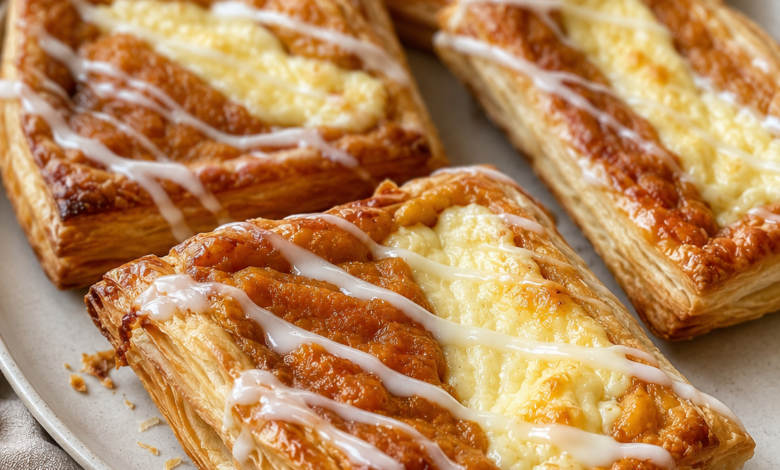
Sweet Potato Cheesecake Danishes with Vanilla Glaze
Quick Answer
Sweet potato cheesecake Danishes combine flaky puff pastry with two creamy fillings: warmly spiced sweet potato and vanilla cheesecake. The pastries are chilled before baking to encourage crisp, defined layers, then finished with a thin vanilla glaze after cooling. They work especially well for fall breakfasts, holiday brunches, or an easy homemade dessert.
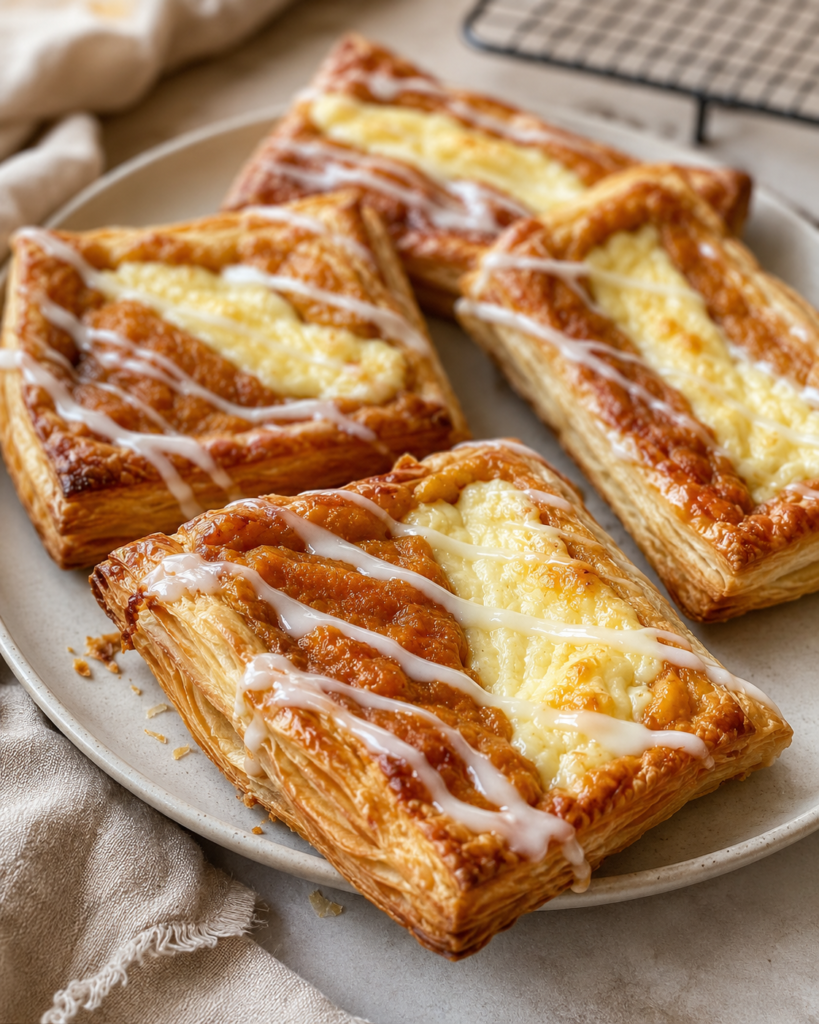
Sweet potato and cheesecake are rich enough on their own, so the goal here isn’t to overload the pastry. Keeping the fillings thick, the puff pastry cold, and the glaze light gives you the contrast that makes these Danishes work: crisp golden edges surrounding soft orange sweet potato and creamy cheesecake centers.
Using frozen puff pastry also makes the recipe much more practical than preparing laminated Danish dough from scratch. You still get attractive flaky layers and plenty of buttery texture without turning a weekend baking project into an all-day job.
If you enjoy this sweet potato and cheesecake combination, Sweet Potato Cheesecake Brownies use the same pairing in a completely different dessert.
Why This Recipe Works
The most important detail is moisture control. Sweet potato tastes wonderful in pastry, but a watery puree can soften puff pastry before it has time to become crisp. Starting with thick mashed sweet potato gives the center a velvety texture without flooding the dough.
The cheesecake mixture is deliberately simple. Full-fat block cream cheese, sugar, egg yolk, vanilla, and a pinch of salt produce a filling that stays creamy while still setting during baking. Keeping the sweet potato and cheesecake mixtures separate also creates the distinctive orange-and-cream appearance of the finished Danishes.
The assembled pastries get a short refrigerator rest before baking. That step firms the fillings and re-chills the fat in the puff pastry. Once the cold pastry reaches the hot oven, its laminated layers expand more effectively and produce the tall, flaky edges you want.
Finally, the glaze goes on only after the pastries have cooled for about 15 minutes. On piping-hot pastry, a powdered-sugar glaze quickly melts and disappears. A short cooling period lets it form visible ribbons while the Danishes are still pleasantly warm.
Recipe Summary
| Recipe Detail | Information |
|---|---|
| Prep Time | 25 minutes |
| Chill Time | 10 minutes |
| Cook Time | 18–22 minutes |
| Cooling Time | 15 minutes |
| Total Time | About 1 hour 10 minutes |
| Servings | 8 large Danishes |
| Course | Breakfast, Brunch, Dessert |
| Cuisine | American |
| Difficulty | Intermediate |
| Estimated Calories | About 310 per Danish |
| Oven Temperature | 400°F |
Ingredients
Sweet Potato Filling
- 3/4 cup cooked, well-mashed sweet potato, cooled
- 2 tablespoons packed light brown sugar
- 1 tablespoon unsalted butter, melted
- 1/2 teaspoon ground cinnamon
- 1/4 teaspoon vanilla extract
- 1/8 teaspoon ground nutmeg
- 1/8 teaspoon fine salt
Cheesecake Filling
- 6 ounces full-fat block cream cheese, softened
- 3 tablespoons granulated sugar
- 1 large egg yolk
- 1/2 teaspoon vanilla extract
- Pinch of fine salt
Pastry
- 1 package frozen puff pastry, 2 sheets, about 17–18 ounces total, thawed but still cold
- 1 large egg
- 1 tablespoon water
Vanilla Glaze
- 3/4 cup powdered sugar
- 1 to 1 1/2 tablespoons milk
- 1/2 teaspoon vanilla extract
- Tiny pinch of salt
Ingredient Notes
Use thick sweet potato
A baked sweet potato is especially useful here because its flesh is usually less watery than boiled sweet potato. Bake until tender, cool it, remove the skin, and mash the flesh smooth before measuring.
If your sweet potato mash looks loose or releases water when stirred, it is too wet for the best pastry texture. You want a thick mixture that stays where you spoon it.
For another way to use sweet potatoes in baking, see this Sweet Potato Cornbread Recipe.
Choose block cream cheese
Full-fat block cream cheese produces a thicker cheesecake filling than spreadable cream cheese sold in tubs. The softer tub varieties generally contain more moisture, which can encourage the filling to spread.
Let the block cream cheese soften enough to mix smoothly, but don’t warm it until it becomes loose or almost liquid.
Keep the puff pastry cold
Thaw frozen puff pastry according to its package directions, but work with it while it still feels cool. If the pastry becomes very soft, sticky, or greasy while you’re assembling the Danishes, return it to the refrigerator for 10–15 minutes.
Equipment
- Large baking sheet
- Parchment paper
- 3 mixing bowls
- Hand mixer or sturdy whisk
- Fork
- Sharp knife or pizza cutter
- Pastry brush
- Spoon or piping bags
- Wire cooling rack
How to Make Sweet Potato Cheesecake Danishes
1. Prepare the oven and baking sheet
Heat the oven to 400°F and line a large baking sheet with parchment paper. Give the oven enough time to reach temperature before the pastries go in; puff pastry needs strong initial heat for good lift.
2. Make the sweet potato filling
Combine the mashed sweet potato, brown sugar, melted butter, cinnamon, vanilla, nutmeg, and salt.
Stir until smooth. The filling should be thick enough to hold its shape on a spoon. If it immediately spreads into a puddle, the sweet potato contains too much moisture.
3. Prepare the cheesecake filling
Beat the softened cream cheese and granulated sugar until smooth. Add the egg yolk, vanilla, and salt and mix just until combined.
The mixture should be creamy but fairly thick. Avoid prolonged whipping, which can incorporate unnecessary air and soften the filling.
4. Cut the puff pastry
Unfold both cold puff-pastry sheets and cut each sheet into four equal rectangles, giving you 8 pastries total.
Arrange them on the parchment-lined baking sheet with a little space between each rectangle.
5. Score and dock the centers
Use a sharp knife to lightly score a border about 1/2 inch from the edge of every rectangle. Don’t cut completely through the dough.
Prick the center area several times with a fork while leaving the border untouched. The score encourages a defined outer edge, while docking helps control how much the filled center rises.
6. Add the sweet potato filling
Spoon approximately 1 1/2 tablespoons of sweet potato filling lengthwise over one side of each pastry center.
Keep the filling within the scored border. Overfilling makes it more likely to spill across the edges during baking.
7. Add the cheesecake filling
Place about 1 1/2 tablespoons of cheesecake mixture beside the sweet potato.
Allow the two fillings to touch naturally, but don’t swirl them completely together. Keeping the orange sweet potato and pale cheesecake areas visible makes each flavor easier to distinguish.
8. Brush the borders with egg wash
Beat the whole egg with 1 tablespoon water.
Lightly brush the exposed pastry borders. Try not to flood the cut sides of the puff pastry with egg wash because sealing those edges can interfere with the layers expanding.
9. Chill the assembled Danishes
Refrigerate the baking sheet for 10 minutes.
When they’re ready for the oven, the pastry should feel cold and firm rather than soft or greasy.
10. Bake until deeply golden
Bake for 18–22 minutes, rotating the baking sheet once if your oven browns unevenly.
The pastries are ready when the outer layers have risen noticeably and become a rich golden brown. The cheesecake filling should look set rather than wet, and the pastry bottoms should be crisp instead of pale and doughy.
11. Cool briefly
Move the pastries to a wire rack and let them cool for about 15 minutes.
The rack prevents trapped moisture from softening the bottoms while also bringing the pastries to a good temperature for glazing.
12. Mix the vanilla glaze
Stir together powdered sugar, 1 tablespoon milk, vanilla, and salt.
Add additional milk only a few drops at a time until the glaze falls from a spoon in a thin ribbon. It should drizzle easily without becoming watery.
13. Glaze and serve
Drizzle the vanilla glaze irregularly over the cooled Danishes.
Leave some pastry and filling exposed rather than covering everything in icing. The golden layers, sweet potato center, and cheesecake filling should remain easy to see.
Chef Tips
- Bake the sweet potato instead of boiling it when possible. Drier flesh helps protect the pastry from excess moisture.
- Measure the sweet potato after cooking and mashing. Whole sweet potatoes vary greatly in size.
- Keep both pastry sheets refrigerated until needed. Work with one at a time if your kitchen is warm.
- Don’t cut through the scored border. You only want to mark where the outer pastry should rise.
- Use a light hand with egg wash. Too much can run down the pastry sides and stick the layers together.
- Leave visible space around the fillings. This gives the border room to expand.
- Watch color rather than relying only on the timer. Properly baked puff pastry should be noticeably golden, not beige.
- Let the Danishes cool on a rack. Leaving hot puff pastry flat on the baking sheet can trap steam beneath it.
- Adjust glaze with drops of milk, not spoonfuls. Powdered-sugar glaze goes from thick to watery quickly.
- Glaze shortly before serving for the cleanest appearance. The pastries will still taste good later, but fresh glaze looks more defined.
Common Mistakes to Avoid
1. Using watery sweet potato
Excess moisture can create a soft center. Use thick mashed sweet potato and avoid adding unnecessary liquid.
2. Letting the puff pastry get warm
Warm pastry becomes soft and loses some of its ability to puff cleanly. Refrigerate it whenever it starts feeling sticky or greasy.
3. Overfilling the centers
More filling may sound better, but too much can overflow and weigh down the pastry. Stay close to the recommended quantities.
4. Cutting through the scored border
A deep cut can separate the center from the border. Score lightly rather than slicing through the sheet.
5. Underbaking
Pale puff pastry often remains soft and doughy inside. Give it enough time to develop a deep golden color and crisp bottom.
6. Using overly soft cheesecake filling
Very warm cream cheese or excessive mixing can make the filling spread. Start with softened—not melted—cream cheese and mix only until smooth.
7. Glazing immediately from the oven
Hot pastries melt the glaze almost on contact. Let them cool for about 15 minutes before drizzling.
Variations
Maple Sweet Potato Danishes
Replace 1 tablespoon of brown sugar in the sweet potato mixture with 1 tablespoon pure maple syrup. Because maple syrup adds liquid, use especially thick sweet potato puree.
Pecan Sweet Potato Danishes
Scatter a small amount of finely chopped toasted pecans over the sweet potato filling before baking. About 1–2 tablespoons for the entire batch is enough to provide crunch without overwhelming the creamy center.
Mini Sweet Potato Danishes
Cut each puff-pastry sheet into six rectangles instead of four and reduce the amount of filling in each. Begin checking them around 15 minutes because smaller pastries generally bake faster.
Extra-Cinnamon Version
Increase the cinnamon in the sweet potato filling from 1/2 teaspoon to 3/4 teaspoon. This gives the pastries a warmer spice profile without changing their basic structure.
Storage Instructions
Room Temperature
These pastries contain cream cheese filling, so room-temperature storage isn’t recommended beyond normal serving time. Refrigerate leftovers within about 2 hours.
Refrigerator
Place cooled Danishes in a shallow airtight container and refrigerate for up to 3 days.
Freezer
For the best presentation, freeze the Danishes before glazing. Arrange completely cooled pastries in a freezer-safe container, using parchment between layers if needed, and freeze for up to 1 month.
Best Storage Container
Use a shallow airtight container with enough space that the pastries aren’t crushed. Very deep containers encourage stacking, which can damage the flaky tops.
How to Reheat
The oven gives the best balance of a warm center and crisp pastry.
Heat refrigerated Danishes at 325°F for 6–8 minutes, or until warmed through and lightly crisp again.
An air fryer also works well. Reheat at roughly 300–320°F for 3–4 minutes, checking early to prevent the edges from becoming too dark.
A microwave is the quickest option, but it softens puff pastry considerably. Use it only when crisp texture isn’t a priority.
Make-Ahead Instructions
Both fillings can be prepared ahead and refrigerated separately in covered containers. For best pastry performance, keep the puff pastry refrigerated and assemble the Danishes closer to baking time.
You can also assemble the pastries earlier the same day and keep them refrigerated on the covered baking sheet until you’re ready to bake. The important point is to keep the puff pastry cold and prevent the fillings from sitting on it longer than necessary.
For longer storage, baking and freezing the finished unglazed Danishes is more reliable than holding fully assembled raw pastries for an extended period.
Serving Suggestions
These Danishes are rich enough to serve on their own, especially while they’re still slightly warm. For breakfast or brunch, pair them with fresh berries, sliced apples or pears, or another simple fruit option.
Coffee, black tea, chai, and cold milk all work naturally with the warm cinnamon, vanilla, sweet potato, and cream cheese flavors.
For a larger fall or holiday spread, pair them with savory eggs and fruit so the table doesn’t become overly sweet. You can also add Southern Candied Sweet Potatoes to your sweet potato recipe collection for holiday meal planning.
Frequently Asked Questions
Can I use canned sweet potato?
Yes, if it is plain sweet potato puree rather than sweetened pie filling. Check the consistency before using it. If it seems watery, excess moisture may soften the puff pastry.
Why didn’t my puff pastry rise?
The pastry may have become too warm, the oven may not have been fully preheated, or egg wash may have run heavily over the cut edges. Keep the dough cold and bake at the full 400°F temperature.
How do I keep the bottom from getting soggy?
Use thick sweet potato filling, avoid overfilling, dock the center, bake until the pastry is deeply golden, and transfer the finished Danishes to a wire rack instead of leaving them on the hot sheet.
Do sweet potato cheesecake Danishes need to be refrigerated?
Yes. Because they contain a cream cheese and egg-yolk filling, leftovers should be refrigerated rather than stored on the counter for extended periods.
Can I freeze them?
Yes. Cool the Danishes completely and freeze them in an airtight container for up to one month. Freezing them without glaze generally gives you a cleaner-looking pastry after reheating.
Can I make them the night before?
The fillings can easily be made ahead. For the best pastry texture, assemble the Danishes closer to baking time or refrigerate assembled pastries only for a relatively short period before baking.
Why is chilling before baking important?
Chilling firms the pastry fat after handling. Starting with cold puff pastry encourages the laminated layers to rise distinctly once they hit the hot oven.
When should I add the glaze?
Wait about 15 minutes after baking. The Danishes can still be warm, but they shouldn’t be piping hot or the glaze will melt into the surface.
Can I make these without cheesecake filling?
You can make a sweet-potato-only version, but the flavor, appearance, and texture will change. For a different cream-cheese-focused dessert, see this Easy Cream Cheese Cake Recipe.
Key Takeaways
- Use thick, cooled sweet potato to help prevent soggy pastry.
- Keep the puff pastry cold from shaping through baking.
- Maintain separate sweet potato and cheesecake areas for the best flavor and appearance.
- Bake until the pastry reaches a deep golden brown, not merely until the timer ends.
- Cool briefly before glazing, and refrigerate leftovers for up to 3 days.
Quick Recipe Summary
Sweet potato cheesecake Danishes are made by filling scored puff-pastry rectangles with a thick cinnamon-spiced sweet potato mixture and a simple cream cheese cheesecake filling. The assembled pastries are chilled for 10 minutes, brushed around the exposed border with egg wash, and baked at 400°F for 18–22 minutes until deeply golden and flaky. After cooling for about 15 minutes, they are finished with a thin vanilla glaze. Keeping the sweet potato relatively dry and the puff pastry cold are the two most important steps for achieving crisp layers and creamy, well-defined centers.
More Recipes to Explore
- Sweet Potato Cheesecake Brownies
- Sweet Potato Cornbread
- Southern Candied Sweet Potatoes
- Salted Caramel Red Velvet Cake
- Cinnamon Roll French Toast Rolls
Useful Lniks
- USDA Safe Minimum Internal Temperatures
- USDA Leftovers and Food Storage
- FDA Food Safety During Preparation
- Cooperative Extension Guide to Baking Potatoes
- MyPlate Vegetable Serving Guidance