Homemade Beef Curry
Quick Answer: Homemade beef curry is made by browning chunks of beef chuck, building a flavorful base with onion, garlic, ginger, tomatoes, and warm curry spices, then gently braising the beef until fork-tender. Finishing the curry uncovered concentrates the cooking liquid into a thick, rich gravy that coats the meat without needing flour or cornstarch.
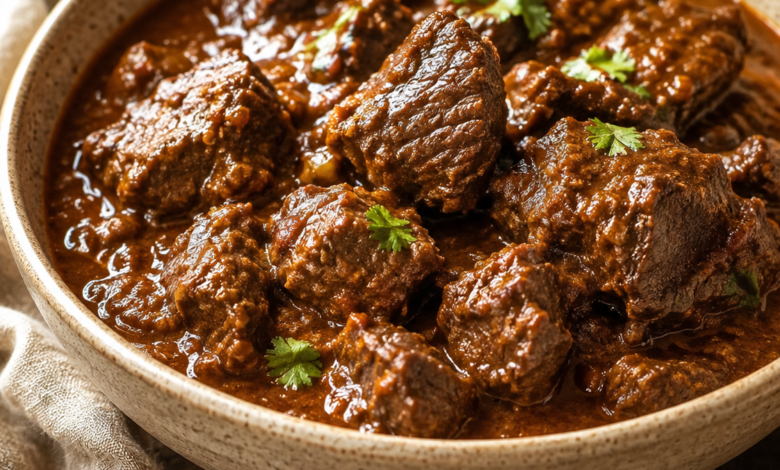
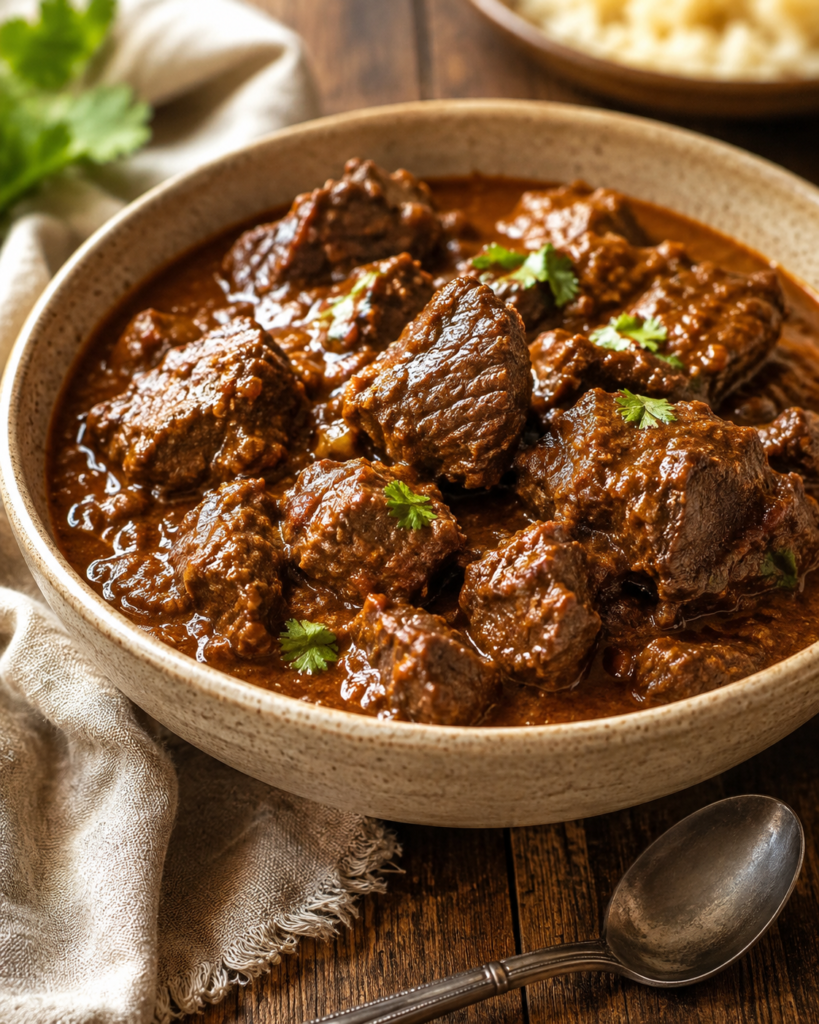
This homemade beef curry is the kind of dinner that rewards a little patience. Beef chuck slowly becomes tender while the curry gravy develops a deep reddish-brown color and savory, warmly spiced flavor.
The method is straightforward, but a few details make a noticeable difference: brown the beef in batches, briefly bloom the spices, and don’t rush the braise. Most of the cooking time is hands-off once the pot settles into a gentle simmer.
Serve it over steamed rice or alongside warm naan for a comforting dinner. If you enjoy slow-cooked meals like this, Slow Cooker Beef and Noodles: The Ultimate Comfort Food Recipe is a useful place to find similar ideas.
Why This Recipe Works
Beef chuck benefits from slow cooking. Chuck contains connective tissue that softens during a long, moist braise. Instead of choosing a very lean cut and trying to cook it quickly, this recipe gives the beef enough time to become fork-tender while staying juicy.



Browning creates the flavor base. Searing the beef in batches leaves deeply browned bits in the bottom of the pot. Those dissolve into the gravy later, giving it more depth than you’d get by simply simmering raw beef.
The spices get a brief head start. Curry powder, cumin, coriander, paprika, and turmeric are cooked briefly in the onion mixture before the liquid goes in. That short step develops their aroma without giving them enough time to scorch.
The sauce thickens naturally. The beef spends most of its cooking time covered so it has enough moisture to tenderize. The lid comes off toward the end, allowing excess water to evaporate and the gravy to concentrate naturally.
Recipe Summary
| Recipe Detail | Information |
|---|---|
| Prep Time | 20 minutes |
| Cook Time | 1 hour 50 minutes |
| Rest Time | 10 minutes |
| Total Time | 2 hours 20 minutes |
| Servings | 6 |
| Course | Main Course |
| Cuisine | Curry-inspired |
| Difficulty | Intermediate |
| Estimated Calories | Approximately 445 per serving |
Ingredients
For the Beef Curry
- 2 1/2 pounds beef chuck roast, trimmed of excess fat and cut into 1 1/2-inch chunks
- 1 1/2 teaspoons kosher salt, divided
- 1/2 teaspoon freshly ground black pepper
- 2 tablespoons neutral cooking oil, divided
- 1 large yellow onion, finely chopped
- 4 garlic cloves, minced
- 1 tablespoon finely grated fresh ginger
- 2 tablespoons curry powder
- 2 teaspoons ground cumin
- 1 teaspoon ground coriander
- 1 teaspoon smoked or sweet paprika
- 1/2 teaspoon ground turmeric
- 1/4 teaspoon cayenne pepper, optional
- 2 tablespoons tomato paste
- 1 cup crushed tomatoes
- 2 cups low-sodium beef broth, plus more if needed
- 1 teaspoon brown sugar
- 1 tablespoon Worcestershire sauce
- 1 small cinnamon stick
- 1 tablespoon fresh lemon juice
- 2 tablespoons chopped fresh cilantro, for serving
Ingredient Notes
Beef chuck: Look for a chuck roast with moderate marbling. Cut it into roughly 1 1/2-inch pieces, but don’t worry about making every cube identical. Slight variation gives the finished curry a more natural texture.
Curry powder: Different blends vary in both flavor and heat. A mild or medium everyday curry powder works well here, and you can control additional heat with the cayenne.
Low-sodium beef broth: Using a lower-sodium broth makes it easier to adjust the seasoning after the sauce reduces.
Fresh ginger and garlic: These form an important aromatic base, so fresh versions are preferable here.
Lemon juice: Added at the end, a small amount of acidity helps balance the rich beef and concentrated gravy.
Equipment
- Cutting board
- Chef’s knife
- Measuring cups and spoons
- Large Dutch oven or heavy-bottomed pot with lid
- Wooden spoon
A Dutch oven is especially useful because its heavy base distributes heat evenly during the long simmer, but any sturdy, heavy-bottomed pot with a well-fitting lid can work.
How to Make Beef Curry
1. Prepare the beef
Pat the beef chunks thoroughly dry with paper towels. Season them with 1 teaspoon kosher salt and the black pepper.
Removing surface moisture matters because wet beef tends to steam rather than brown. The surface should look dry before it goes into the hot pot.
2. Brown the first batch
Heat 1 tablespoon oil in the Dutch oven over medium-high heat.
Arrange half of the beef in a single layer with a little space between the pieces. Sear for about 3–4 minutes per side where practical, until several surfaces develop a deep brown crust.
Transfer the browned beef to a plate. It doesn’t need to be cooked through.
3. Brown the remaining beef
Add the remaining tablespoon of oil if the pot looks dry, then repeat with the remaining beef.
Avoid putting all 2 1/2 pounds into the pot at once. An overcrowded pan traps moisture, which makes good browning much harder.
Those dark deposits left behind in the pot are useful. They’ll become part of the gravy.
4. Soften the onion
Reduce the heat to medium and add the chopped onion with the remaining 1/2 teaspoon salt.
Cook for 7–9 minutes, stirring occasionally, until the onion is soft and lightly golden.
If the browned deposits on the bottom begin getting too dark, add about a tablespoon of beef broth and scrape them loose.
5. Add the garlic and ginger
Stir in the minced garlic and grated ginger. Cook for about 45 seconds.
They should become noticeably fragrant but shouldn’t turn dark brown.
6. Bloom the spices
Add the curry powder, cumin, coriander, paprika, turmeric, and optional cayenne.
Stir continuously for approximately 30 seconds. Once the spices smell fragrant, move on rather than continuing to cook them dry.
Burned ground spices can introduce bitterness that is difficult to correct later.
7. Cook the tomato paste
Stir in the tomato paste and cook for 1–2 minutes.
It should darken slightly and begin sticking gently to the bottom of the pot. This small step helps deepen both the flavor and the reddish-brown color of the finished curry.
8. Build the curry gravy
Pour in the crushed tomatoes and beef broth. Add the brown sugar, Worcestershire sauce, and cinnamon stick.
Scrape across the bottom of the pot with a wooden spoon to loosen the browned deposits.
9. Braise until the beef begins to tenderize
Return the browned beef and any juices collected on the plate to the pot.
Bring the liquid to a gentle simmer, cover, and reduce the heat to low. Cook for about 75 minutes, stirring two or three times.
The important word here is gentle. You want occasional bubbles rather than aggressive boiling.
Slow Cooked Guinness Beef Stew with Mustard Herb Dumplings
10. Reduce the gravy
Remove the lid and continue simmering for another 20–30 minutes.
During this stage, the beef should become fork-tender while the gravy reduces. The finished sauce should cling to the meat but still leave some gravy pooling around the pieces.
If the liquid becomes too thick before the beef is tender, add a splash of beef broth and continue cooking.
11. Finish the flavor
Remove and discard the cinnamon stick. Stir in the lemon juice, then taste the gravy.
Add more salt only if needed. Remember that reducing the sauce concentrates its seasoning, which is why the final adjustment comes near the end.
12. Rest before serving
Remove the pot from the heat and let the curry rest for 10 minutes.
Spoon it into a deep serving bowl and finish with a restrained scattering of chopped cilantro.
How to Make Beef Curry Tender
The most important factors are the right cut, enough moisture, gentle heat, and sufficient time.
Beef chuck can still feel tough at the estimated cooking time because individual roasts vary. If a fork doesn’t slide easily into a piece, the beef usually needs more braising—not higher heat.
Keep the pot at a gentle simmer and add a small amount of broth if the sauce is becoming too concentrated. Continue cooking until the meat yields easily when tested with a fork.
Don’t rely exclusively on the clock. Texture is the better indication that the beef is ready.
How to Get Thick, Rich Curry Gravy
This beef curry doesn’t require flour or cornstarch to produce a substantial gravy.
The crushed tomatoes, tomato paste, onions, and braising liquid naturally create body. Keeping the pot covered during most of the braise protects the beef from losing too much moisture before it becomes tender.
Once the beef is nearly done, removing the lid allows water to evaporate. A gentle 20–30 minute uncovered simmer concentrates the gravy until it coats the meat.
If it becomes thicker than you want, simply loosen it with beef broth a few tablespoons at a time.
Chef Tips
- Cut the beef fairly large. About 1 1/2 inches gives chuck enough substance to withstand the long cooking time.
- Dry the meat thoroughly. Surface moisture is one of the biggest obstacles to good browning.
- Use batches. Giving the beef room in the pot produces better color than crowding everything together.
- Watch the heat after adding spices. Ground spices can scorch quickly once they hit the hot pot.
- Use low-sodium broth. The gravy reduces considerably, so starting with heavily salted broth can make the final curry too salty.
- Don’t force tenderness with higher heat. More aggressive boiling doesn’t replace the time chuck needs to soften.
- Reduce only after the beef is mostly tender. This is the easiest way to get both tender meat and concentrated gravy.
- Taste after reduction. Salt, spice, and acidity become more concentrated as water evaporates.
- Add the lemon at the end. Its brightness is more noticeable when it isn’t subjected to the entire braise.
- Let the curry rest briefly. Ten minutes off the heat gives the finished gravy time to settle before serving.
Common Mistakes to Avoid
1. Crowding the pot
Too much beef at once releases enough moisture to lower the pan temperature. The meat turns gray instead of developing a deep brown crust.
Fix: Brown in two batches and give the pieces some space.
2. Starting with wet beef
Moisture on the meat’s surface creates steam.
Fix: Pat the beef thoroughly dry before seasoning and searing.
3. Burning the curry spices
Ground spices need only a short time in the hot pot.
Fix: Stir continuously and add the next ingredients as soon as the spices become fragrant. Severely burned spices are difficult to rescue.
4. Boiling the curry aggressively
A hard boil can make the cooking process less gentle than chuck needs.
Fix: Reduce the heat until you see only a steady, gentle simmer.
5. Stopping because the timer says the beef is done
Beef chuck doesn’t become tender on an exact schedule.
Fix: Test a piece with a fork. If it still resists, continue cooking.
6. Reducing the sauce too early
If too much liquid evaporates before the beef softens, you may end up with thick gravy surrounding tough meat.
Fix: Keep the pot covered during most of the braise and reduce toward the end.
7. Letting the gravy become too thick
Reduction can happen quickly during the final stage.
Fix: Stir more frequently as the sauce thickens. Add small amounts of broth if necessary.
8. Adding too much salt early
Broth and seasoning become more concentrated as the curry reduces.
Fix: Season moderately at the beginning and make the final adjustment after reduction.
Variations
Spicier Beef Curry
Increase the cayenne to 1/2 teaspoon or cook a finely chopped fresh chile with the garlic and ginger. The basic cooking method stays the same, but the finished curry will have noticeably more heat.
Mild Beef Curry
Leave out the cayenne and choose a mild curry powder. You’ll retain the warm aromatic flavor without as much heat, making this version more approachable for a family meal.
Slow Cooker Beef Curry
Brown the beef and prepare the onions, aromatics, spices, and tomato paste on the stovetop first. Transfer everything to a slow cooker and reduce the beef broth to about 1 1/2 cups.
Cook on LOW for approximately 7–8 hours. If the gravy is too thin afterward, transfer it to a saucepan and reduce it separately.
Storage Instructions
Room temperature: Don’t leave cooked beef curry at room temperature for more than 2 hours.
Refrigerator: Cool the curry promptly and transfer it to an airtight container. Refrigerate for up to 4 days.
Freezer: Store in freezer-safe airtight containers for up to 3 months for best quality. Leave a little room for expansion.
Best container: Shallow airtight containers make portioning easier and allow leftovers to cool more efficiently than one very deep container.
USDA Leftover Food Safety Guidance
How to Reheat
The stovetop is the best option for maintaining the gravy consistency and gently reheating the beef.
Place the amount you need in a saucepan with a small splash of water or beef broth. Cover and warm over medium-low heat, stirring occasionally, until steaming hot throughout.
For individual portions, the microwave is convenient. Place the curry in a microwave-safe dish, cover loosely, and reheat in intervals, stirring midway so it heats evenly.
Avoid prolonged high heat, which can reduce the gravy excessively while the beef reheats.
Make-Ahead Instructions
Beef curry is well suited to advance preparation.
Prepare the recipe completely, cool it promptly, and refrigerate it in an airtight container. When you’re ready to serve, reheat it gently on the stovetop with a splash of broth or water if the gravy has thickened in the refrigerator.
For the freshest presentation, wait until serving to add the cilantro.
Serving Suggestions
Rice: Steamed basmati or long-grain white rice is an easy choice because it absorbs the curry gravy without competing with its flavor.
Bread: Warm naan or another soft flatbread works well for scooping up the sauce.
Vegetables: Roasted cauliflower, green beans, or simply cooked vegetables can make the meal more substantial without adding another heavy component.
Salad: A cucumber-based salad provides a cool, crisp contrast to the warm curry.
Drinks: Sparkling water with lemon, iced tea, or another simple non-sweet beverage complements the rich meal.
Dessert: Finish with something fresh and relatively light, such as fruit with yogurt.
Smoked Neck Bones Red Beans and Rice with Andouille Sausage (Southern Comfort Recipe)
Frequently Asked Questions
What cut of beef is best for beef curry?
Beef chuck is an excellent choice for this recipe because its connective tissue softens during prolonged moist cooking. Very lean cuts can become dry before developing the same tender braised texture.
How do I make beef tender in curry?
Use a braising-friendly cut such as chuck, maintain a gentle simmer, and give it enough time. If the beef is still tough after the suggested cooking time, continue simmering rather than increasing the heat.
How long should beef curry simmer?
This recipe braises covered for about 75 minutes and then cooks uncovered for another 20–30 minutes. The exact time can vary because individual pieces of beef chuck don’t tenderize at precisely the same rate.
Why is my beef curry still tough?
It most likely needs additional cooking. Keep it at a gentle simmer with sufficient liquid until a fork slides easily into the beef.
How do you thicken beef curry?
Remove the lid once the beef is mostly tender and gently simmer the curry until excess liquid evaporates. This naturally concentrates the gravy without adding flour or cornstarch.
Can I make beef curry ahead of time?
Yes. Cook it completely, cool it promptly, and refrigerate it in an airtight container. Reheat gently on the stovetop, adding a little broth if the gravy has thickened.
Can you freeze beef curry?
Yes. Freeze cooled curry in airtight freezer-safe containers for up to 3 months for best quality. Thaw it safely in the refrigerator before reheating.
What should I serve with beef curry?
Steamed basmati or long-grain rice, naan, simple cooked vegetables, and a fresh cucumber salad all complement the rich curry gravy.
Can I make this beef curry in a slow cooker?
Yes, but brown the beef and cook the aromatics, spices, and tomato paste on the stovetop first. Use approximately 1 1/2 cups broth and cook on LOW for about 7–8 hours.
Key Takeaways
- Beef chuck is well suited to the long, gentle braise needed for tender beef curry.
- Browning the meat in batches builds a deeper flavor base for the gravy.
- Keep the curry covered while the beef tenderizes, then uncover it to concentrate the sauce.
- Judge the beef by fork tenderness rather than relying solely on cooking time.
- Leftover curry can be refrigerated for up to 4 days or frozen for up to 3 months for best quality.
Quick Recipe Summary
Homemade beef curry combines browned beef chuck with onion, garlic, ginger, curry powder, cumin, coriander, tomatoes, and beef broth. The beef gently braises until fork-tender, then the pot is uncovered so the cooking liquid can reduce into a thick reddish-brown gravy that coats the meat. The recipe takes about 2 hours 20 minutes including preparation and resting and serves six. Serve it with steamed rice, naan, or a fresh cucumber salad. Refrigerate leftovers promptly in an airtight container for up to four days, or freeze them for up to three months for best quality.
More Recipes:
- Braised Beef Short Ribs Recipe with Mashed Potatoes
- Easy Crockpot Beef Tips with Gravy Recipe
- Best Homemade Ribeye Steak Recipe – Juicy & Flavorful
- Philly Cheesesteak Meatloaf: A Classic American Twist
- Garlic Butter Steak Bites with Creamy Parmesan Sauce
- Beef Guinness Pot Pie – A Hearty & Flavorful Comfort Dish