Quick Answer
This beef stuffed shells recipe combines jumbo pasta shells filled with seasoned ground beef, creamy ricotta, and Parmesan, baked in rich tomato sauce beneath a layer of melted mozzarella. The shells are cooked slightly under al dente before stuffing, then baked covered to keep them tender. It’s a comforting Italian-American dinner that serves six and takes about 1 hour and 20 minutes.
There’s something especially comforting about a baking dish full of tender pasta, savory ground beef, and bubbling cheese. These beef and ricotta stuffed shells bring those familiar Italian-American flavors together in generous portions that are easy to serve at the family table.
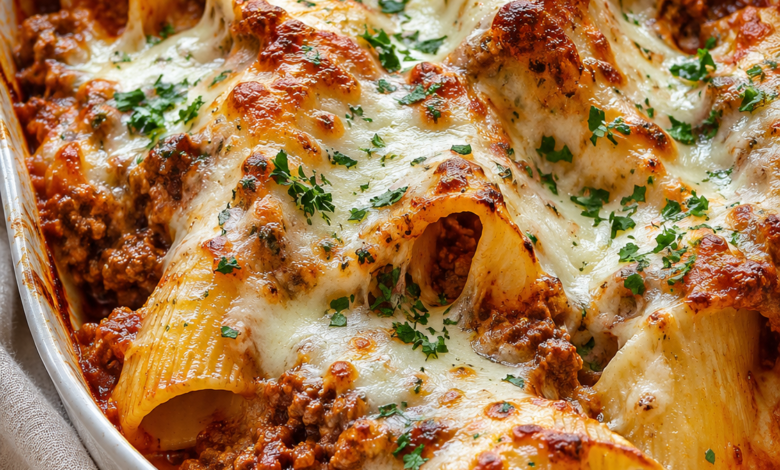
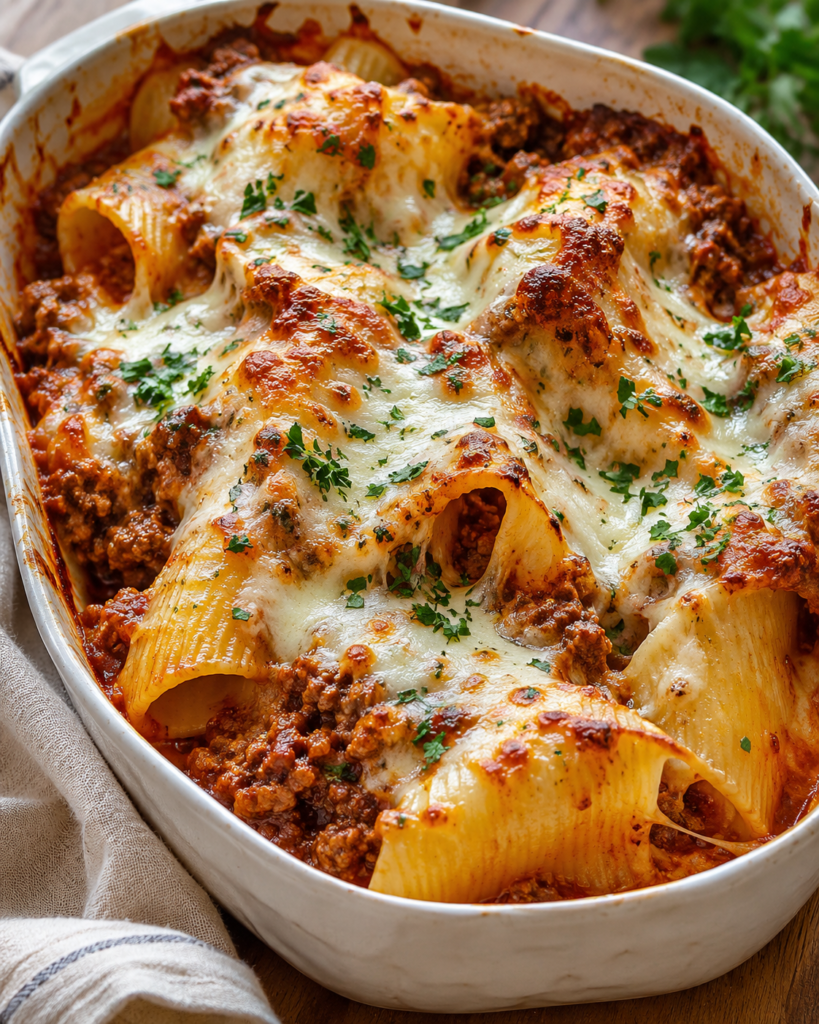
Each jumbo pasta shell holds a creamy beef filling, while marinara sauce keeps the pasta moist as it bakes. A thick layer of mozzarella and Parmesan melts over the top, developing golden-brown spots around the edges.
The recipe has a few separate stages, but none requires complicated techniques. Cooking the shells slightly under al dente, draining the beef properly, and covering the casserole during the first part of baking make a noticeable difference in the finished texture.
If you enjoy rich, cheesy pasta dishes, you might also like our Creamy Crockpot Lasagna Soup, which combines similar flavors in an easy slow-cooker dinner.
Why This Recipe Works
Creamy filling without excess liquid. Whole-milk ricotta blends with the seasoned ground beef to create a rich filling that remains tender during baking. Parmesan adds savory flavor, while the egg helps the filling hold together.
Tender pasta that keeps its shape. Cooking the jumbo shells for approximately two minutes less than the package’s al dente time leaves them firm enough to handle. They finish cooking in the tomato sauce rather than becoming overly soft.
Balanced beef and tomato flavors. Browning the ground beef before combining it with the cheese develops a deeper savory taste. Marinara and crushed tomatoes provide enough moisture and acidity to balance the rich filling.
Golden mozzarella topping. Covering the baking dish initially helps the filling heat through. Removing the foil near the end allows the cheese to melt fully and develop appetizing browned spots.
Practical for family meals. The stuffed shells can be assembled ahead of time, refrigerated, and baked when needed. Leftovers also reheat well with a little extra sauce.
Recipe Card
Creamy Ricotta and Beef Stuffed Pasta Shells
Tender jumbo pasta shells filled with seasoned ground beef, creamy ricotta, and Parmesan, baked in tomato sauce with a golden mozzarella topping.
| Recipe Detail | Information |
|---|---|
| Prep Time | 25 minutes |
| Cook Time | 45 minutes |
| Rest Time | 10 minutes |
| Total Time | 1 hour 20 minutes |
| Servings | 6 |
| Cuisine | Italian-American |
| Course | Main Course, Dinner |
| Difficulty | Easy to Moderate |
| Calories | Approximately 620 per serving |
| Cooking Method | Stovetop and Oven-Baked |
Nutrition is an estimate. Actual values depend on the ingredients, brands, and portion sizes used.
Ingredients for Beef and Ricotta Stuffed Shells
This recipe uses everyday grocery-store ingredients, with most of the flavor coming from the browned beef, tomato sauce, Italian seasoning, and cheese.
Jumbo Pasta Shells
- 12 ounces jumbo pasta shells (approximately 24–28 shells)
- 1 tablespoon salt, for the pasta cooking water
Ground Beef and Ricotta Filling
- 1 pound lean ground beef (85% or 90% lean)
- 1 tablespoon olive oil
- 1 small yellow onion, finely diced
- 3 garlic cloves, minced
- 1 teaspoon Italian seasoning
- ½ teaspoon kosher salt, or to taste
- ½ teaspoon freshly ground black pepper
- ¼ teaspoon crushed red pepper flakes (optional)
- ¾ cup whole-milk ricotta cheese
- ¼ cup grated Parmesan cheese
- 1 large egg, lightly beaten
Tomato Sauce
- 1 tablespoon olive oil
- 2 cups marinara sauce
- ½ cup crushed tomatoes
- ½ teaspoon dried oregano
- ¼ teaspoon garlic powder
- ¼ cup water, as needed to adjust consistency
Cheese Topping
- 2 cups shredded low-moisture mozzarella cheese
- ¼ cup freshly grated Parmesan cheese
- 1 tablespoon freshly chopped parsley
Ingredient Notes
Jumbo pasta shells: Look for shells specifically labeled for stuffing. Smaller pasta shells won’t hold enough filling. A few may split during boiling, so having extras available is useful.
Ground beef: Lean ground beef provides savory flavor without leaving excessive grease in the filling. Drain off any extra fat after browning.
Whole-milk ricotta: This gives the filling its creamy texture. If the ricotta appears watery, drain it briefly before mixing.
Mozzarella: Low-moisture mozzarella produces a thick, melted topping. Fresh mozzarella contains more water and can change the casserole’s consistency.
Marinara sauce: Choose a sauce you enjoy eating on its own. Because it makes up much of the casserole’s flavor, a well-seasoned marinara makes a difference.
Equipment Needed
You’ll need a large pot for the pasta, a colander, a large skillet, a mixing bowl, a 9 × 13-inch baking dish, a wooden spoon or spatula, measuring cups and spoons, aluminum foil, and a meat thermometer for checking the center of the casserole.
How to Make Beef Stuffed Shells
The preparation is easiest when divided into three parts: cooking the pasta, preparing the beef and ricotta filling, and assembling the casserole before baking.
Step 1: Preheat the Oven
Preheat your oven to 375°F (190°C).
Lightly grease a 9 × 13-inch baking dish with cooking spray or a little olive oil. Position an oven rack in the center.
Step 2: Cook the Pasta Shells
Bring a large pot of water to a rolling boil. Add 1 tablespoon of salt, followed by the jumbo pasta shells.
Cook for approximately two minutes less than the package’s recommended al dente cooking time.
The shells should bend easily without falling apart. Drain carefully and arrange them in a single layer on a lightly oiled tray so they don’t stick together.
Step 3: Brown the Ground Beef
Heat 1 tablespoon olive oil in a large skillet over medium-high heat.
Add the ground beef and break it into small pieces with a wooden spoon. Cook for approximately 6–8 minutes, until browned and no pink remains.
Drain excess grease if necessary. Small browned pieces add flavor and help the filling distribute evenly inside the shells.
Step 4: Cook the Onion and Garlic
Reduce the heat to medium and add the diced onion to the browned beef.
Cook for 3–4 minutes, stirring occasionally, until softened and translucent.
Add the minced garlic and cook for another 30 seconds, until fragrant. Avoid browning the garlic too deeply.
Step 5: Season the Beef
Stir in the Italian seasoning, kosher salt, black pepper, and optional crushed red pepper flakes.
Cook for approximately one minute, then remove the skillet from the heat.
Allow the beef mixture to cool for about five minutes before combining it with the ricotta.
Step 6: Make the Creamy Ricotta Filling
Transfer the beef mixture to a large mixing bowl.
Add the ricotta cheese and ¼ cup grated Parmesan. Stir gently until the filling is evenly combined.
Once the mixture is no longer hot, add the lightly beaten egg and stir until incorporated.
The finished filling should look thick and creamy rather than runny. This consistency makes the pasta shells easier to stuff.
Step 7: Prepare the Tomato Sauce
Return the skillet to medium heat and add the remaining tablespoon of olive oil.
Stir in the marinara sauce, crushed tomatoes, dried oregano, and garlic powder.
Simmer gently for about five minutes. If the sauce becomes too thick, stir in up to ¼ cup water.
The finished sauce should be thick enough to cling to a spoon but loose enough to spread between the shells.
Step 8: Add Sauce to the Baking Dish
Spread approximately one cup of the tomato sauce across the bottom of the prepared baking dish.
Make sure the entire base is covered. This helps prevent sticking and keeps the underside of the pasta moist.
Step 9: Fill the Pasta Shells
Hold a cooked shell open and spoon approximately 1½–2 tablespoons of the beef and ricotta mixture into the center.
Place it in the baking dish with the opening facing slightly upward.
Repeat with the remaining shells, arranging them close together without crushing them. Depending on their size, you should fill approximately 24–28 shells.
Step 10: Add the Remaining Tomato Sauce
Spoon the remaining sauce over and around the stuffed shells.
Let it settle between the pasta pieces while leaving some of the filling and ridged pasta visible.
The sauce helps the shells finish cooking in the oven and prevents exposed edges from becoming too dry.
Step 11: Add the Cheese
Sprinkle two cups of shredded mozzarella evenly over the shells.
Add the remaining ¼ cup grated Parmesan.
Cover most of the pasta with cheese, leaving a few small areas where the tomato meat sauce can show through.
Step 12: Bake Covered
Cover the baking dish loosely with aluminum foil.
Bake at 375°F for 20 minutes.
The covering helps retain moisture while the filling heats through and the pasta finishes cooking.
Step 13: Bake Until Golden
Remove the foil carefully.
Continue baking for another 10–15 minutes, until the cheese is fully melted and the tomato sauce bubbles around the edges.
The topping should develop small golden-brown spots. Check that the center of the filling reaches 165°F (74°C).
For additional browning, broil for one to two minutes while watching closely.
Step 14: Rest the Casserole
Remove the baking dish from the oven and allow it to rest for approximately 10 minutes.
This helps the filling and melted cheese settle, making the shells easier to lift out without breaking.
Step 15: Garnish and Serve
Sprinkle the freshly chopped parsley over the casserole.
Serve approximately four stuffed shells per person, depending on their size.
Spoon a little additional sauce from the baking dish over each portion. Serve while the cheese is warm and creamy.
Chef Tips
- Keep a few extra shells handy. Some jumbo pasta shells may tear during boiling. Having extras makes assembling the casserole easier.
- Use a gentle boil. Aggressive boiling can knock large shells against one another and cause splitting.
- Let the beef cool before adding the egg. A very hot mixture can begin cooking the egg before the filling is assembled.
- Check the ricotta for excess moisture. Draining unusually wet ricotta helps keep the filling creamy rather than watery.
- Break the beef into small pieces. Large meat chunks make the shells harder to fill and can prevent the filling from sitting neatly inside.
- Taste the beef before adding the raw egg. This is the easiest stage to adjust the seasoning safely.
- Use a spoon that fits the shells. A small spoon makes filling easier and helps prevent accidental tearing.
- Don’t overpack the baking dish. The sauce needs room to settle around the shells and help them cook evenly.
- Watch the cheese during broiling. Mozzarella can change from golden to burned quickly under direct heat.
- Keep extra marinara available for leftovers. A spoonful added during reheating helps restore moisture to the pasta.
Common Mistakes to Avoid
| Mistake | Why It Happens | Prevention or Fix |
|---|---|---|
| Pasta shells tear | They’re boiled too long or handled roughly | Undercook slightly; use intact extras |
| Filling is watery | Ricotta contains too much moisture or beef isn’t drained | Drain excess liquid before mixing |
| Filling is difficult to spoon | Beef pieces are too large | Break the meat into smaller crumbles |
| Pasta becomes dry | There isn’t enough sauce around the shells | Spread sauce beneath and around the pasta |
| Cheese browns too soon | The casserole is uncovered for too long | Cover for the first 20 minutes |
| Pasta is overly soft | Shells were fully cooked before baking | Leave them slightly firm when boiling |
| Filling lacks flavor | The beef wasn’t seasoned adequately | Adjust seasoning before adding the egg |
| Shells break when served | The casserole is served immediately | Rest for 10 minutes before portioning |
If the finished casserole seems a little dry, spoon warm marinara over individual servings. This won’t reverse overcooked pasta, but it can improve moisture and flavor.
Variations
Extra-Cheesy Beef Stuffed Shells
Add an extra ½ cup shredded mozzarella to the topping and another ¼ cup ricotta to the filling. The result will be richer and creamier, with a slightly less prominent beef flavor.
Spicy Beef Stuffed Shells
Increase the crushed red pepper flakes to ½ teaspoon and add a small pinch of cayenne pepper to the beef mixture. Adjust the seasoning before adding the egg.
Spinach and Ricotta Beef Shells
Add ½ cup finely chopped, cooked spinach to the ricotta filling. Squeeze the spinach thoroughly before mixing to prevent excess moisture.
Make-Ahead Family Casserole
Assemble the recipe through the cheese-topping step, cover tightly, and refrigerate for up to 24 hours. Bake when ready, allowing extra time if the casserole goes directly from the refrigerator to the oven.
Storage Instructions
Room Temperature
Do not leave the cooked stuffed shells at room temperature for longer than two hours. In temperatures above 90°F, refrigerate within one hour.
Refrigerator
Transfer leftovers to shallow, airtight containers and refrigerate promptly at 40°F or below.
Store refrigerated stuffed shells for up to three to four days.
Freezer
Cool the stuffed shells safely before transferring portions to freezer-safe airtight containers.
Freeze for up to two to three months for the best quality. The pasta and ricotta filling may soften slightly after thawing.
Best Storage Container
Shallow glass containers with tight-fitting lids work well for refrigeration. For freezing, use freezer-safe containers that limit air exposure.
Divide large batches into smaller portions so they cool and reheat more evenly.
How to Reheat
Oven Method
The oven is the preferred method when you want to preserve the casserole-style texture.
Preheat to 350°F (175°C).
Arrange the leftovers in an oven-safe dish and add one or two tablespoons of water or tomato sauce.
Cover loosely with foil and heat for approximately 15–25 minutes, depending on the portion size and starting temperature.
Check that the center reaches 165°F before serving.
Microwave Method
Place a serving of stuffed shells in a microwave-safe dish.
Add a spoonful of sauce and cover loosely with a microwave-safe lid.
Heat in short intervals, rearranging the shells if needed, until the center reaches 165°F.
Allow the food to stand briefly before serving so the heat distributes evenly.
Make-Ahead Instructions
These beef and ricotta stuffed shells are convenient when you want to prepare dinner before a busy evening.
Cook the pasta, prepare the filling, and assemble the casserole with the tomato sauce and cheese topping.
Cover the baking dish tightly and refrigerate for up to 24 hours.
When ready to cook, remove the covering and replace it with loosely fitted aluminum foil for baking. Follow the regular oven temperature, allowing additional time because the casserole will be cold.
Check the center temperature before serving.
For the best pasta texture, avoid cooking the shells completely during the initial boiling stage.
Serving Suggestions
Because these stuffed shells are rich and filling, simple vegetable sides are especially useful.
Garlic bread: Warm, lightly crisp garlic bread is perfect for scooping up leftover marinara sauce.
Caesar salad: Crisp romaine and tangy dressing balance the creamy cheese filling.
Roasted broccoli: Broccoli roasted until lightly browned adds a simple vegetable side without competing with the pasta.
Green salad: Mixed lettuce with a light vinaigrette provides a fresh contrast.
Sautéed green beans: Green beans cooked with a little garlic work well alongside this hearty casserole.
For drinks, serve sparkling water with lemon, unsweetened iced tea, or plain chilled water.
A light fruit salad also makes a refreshing dessert after a rich pasta dinner.
Frequently Asked Questions
Do you need to cook jumbo shells before stuffing them?
Yes. For this recipe, cook the shells for approximately two minutes less than the package’s al dente cooking time. They should be flexible enough to fill while remaining firm enough to hold their shape during baking.
Do you need an egg in ricotta stuffed shells?
The egg helps bind the ricotta and beef mixture as the casserole bakes. This recipe uses one lightly beaten egg to help the filling stay together.
Should stuffed shells be covered while baking?
Cover them for the first 20 minutes at 375°F to retain moisture. Remove the foil for the final 10–15 minutes so the mozzarella can melt fully and develop a golden topping.
Why are my stuffed shells watery?
Excessively wet ricotta, undrained beef grease, or thin tomato sauce can cause watery filling. Drain the ricotta if necessary, remove excess meat grease, and simmer the sauce until thick but spoonable.
Can I use ground turkey instead of ground beef?
Yes. Ground turkey is a practical substitute, although the filling will have a milder flavor and potentially less richness. Cook it thoroughly before combining it with the ricotta.
Can I prepare beef stuffed shells the night before?
Yes. Assemble the casserole, cover tightly, and refrigerate for up to 24 hours. Bake when ready, allowing additional time for the chilled dish to heat through.
Can you freeze beef and ricotta stuffed shells?
Yes. Cooked portions can be frozen in airtight freezer-safe containers for up to two to three months for the best quality. Thaw in the refrigerator before reheating.
How do you prevent stuffed shells from drying out?
Cook the pasta slightly under al dente, spread sauce beneath and around the shells, and keep the dish covered for the first part of baking. Add a little sauce when reheating leftovers.
What mozzarella is best for baked stuffed shells?
Low-moisture shredded mozzarella works well because it melts evenly without adding too much extra liquid. It also develops attractive golden spots when baked uncovered.
Key Takeaways
- Slightly undercook jumbo pasta shells so they stay intact during stuffing and finish cooking in the oven.
- Combine seasoned ground beef with whole-milk ricotta, Parmesan, and egg for a savory, creamy filling.
- Spread tomato sauce underneath and around the shells to keep the casserole moist.
- Bake covered first, then uncover to develop a golden mozzarella topping.
- Refrigerate leftovers for three to four days or freeze portions for two to three months for the best quality.
Quick Recipe Summary
Beef stuffed shells are an Italian-American baked pasta dish made with jumbo shells filled with seasoned ground beef, ricotta, Parmesan, and egg. The shells are arranged in a tomato sauce and covered with mozzarella and additional Parmesan. This recipe bakes at 375°F for 20 minutes covered, followed by 10–15 minutes uncovered, until the cheese is golden and the filling reaches 165°F. Allow 10 minutes of resting time before serving. The recipe makes six servings and can be assembled a day ahead. Refrigerate leftovers promptly and reheat with additional sauce to preserve moisture.
More Comforting Pasta Recipes
If you enjoy hearty dinners with rich tomato sauce and melted cheese, these related recipes and guides can help you explore more homemade pasta meals.
- Creamy Crockpot Lasagna Soup — A slow-cooked alternative with beef, pasta, tomatoes, and cheese.
- Creamy White Chicken Lasagna Recipe (Easy & Homemade)
- Cheesy Beef Lasagna with Bell Peppers and Ricotta
- Easy Baked Ziti Recipe (Cheesy & Foolproof)
- Creamy Chicken Noodle Casserole with Crispy Topping
- Crockpot Parmesan Garlic Chicken Spaghetti with Bacon
For additional food-safety information, consult FoodSafety.gov for guidance on storing leftovers and reheating cooked food.