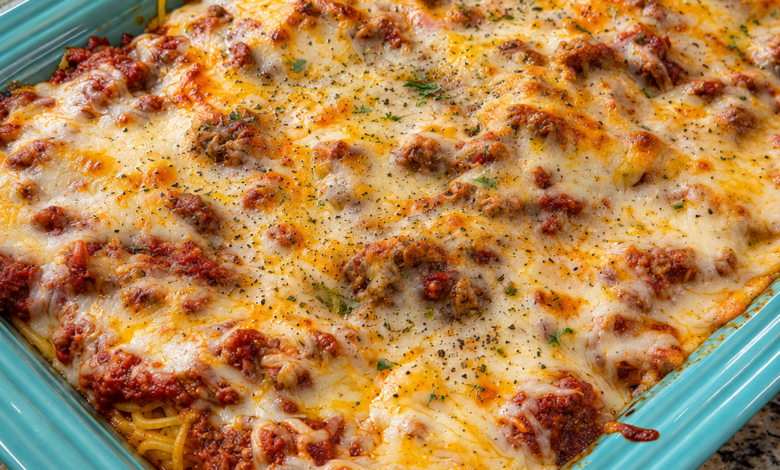
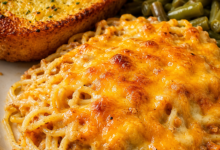
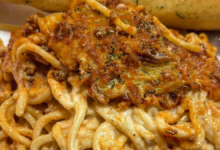
Baked spaghetti casserole is a comforting family dinner made with tender spaghetti, seasoned ground beef, rich tomato sauce, and plenty of melted mozzarella cheese. Everything comes together in a 9 × 13-inch baking dish and bakes until hot, bubbly, and lightly golden. It’s an easy homemade meal for busy weeknights, Sunday dinners, or feeding a hungry family.
Quick Answer
This baked spaghetti casserole combines spaghetti noodles, ground beef, marinara sauce, crushed tomatoes, mozzarella, and Parmesan. The pasta is lightly undercooked, coated in a savory meat sauce, and baked at 375°F until the cheese melts and the edges bubble. Let it rest for 10 minutes before serving for easier portions.
Some dinners are simply made for sharing, and this baked spaghetti casserole is one of them. It brings together everything people enjoy about a classic spaghetti dinner, but with an extra layer of melted cheese and a golden, bubbly finish from the oven.
The ground beef adds a hearty texture, while marinara and crushed tomatoes create a rich sauce that coats every strand of spaghetti. Mozzarella melts over the top, and Parmesan adds a savory finish. The result is a satisfying homemade casserole that feels special without requiring complicated preparation.
If you enjoy hearty pasta dinners, you might also like this homemade spaghetti sauce or our other baked pasta recipes.
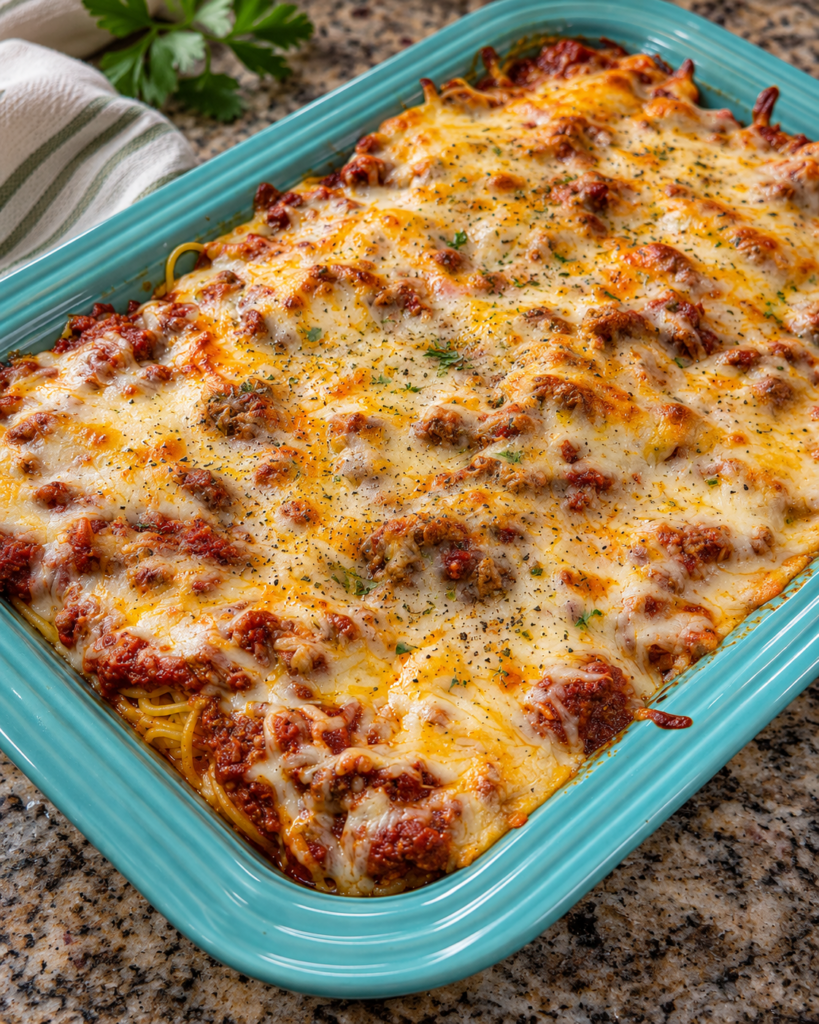
Why This Baked Spaghetti Recipe Works
There are several reasons this recipe makes such a dependable family dinner.
- Slightly undercooked spaghetti: Cooking the noodles about two minutes less than the package directions gives them room to finish in the oven without becoming mushy.
- A generous amount of meat sauce: Ground beef, marinara, and crushed tomatoes create enough sauce to keep the pasta moist during baking.
- Two types of cheese: Mozzarella creates the melted, stretchy topping, while Parmesan adds a deeper savory flavor.
- Simple preparation: The sauce comes together in one skillet, and the casserole uses ordinary ingredients available at most grocery stores.
- A golden baked finish: Removing the foil toward the end allows the cheese to develop lightly browned spots while the edges become bubbly.
The most important detail is keeping enough sauce around the spaghetti before it goes into the oven. Pasta continues absorbing moisture as it bakes, so starting with well-coated noodles helps prevent a dry casserole.
Baked Spaghetti Casserole Recipe Card
Recipe Information
| Detail | Information |
|---|---|
| Prep Time | 20 minutes |
| Cook Time | 35 minutes |
| Rest Time | 10 minutes |
| Total Time | 65 minutes |
| Servings | 8 |
| Course | Main Course |
| Cuisine | American / Italian-American |
| Difficulty | Easy |
| Calories | Approximately 590 per serving |
Ingredients
For the Spaghetti
- 1 pound dried spaghetti
- 1 tablespoon salt (for the pasta water)
For the Ground Beef Sauce
- 1½ pounds lean ground beef (85/15)
- 1 tablespoon olive oil, only if needed
- 1 medium yellow onion, finely diced
- 3 garlic cloves, minced
- 1 jar (24 ounces) marinara sauce
- 1 can (14.5 ounces) crushed tomatoes
- 1 teaspoon Italian seasoning
- ½ teaspoon dried oregano
- ½ teaspoon smoked paprika
- ½ teaspoon salt, or to taste
- ¼ teaspoon freshly ground black pepper
- ½ teaspoon granulated sugar (optional)
For the Cheese Topping
- 3 cups shredded low-moisture mozzarella cheese
- ½ cup freshly grated Parmesan cheese
- ½ teaspoon dried Italian herbs
- ¼ teaspoon freshly ground black pepper
Equipment
- 9 × 13-inch baking dish
- Large pot for cooking spaghetti
- Large skillet or Dutch oven
- Colander
- Wooden spoon or spatula
- Large mixing bowl, if needed
- Aluminum foil
- Cheese grater
How to Make Baked Spaghetti Casserole
Step 1: Preheat the Oven and Prepare the Baking Dish
Preheat your oven to 375°F.
Lightly grease a 9 × 13-inch baking dish with cooking spray or a little olive oil.
Greasing the dish helps prevent the pasta and melted cheese from sticking, making serving and cleanup easier.
Step 2: Cook the Spaghetti
Bring a large pot of water to a boil and add the salt.
Add the dried spaghetti and cook it approximately two minutes less than the package’s recommended al dente cooking time.
The noodles should be flexible but still slightly firm in the center. They will continue cooking in the oven, so avoid making them completely tender at this stage.
Drain the spaghetti thoroughly using a colander. Do not rinse it.
Why this matters: Fully cooked spaghetti can become overly soft after another 30–35 minutes in the oven.
Step 3: Brown the Ground Beef
Heat a large skillet over medium-high heat.
Add the ground beef, breaking it into small pieces with a wooden spoon.
Cook for approximately 7–9 minutes, stirring occasionally, until browned and fully cooked. Drain excess grease if necessary.
For food safety, ground beef should reach an internal temperature of 160°F, measured with a food thermometer.
Step 4: Cook the Onion and Garlic
Add the diced onion to the skillet with the cooked beef.
Cook for 3–4 minutes, stirring occasionally, until the onion softens and becomes translucent.
Add the minced garlic and cook for another 30 seconds until fragrant.
Avoid cooking the garlic for too long because it can become bitter.
Step 5: Prepare the Meat Sauce
Pour the marinara sauce and crushed tomatoes into the skillet.
Add the Italian seasoning, dried oregano, smoked paprika, salt, black pepper, and optional sugar.
Stir everything together until the seasonings are evenly distributed.
Bring the mixture to a gentle simmer and cook uncovered for approximately 8–10 minutes, stirring occasionally.
The sauce should become slightly thicker while remaining moist enough to coat the spaghetti generously.
Step 6: Combine the Spaghetti and Meat Sauce
Transfer the drained spaghetti to a large mixing bowl or directly into the skillet if it is large enough.
Pour most of the meat sauce over the noodles, reserving approximately 1 cup for the top of the casserole.
Toss gently until the spaghetti is evenly coated.
The noodles should look glossy and generously covered with sauce rather than dry or clumped together.
Step 7: Assemble the Casserole
Transfer half of the spaghetti mixture into the prepared baking dish and spread it evenly.
Sprinkle approximately half of the mozzarella and Parmesan over the pasta.
Add the remaining spaghetti mixture, distributing it evenly across the dish.
Spread the reserved meat sauce over the top.
Finish with the remaining mozzarella and Parmesan. Sprinkle the dried Italian herbs and black pepper evenly over the cheese.
Step 8: Bake Until Hot and Bubbly
Cover the baking dish loosely with aluminum foil.
Place it in the preheated oven and bake for 20 minutes.
Remove the foil and continue baking for another 10–15 minutes.
The cheese should be fully melted, the edges should be bubbling, and the top should develop lightly golden-brown spots.
For a deeper golden finish, broil for 1–2 minutes, watching continuously to prevent burning.
The center of the meat casserole should reach 165°F.
Step 9: Rest and Serve
Remove the casserole from the oven and let it rest uncovered for approximately 10 minutes.
This resting period allows the sauce to settle and makes it easier to serve neat portions.
Scoop into individual plates and serve while the mozzarella is still soft and melted.
Ingredient Notes
A few ingredient choices make a noticeable difference in the finished casserole.
Ground Beef: Lean 85/15 ground beef provides a good balance of flavor and moisture. If using a fattier blend, drain the excess grease after browning.
Low-Moisture Mozzarella: This is the best choice for a reliable melted topping. Fresh mozzarella contains more moisture and can make the casserole watery.
Parmesan Cheese: Freshly grated Parmesan adds a savory flavor that complements the mild mozzarella.
Marinara Sauce: Use a good-quality jarred marinara that you enjoy eating on its own. Its flavor will carry through the entire casserole.
Crushed Tomatoes: These add extra tomato flavor and moisture, helping the sauce coat the spaghetti.
Smoked Paprika: A small amount adds subtle warmth and depth without overpowering the tomato sauce.
Chef Tips
- Don’t fully cook the spaghetti. Drain it approximately two minutes before the package’s recommended al dente time so it finishes cooking in the oven.
- Brown the beef properly. Give the meat enough room in the skillet to develop color instead of steaming in its own moisture.
- Avoid watery sauce. Let the meat sauce simmer uncovered until it thickens slightly before combining it with the spaghetti.
- Use freshly shredded mozzarella. It generally melts more smoothly than many pre-shredded varieties.
- Reserve sauce for the top. This helps prevent exposed spaghetti from drying out during baking.
- Distribute the cheese evenly. Spread it all the way toward the edges so the casserole develops a consistent topping.
- Don’t skip the foil. Covering the casserole during the first part of baking helps heat the center without over-browning the cheese.
- Watch the broiler carefully. Cheese can go from golden to burnt very quickly under direct heat.
- Allow enough resting time. Ten minutes helps the casserole hold together better when serving.
- Use a thermometer when needed. Visual cues are helpful, but checking that the center reaches 165°F provides an additional food-safety check.
Common Mistakes to Avoid
1. Overcooking the Spaghetti
Spaghetti that is completely cooked before baking may become soft and mushy.
How to avoid it: Cook the noodles approximately two minutes less than the package directions.
2. Using Too Little Sauce
The pasta continues absorbing moisture in the oven, so insufficient sauce can leave the casserole dry.
How to avoid it: Coat the noodles generously and reserve some sauce for the top.
3. Skipping the Beef Browning
Adding tomato sauce before properly browning the beef can reduce the depth of flavor.
How to avoid it: Brown the ground beef first, then add the onions, garlic, and tomato ingredients.
4. Using Fresh Mozzarella Without Adjusting for Moisture
Fresh mozzarella can release additional liquid during baking.
How to avoid it: Choose low-moisture shredded mozzarella for this particular casserole.
5. Baking Uncovered for the Entire Time
The cheese may brown too quickly while the center is still heating.
How to avoid it: Cover the dish for the first 20 minutes, then uncover it for the final 10–15 minutes.
6. Broiling for Too Long
The cheese can burn quickly under the broiler.
How to avoid it: Limit broiling to 1–2 minutes and keep a close eye on the dish.
7. Cutting the Casserole Immediately
Serving immediately can cause the sauce and cheese to spread rather than hold their shape.
How to avoid it: Let the casserole rest for approximately 10 minutes before serving.
Variations
Spicy Baked Spaghetti
Add ½ teaspoon crushed red pepper flakes to the meat sauce. This gives the casserole a gentle heat without changing the basic preparation.
Italian Sausage and Beef Casserole
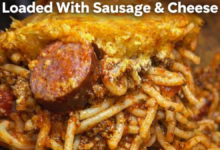
Replace half of the ground beef with mild or hot Italian sausage. The sausage adds a stronger seasoning profile and a richer flavor.
Extra Cheesy Baked Spaghetti
Increase the mozzarella to 3½ cups and add 1 cup ricotta between the spaghetti layers. This creates a creamier interior and a richer casserole.
Ground Turkey Spaghetti Casserole
Replace the ground beef with 1½ pounds ground turkey. Add a little olive oil if needed during browning because turkey is often leaner.
Vegetable Baked Spaghetti
Add 1 cup finely chopped mushrooms or diced bell peppers when cooking the onions. Allow the vegetables to soften before adding the tomato sauce.
Storage Instructions
Room Temperature
Do not leave the cooked casserole at room temperature for more than two hours. Refrigerate leftovers promptly.
Refrigerator
Store leftover baked spaghetti in airtight containers in the refrigerator at 40°F or below.
It will keep for approximately 3–4 days.
Freezer
For longer storage, divide the cooled casserole into individual portions and place them in freezer-safe containers.
Freeze for approximately 2–3 months for the best quality.
Thaw frozen portions overnight in the refrigerator before reheating.
Best Storage Container
Glass food-storage containers with airtight lids work well for refrigerated portions. For freezing, use freezer-safe containers or tightly wrapped freezer-safe portions.
For additional food-safety information, consult the FoodSafety.gov Cold Food Storage Chart.
How to Reheat Baked Spaghetti
Oven Method
The oven is the best option when reheating several portions because it helps preserve the casserole’s texture.
- Preheat the oven to 325°F.
- Place the desired portion in an oven-safe dish.
- Add 1–2 tablespoons of water or marinara sauce.
- Cover loosely with aluminum foil.
- Heat until thoroughly hot, checking that the center reaches 165°F.
- Remove the foil during the final few minutes if you want the cheese to become slightly golden again.
Microwave Method
For individual portions, the microwave is more convenient.
- Place a serving on a microwave-safe plate.
- Add a small spoonful of water or marinara sauce.
- Cover loosely.
- Heat in 60-second intervals, checking between intervals.
- Continue until the center reaches 165°F.
Avoid overheating because it can make the spaghetti dry and the cheese rubbery.
For more information, see the USDA’s guidance on safely reheating leftovers.
Make-Ahead Instructions
This casserole can be prepared ahead when you want to reduce the work on a busy evening.
Prepare the meat sauce, cook the spaghetti slightly under al dente, and assemble the casserole in the baking dish.
Cover and refrigerate promptly, then bake within 24 hours.
When baking directly from the refrigerator, allow approximately 10–15 additional minutes of covered baking time, checking that the center reaches 165°F before serving.
For the best texture, avoid assembling it several days in advance because the pasta will continue absorbing moisture from the sauce.
Serving Suggestions
This hearty spaghetti casserole pairs well with fresh vegetables, crisp salads, and simple bread.
Bread
- Homemade garlic bread
- Garlic breadsticks
- Warm Italian bread
- Toasted French bread
Salads
- Classic Caesar salad
- Italian garden salad
- Cucumber and tomato salad
- Fresh mixed greens with vinaigrette
Vegetables
- Roasted broccoli with garlic
- Steamed green beans
- Roasted zucchini
- Garlic-seasoned vegetables
Drinks
- Fresh lemonade
- Iced tea
- Sparkling water with lemon
- Homemade fruit punch
A little chopped fresh parsley or basil can also be sprinkled over the casserole just before serving for a fresh finish.
If you enjoy comforting baked pasta dishes, try our Baked Sausage Rigatoni with Mozzarella and Parmesan or Easy Chicken Tetrazzini.
Frequently Asked Questions
1. Do You Cook Spaghetti Before Baking It?
Yes. Cook the spaghetti in salted boiling water before assembling the casserole. Drain it approximately two minutes before the package’s recommended al dente cooking time so it can finish cooking in the oven.
2. How Long Should Baked Spaghetti Cook at 375°F?
For this recipe, bake the casserole covered for 20 minutes, then uncovered for another 10–15 minutes. The cheese should be melted and bubbling, and the center should reach 165°F.
3. How Do You Keep Baked Spaghetti from Drying Out?
Use enough meat sauce to coat the noodles generously, reserve some sauce for the top, and cover the casserole during the first part of baking. Avoid leaving it in the oven longer than necessary.
4. What Cheese Works Best for Baked Spaghetti?
Low-moisture mozzarella is an excellent choice because it melts smoothly and develops a golden surface. Parmesan complements it with a more savory flavor.
5. Can I Make Baked Spaghetti Ahead of Time?
Yes. Assemble the casserole, cover it, and refrigerate promptly. Bake it within 24 hours. If baking directly from the refrigerator, allow additional covered baking time and check the center temperature.
6. Can I Freeze Baked Spaghetti Casserole?
Yes. Allow it to cool, divide it into portions, and freeze in airtight, freezer-safe containers. For the best quality, use within approximately 2–3 months.
7. Can I Use Ground Turkey Instead of Ground Beef?
Yes. Ground turkey works as a substitute. It has a milder flavor and is generally leaner, so a little olive oil may be helpful when browning.
8. Can I Use Homemade Marinara Sauce?
Absolutely. Homemade marinara works well as long as it has a suitable consistency. If your sauce is particularly thin, simmer it a little longer before combining it with the spaghetti.
9. How Long Does Baked Spaghetti Last in the Refrigerator?
When stored promptly in an airtight container at 40°F or below, leftovers generally keep for 3–4 days.
Key Takeaways
- Cook the spaghetti slightly under al dente to prevent mushy noodles after baking.
- Brown the ground beef before adding the marinara and crushed tomatoes for a richer sauce.
- Use low-moisture mozzarella for a smooth, bubbly, golden cheese topping.
- Reserve some meat sauce for the top to help keep the casserole moist.
- Let the finished casserole rest for 10 minutes before serving, and refrigerate leftovers promptly.
Quick Recipe Summary
Baked spaghetti casserole with ground beef is an easy homemade dinner featuring spaghetti, savory tomato meat sauce, melted mozzarella, and Parmesan. Cook the spaghetti slightly under al dente, brown the beef with onion and garlic, and simmer it with marinara, crushed tomatoes, and seasonings. Combine the pasta with the sauce, assemble in a 9 × 13-inch baking dish, and top with cheese. Bake at 375°F, covered for 20 minutes and uncovered for another 10–15 minutes, until the casserole is hot and bubbly and reaches 165°F in the center. Rest for 10 minutes before serving. This family-style recipe makes eight servings.
Related Recipes from BotaInfo
Looking for more homemade dinner ideas? Explore these recipes:
- Homemade Spaghetti Sauce
- Baked Sausage Rigatoni with Mozzarella and Parmesan
- Easy Chicken Tetrazzini
- Spaghetti Cornbread Casserole
- Marry Me Chicken Pasta
Food Safety Resources
For reliable information about preparing and storing meat-based casseroles, consult:
- USDA – Safe Internal Cooking Temperatures
- FoodSafety.gov – Cold Food Storage Chart
- USDA – Safe Leftover Storage
- USDA – Safe Reheating Methods