

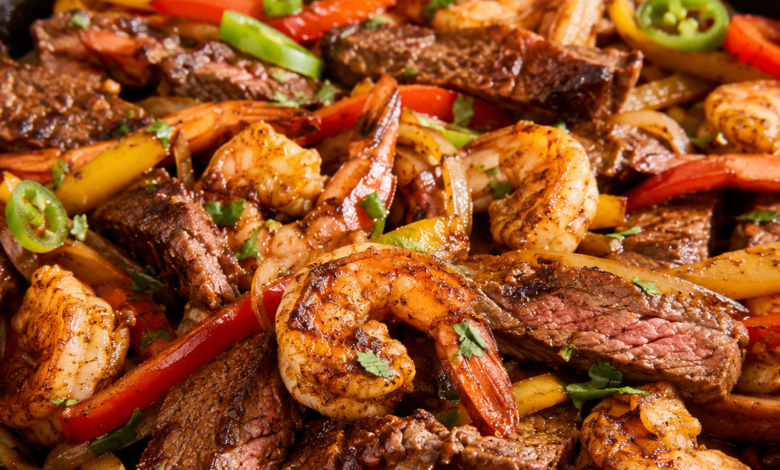
Steak and Shrimp Fajitas
Quick Answer
Steak and shrimp fajitas combine seared beef, tender seasoned shrimp, sautéed bell peppers, and caramelized onions in one hot skillet. The key is cooking the steak, vegetables, and shrimp in stages instead of all at once. That gives the steak time to brown, keeps the shrimp from turning rubbery, and lets the peppers stay colorful and lightly crisp.
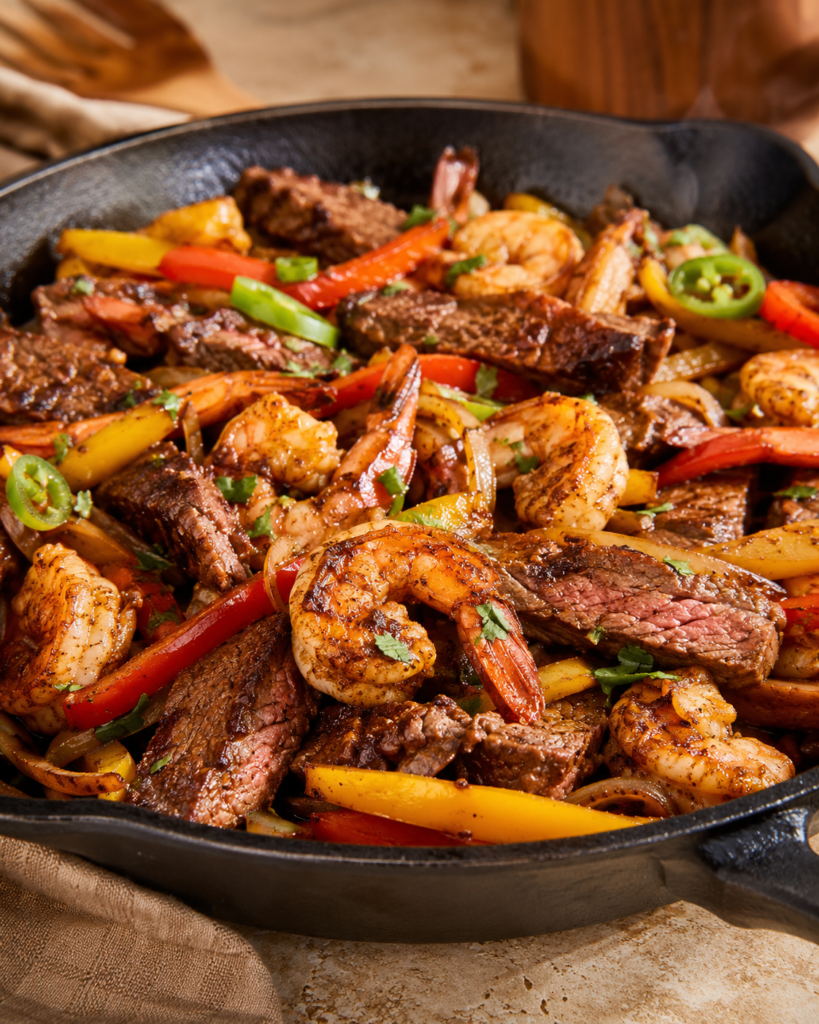
These steak and shrimp fajitas are a practical choice when you want something more substantial than ordinary fajitas without making dinner complicated. You get smoky seasoning, juicy beef, plump shrimp, sweet peppers, browned onions, and a little fresh jalapeño heat in every serving.
The cast-iron skillet does most of the work. High heat builds the browned edges that make fajitas taste so good, while a short final toss brings everything back together without overcooking either protein.
Serve the skillet straight from the stove with warm tortillas and simple toppings, or turn the mixture into fajita bowls for an easy weeknight meal.
Steak and Shrimp Quesadillas
Why This Steak and Shrimp Fajitas Recipe Works
The biggest challenge with steak and shrimp fajitas is that the ingredients don’t cook at the same speed. Shrimp can become firm before a thick steak has finished cooking, while vegetables release moisture that can interfere with browning.
This method solves that problem by giving each component its own turn in the skillet.
The steak goes in first so it can make full contact with the hot cast iron. After resting, it’s sliced against the grain for better tenderness. The peppers and onions cook next, picking up the browned bits left behind by the beef. Shrimp goes in last because it needs only a few minutes.
Everything is then returned to the skillet for a very brief toss. The result is a generous fajita skillet with clearly seared steak, tender shrimp, blistered peppers, and soft browned onions rather than one uniformly steamed mixture.
Recipe Summary
| Prep Time | 20 minutes |
| Cook Time | 20 minutes |
| Rest Time | 5 minutes |
| Total Time | 45 minutes |
| Servings | 6 |
| Course | Dinner |
| Cuisine | Tex-Mex / American |
| Difficulty | Easy–Moderate |
| Estimated Calories | About 430 per serving, before tortillas and toppings |
Ingredients
For the Steak
- 1 1/2 pounds flank steak or skirt steak
- 1 tablespoon olive oil
- 1 tablespoon fresh lime juice
- 1 teaspoon chili powder
- 1 teaspoon smoked paprika
- 1 teaspoon ground cumin
- 3/4 teaspoon kosher salt
- 1/2 teaspoon garlic powder
- 1/2 teaspoon dried oregano
- 1/4 teaspoon black pepper
For the Shrimp
- 1 pound large raw shrimp, peeled and deveined
- 1 tablespoon olive oil
- 1/2 teaspoon chili powder
- 1/2 teaspoon smoked paprika
- 1/2 teaspoon ground cumin
- 1/2 teaspoon kosher salt
- 1/4 teaspoon garlic powder
- 1/4 teaspoon black pepper
For the Vegetables
- 1 large red bell pepper, sliced into strips
- 1 large yellow bell pepper, sliced into strips
- 1 large yellow onion, thinly sliced
- 1 tablespoon olive oil
- 1 fresh jalapeño, thinly sliced
- 2 tablespoons chopped fresh cilantro
For Serving
- 12 small flour or corn tortillas, warmed
- Lime wedges, optional
- Salsa or pico de gallo, optional
- Sour cream, optional
- Guacamole or sliced avocado, optional
Ingredient Notes
Flank or skirt steak: Both work well. Whichever you use, look at the direction of the muscle fibers before cooking so you’ll know how to slice across them later.
Large shrimp: Large shrimp are easier to control in a hot skillet than very small shrimp because they give you a little more time before they overcook.
Bell peppers: Red and yellow peppers give the skillet sweetness and color. Green or orange peppers can be substituted without changing the method.
Jalapeño: Add it near the end for a brighter, fresher heat. For a milder skillet, remove the seeds or leave the jalapeño out.
Smoked paprika and cumin: These provide the warm, smoky backbone of the fajita seasoning without requiring a packaged seasoning mix.
Equipment
- Large 12-inch cast-iron skillet or another heavy skillet
- Cutting board
- Sharp chef’s knife
- Two medium bowls
- Tongs
- Instant-read thermometer
Perfect Cast-Iron Shrimp Recipe
How to Make Steak and Shrimp Fajitas
1. Season the Steak
Pat the steak thoroughly dry. Rub it with the olive oil, lime juice, chili powder, smoked paprika, cumin, salt, garlic powder, oregano, and black pepper.
Let it stand for about 15 minutes while you prepare the shrimp and vegetables. The surface should look seasoned but not wet; excess moisture makes browning harder.
2. Season the Shrimp
Pat the shrimp dry with paper towels, then toss them separately with olive oil, chili powder, smoked paprika, cumin, salt, garlic powder, and pepper.
Keep the raw shrimp separate from the steak and use clean utensils as you move between ingredients.
3. Heat the Skillet
Set a large cast-iron skillet over medium-high to high heat for 3–4 minutes.
The skillet should be fully heated before the steak goes in. If the pan isn’t hot enough, the steak is more likely to release liquid and simmer instead of forming a browned exterior.
4. Sear the Steak
Lay the steak in the skillet and leave it undisturbed for about 3–4 minutes. Flip and cook the other side for another 3–5 minutes, adjusting the time for thickness.
Use an instant-read thermometer rather than relying only on color. USDA guidance lists 145°F with at least a 3-minute rest as the safe minimum for whole beef steaks.
5. Rest and Slice
Move the steak to a clean cutting board and let it rest for at least 5 minutes.
Slice it thinly against the grain. Longer strips can be cut into generous bite-size pieces so they’re easy to tuck into tortillas.
6. Cook the Peppers and Onions
Reduce the heat slightly to medium-high and add 1 tablespoon olive oil. Add the peppers and onions and cook for 6–8 minutes.
Stir occasionally rather than constantly. The onions should soften and develop browned edges, while the peppers should become tender without losing all of their structure.
7. Cook the Shrimp
Move the vegetables to the edges of the skillet or transfer them briefly to a plate.
Arrange the shrimp in a single layer and cook for roughly 1 1/2–2 minutes per side. They should become opaque, firm, and naturally curled rather than tightly contracted.
USDA’s safe-temperature guidance lists 145°F for fish and shellfish.
8. Bring Everything Together
Return the sliced steak, its accumulated juices, and any removed vegetables to the skillet.
Toss gently over medium-high heat for about 1 minute. You’re reheating and combining the ingredients here, not cooking them for a second time.
9. Finish and Serve
Scatter the sliced jalapeño and cilantro across the skillet and serve immediately with warm tortillas and your preferred toppings.
For the most appetizing presentation, leave plenty of steak and shrimp visible on top instead of burying them under the vegetables.
The Best Cooking Order for Steak and Shrimp Fajitas
Remember this sequence:
Steak → Rest → Vegetables → Shrimp → Brief Final Toss
That order matters more than trying to make the entire recipe in one continuous batch.
Steak needs strong heat and time to sear. Vegetables need enough skillet contact to brown. Shrimp needs comparatively little cooking. Treating them separately gives you much better control over all three.
20-Minute Sheet Pan Fajitas
Chef Tips
- Dry the proteins well. Surface moisture works against browning.
- Give the skillet time to preheat. Cast iron performs best once the whole pan is thoroughly hot.
- Don’t crowd the shrimp. Use two batches if your skillet is smaller.
- Rest the steak before slicing. Don’t rush straight from skillet to knife.
- Slice across the grain. This shortens the steak’s muscle fibers and makes each bite easier to chew.
- Keep the peppers slightly firm. Completely soft peppers can make the finished skillet feel heavy.
- Stir vegetables only as needed. Leaving them against the hot pan for short stretches creates browned edges.
- Use fresh lime at serving time if you want more acidity. This keeps the flavor brighter than adding a large amount during cooking.
- Add cilantro at the end. Long cooking dulls its fresh flavor and appearance.
- Keep the final toss short. The shrimp are already cooked and don’t need extra skillet time.
Common Mistakes to Avoid
Overcrowding the Pan
A crowded skillet traps moisture. Instead of browning, the ingredients begin to steam. Cook in batches when necessary.
Starting With Wet Steak
Moisture on the exterior prevents efficient searing. Pat the steak dry before adding the oil and seasonings.
Cooking Everything Together
Shrimp, beef, peppers, and onions have different cooking times. Putting them all into the skillet at once makes it harder to get each ingredient right.
Overcooking the Shrimp
Shrimp can move from tender to firm quickly. Remove them from strong direct heat once they’re opaque and cooked through.
Cutting Steak With the Grain
Long muscle fibers make steak seem tougher. Look for the visible lines running through the meat and slice across them.
Stirring the Vegetables Constantly
Continuous stirring limits contact with the skillet. Give peppers and onions short periods without movement so they can brown.
Leaving Everything in the Final Skillet Too Long
The last step is only for combining and reheating. Extended cooking can dry the steak and toughen the shrimp.
Variations
Extra-Spicy Fajitas
Use two jalapeños or add a small pinch of cayenne to the seasoning. The cooking method stays the same, but the finished skillet will have noticeably more heat.
Mild Family Version
Leave out the jalapeño and use regular paprika instead of smoked paprika if preferred.
Chicken and Shrimp Fajitas
Replace the beef with boneless chicken breast or thighs. The overall staged method still works, but poultry requires different cooking time and must reach 165°F.
Low-Carb Fajita Bowls
Skip the tortillas and serve the skillet mixture over cauliflower rice, lettuce, or additional sautéed vegetables.
Extra-Vegetable Version
Add another bell pepper and sliced mushrooms. Cook the vegetables in batches if necessary so excess moisture doesn’t cool the skillet.
Make-Ahead Instructions
You can slice the peppers and onions and combine each dry seasoning mixture a day ahead.
The steak and shrimp can also be cleaned and portioned ahead, but refrigerate them separately in covered containers. Wait to add the lime juice and final seasonings until closer to cooking so the ingredients are ready for a fresh, hot skillet rather than sitting in marinade for an unnecessary amount of time.
Storage Instructions
Transfer leftovers to shallow airtight containers and refrigerate promptly. USDA guidance advises refrigerating perishable cooked foods within 2 hours, or within 1 hour when the surrounding temperature is above 90°F. Most cooked leftovers should be used within 3–4 days.
Room temperature: Maximum 2 hours under normal conditions.
Refrigerator: Up to 3–4 days.
Freezer: Freezing is possible, although the shrimp and peppers will usually be softer after thawing. For best eating quality, freezing the steak portion separately is preferable when practical.
Best container: A shallow airtight food-storage container.
Store tortillas, avocado, sour cream, and fresh toppings separately.
How to Reheat
A skillet gives the best balance of speed and texture.
Warm a skillet over medium heat, add the leftover fajita mixture, and toss only until heated through. Avoid prolonged cooking because shrimp become firmer each time they’re heated.
For convenience, microwave individual servings in short intervals and stir between each interval.
USDA guidance recommends reheating leftovers to 165°F.
Serving Suggestions
Warm flour or corn tortillas are the obvious starting point, but the fajita mixture also works well over rice or in a bowl.
Good side dishes include:
- Mexican-style rice
- Cilantro-lime rice
- Black beans
- Refried beans
- Simple cabbage salad
- Avocado salad
- Pico de gallo
- Guacamole
- Salsa
- Sour cream
- Lime wedges
For another steak-and-shrimp dinner idea, use Steak and Shrimp Tacos with Chimichurri. The sitemap also contains related steak-and-shrimp and skillet recipes that can strengthen this recipe cluster.
Iced tea, sparkling lime water, or citrus agua fresca pair easily with the smoky seasoning.
Frequently Asked Questions
What is the best steak for steak and shrimp fajitas?
Flank steak and skirt steak are both good choices. Whichever you use, avoid overcooking it and slice it thinly across the grain after resting.
Should I cook the steak or shrimp first?
Cook the steak first. It needs stronger heat and more time. Shrimp should be cooked near the end so it doesn’t sit in the skillet while the other ingredients finish.
Can steak and shrimp be cooked together?
They can share the finished skillet, but cooking them separately gives you better control because they don’t reach ideal doneness at the same speed.
How do I keep fajita steak tender?
Use a suitable steak cut, don’t cook it longer than necessary, allow it to rest, and slice thinly against the grain.
How do I keep shrimp from becoming rubbery?
Cook them only until they’re opaque and cooked through, then keep the final reheating step brief.
Do I need a cast-iron skillet?
No. A large heavy stainless-steel or other heavy skillet can work. What matters most is using a pan that holds enough heat for proper searing.
Are corn or flour tortillas better?
Either works. Flour tortillas are soft and flexible, while corn tortillas provide a more pronounced corn flavor and a slightly firmer texture.
Can steak and shrimp fajitas be made ahead?
The vegetables can be sliced and seasonings measured ahead. For best texture, cook the steak and especially the shrimp shortly before serving.
Can I freeze the leftovers?
Yes, but texture changes are likely. Shrimp and peppers tend to become softer after freezing and reheating, so refrigerated leftovers generally give better results.
Key Takeaways
- Cook the steak, vegetables, and shrimp in separate stages for better control.
- A thoroughly heated skillet helps create the browned flavor fajitas need.
- Rest and slice steak against the grain for a more tender bite.
- Keep shrimp cooking time short and make the final skillet toss brief.
- Refrigerate leftovers promptly and reheat only what you plan to eat.
Quick Recipe Summary
Steak and shrimp fajitas are made by searing seasoned flank or skirt steak, resting and slicing it, then cooking bell peppers and onions in the same hot skillet. Large seasoned shrimp are cooked briefly before the steak and vegetables return for a final one-minute toss. Jalapeño and cilantro finish the dish. Cooking the components separately is the central technique: it allows the steak to brown, keeps the shrimp tender, and gives the vegetables time to soften and caramelize without turning the entire skillet watery. Serve immediately with warm tortillas, salsa, guacamole, sour cream, or rice.
More Recipes
- Steak and Shrimp Quesadillas
- Perfect Cast-Iron Shrimp Recipe
- 20-Minute Sheet Pan Fajitas
- Easy Hibachi Steak Bites and Fried Rice
Useful Links
- USDA Safe Minimum Internal Temperatures
- USDA Leftovers and Food Storage
- FDA Food Safety During Preparation
- Cooperative Extension Guide to Baking Potatoes
- MyPlate Vegetable Serving Guidance


One Comment