Easy Winter Fruit Salad
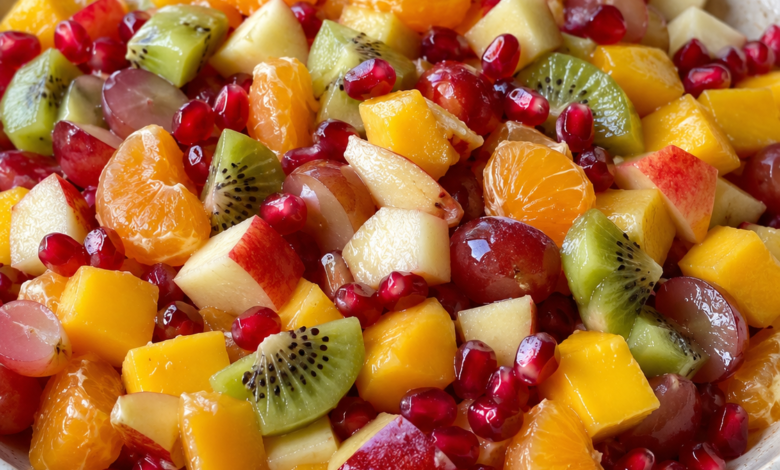
Quick Answer: This easy winter fruit salad combines mandarin oranges, mango, kiwi, crisp apples, red grapes, and pomegranate arils with a light citrus-honey dressing. It takes about 20 minutes to prepare, requires no cooking, and works well for breakfast, brunch, holiday meals, or potlucks. Using firm-ripe fruit and a small amount of dressing keeps the salad colorful, crisp, and fresh instead of watery.
Winter fruit salad is an easy way to turn colorful seasonal fruit into a fresh side dish that feels right at home on a breakfast table, holiday buffet, or weekend brunch spread. This version balances juicy citrus and grapes with crisp apple, tender mango and kiwi, and plenty of tart-sweet pomegranate arils.
The dressing is deliberately light. A small amount of orange juice, lemon juice, honey, and orange zest adds brightness without covering the natural flavor of the fruit or leaving a pool of liquid at the bottom of the bowl.
The key is less about complicated preparation and more about handling each fruit correctly. Firm-ripe mango and kiwi hold their shape, apples are cut last to reduce browning, and the pomegranate is folded in near the end so the salad stays visually bright.
Easy Brunch Recipes

Why This Winter Fruit Salad Works
This salad succeeds because the fruits provide different flavors and textures without competing with one another. Mandarin oranges bring soft, juicy sweetness, while apples add the crispness that keeps each bite from feeling too soft. Kiwi contributes a mild tart note, mango adds richer sweetness, and grapes provide a clean, juicy texture.
Pomegranate arils are especially useful here. Their tart flavor keeps the sweeter fruits balanced, while their firm texture and ruby color make the finished salad more appealing.
The citrus-honey dressing is intentionally restrained. Fruit releases juice naturally after it is cut, so adding a heavy dressing can quickly make a fresh fruit salad watery. Two citrus juices provide acidity, honey rounds out the tartness, and a little zest supplies concentrated orange flavor without more liquid.
Preparation order also matters. Apples are cut toward the end and immediately coated with citrus. Delicate fruits are folded rather than aggressively stirred. The finished salad remains colorful and recognizable rather than becoming a soft mixture of broken fruit.
Recipe Summary
- Prep Time: 20 minutes
- Cook Time: 0 minutes
- Rest Time: 10 minutes
- Total Time: 30 minutes
- Servings: 10
- Course: Side Dish, Breakfast, Brunch
- Cuisine: American
- Difficulty: Easy
- Estimated Calories: About 145 per serving
Ingredients for Winter Fruit Salad
Fresh Fruit
- 4 medium mandarin oranges, peeled and separated into segments
- 3 medium kiwis, peeled and cut into bite-size pieces
- 2 cups seedless red grapes, halved
- 2 medium crisp red apples, cored and cut into ½-inch pieces
- 2 ripe mangoes, peeled and cut into ½-inch cubes
- 1½ cups pomegranate arils
Citrus Honey Dressing
- 2 tablespoons fresh mandarin or orange juice
- 1 tablespoon fresh lemon juice
- 1 tablespoon honey
- ½ teaspoon finely grated orange zest
Ingredient Notes
Choose Firm-Ripe Mango and Kiwi
Mangoes and kiwis should be ripe enough to taste sweet but firm enough to hold their shape after cutting. Very soft fruit releases more juice and can become mushy when the salad is tossed.
Fresh Mandarin Oranges
Fresh mandarins provide plump segments and a clean citrus flavor. Remove loose pieces of white pith, but don’t pull the segments apart so aggressively that they tear and release excess juice.
Pomegranate Arils
Pomegranate contributes both tartness and texture. Because the arils can stain lighter fruit when heavily mixed, adding most of them near the end helps maintain the salad’s bright appearance.
Best Apples for Fruit Salad
Choose a crisp apple rather than a soft variety. Leaving the peel on provides extra color and helps the pieces stay visually distinct. Cut the apples last and coat them promptly with the citrus dressing.
Equipment You’ll Need
- Large shallow serving bowl
- Cutting board
- Sharp chef’s knife
- Small mixing bowl
- Whisk or fork
- Measuring spoons
- Large serving spoon
How to Make Winter Fruit Salad
1. Prepare the Mandarin Oranges
Peel the mandarins and separate them into individual segments. Remove loose white pith while keeping the segments intact.
Whole segments hold up better than torn ones and release less juice into the bowl. Set them aside while you prepare the remaining fruit.
2. Cut the Kiwi
Peel the kiwis and cut them into irregular bite-size pieces, roughly ½ to ¾ inch across.
Avoid very small pieces. Kiwi softens faster than apples or grapes, and tiny chunks can lose their shape when the salad is mixed.
3. Halve the Grapes
Slice each red grape in half lengthwise.
Halving makes large grapes easier to eat and distributes their flavor more evenly throughout the salad. If your grapes are unusually small, they can be left whole.
4. Dice the Mango
Peel the mangoes and cut the flesh away from the pits. Cut the flesh into roughly ½-inch cubes.
The mango should feel tender but not collapse under the knife. If the flesh smears or becomes pulpy as you cut it, the fruit is likely too ripe for the best salad texture.
5. Cut the Apples Last
Core the apples and cut them into approximately ½-inch pieces, leaving the red peel attached.
Preparing them toward the end limits how long the cut surfaces are exposed to air before they receive the acidic dressing.
6. Make the Citrus Honey Dressing
Whisk the orange juice, lemon juice, honey, and orange zest together in a small bowl until the honey is fully incorporated.
The mixture should taste lightly sweet and bright. It isn’t intended to become a thick syrup.
7. Coat the Apples
Toss the freshly cut apples with about 1 tablespoon of the dressing.
This gets the citrus onto the exposed apple surfaces quickly while leaving enough dressing for the rest of the fruit.
8. Combine the Fruit
Place the mandarins, kiwi, grapes, mango, and dressed apples in a large serving bowl. Pour the remaining dressing over them.
Fold everything together gently with a large spoon. Stop once the colors are evenly distributed. Vigorous stirring can break the mandarin segments and soften the kiwi.
9. Add the Pomegranate
Fold about two-thirds of the pomegranate arils into the salad. Sprinkle the remaining arils over the surface.
Saving some for the top creates an attractive finish while reducing the amount of red juice transferred to the lighter fruits.
10. Chill Briefly
Refrigerate the salad for about 10 minutes before serving.
The short rest cools the fruit and allows the citrus flavors to mingle without giving the fruit enough time to release a large amount of liquid.
How to Keep Fruit Salad From Getting Watery
Start with dry fruit. After washing grapes, apples, mangoes, or any other produce that needs rinsing, remove excess surface moisture before cutting and assembling the salad.
Ripeness matters too. Extremely soft mango and kiwi release more juice and break down faster than firm-ripe fruit.
Finally, resist the urge to increase the dressing. Fresh fruit already contains plenty of moisture. The small amount used here is enough to brighten the salad without turning it into fruit floating in syrup.
How to Keep Apples From Browning
Cut the apples after the other fruits are prepared, then toss them promptly with a portion of the citrus dressing.
Lemon and orange juice provide acidity that helps slow visible browning. Make sure several cut surfaces receive a light coating, but don’t soak the apples in juice; excess liquid isn’t necessary.
Chef Tips
- Keep the fruit cold before preparation. Chilled fruit starts the salad at a pleasant serving temperature and generally feels firmer when cut.
- Use a sharp knife. A sharp blade makes cleaner cuts and crushes soft mango and kiwi less.
- Aim for comparable bite sizes. The fruit doesn’t need to be perfectly uniform, but dramatically different sizes make the salad awkward to eat.
- Leave mandarin segments whole. Their natural shape gives the salad more visual variety and helps contain the juice.
- Don’t overmix. Fold from the bottom of the bowl just until the fruit is distributed.
- Add the pomegranate late. This helps prevent its red juice from coloring the apples and other pale fruit.
- Use only finely grated orange zest. Large strips of zest can taste bitter and are unpleasant in a soft fruit salad.
- Taste before adding extra honey. Ripe mangoes, mandarins, and grapes may already provide plenty of sweetness.
- Choose a wide serving bowl. It gives the fruit room to spread out and reduces crushing compared with packing everything into a narrow bowl.
- Garnish with the ingredients already in the recipe. A final scatter of pomegranate arils creates color without introducing an unrelated garnish.
Common Mistakes to Avoid
1. Using Overripe Mango
Very soft mango can break apart and coat the other fruits with pulp. Choose fruit that gives slightly to pressure but still cuts into clean pieces. If your mango is very ripe, cut it slightly larger and fold it in last.
2. Using Very Soft Kiwi
Overripe kiwi loses its structure quickly. If it begins to mash while being peeled or sliced, handle it minimally and add it near the end.
3. Leaving Washed Fruit Wet
Extra water dilutes the citrus dressing and collects at the bottom of the serving bowl. Drain and dry washed fruit before cutting it.
4. Cutting Apples Too Early
Apples can discolor while the other ingredients are being prepared. Prepare the other fruits first, then cut and dress the apples.
5. Adding Too Much Dressing
More dressing doesn’t necessarily mean more flavor. Excess liquid makes the salad slippery and masks the natural character of the fruit. Start with the measured amount.
6. Stirring Too Aggressively
Hard stirring damages mandarins and kiwi and can make the salad look muddled. Use a gentle folding motion instead.
7. Making Every Piece Tiny
Very small pieces soften quickly and make the salad resemble chopped fruit salsa. Bite-size pieces around ½ to ¾ inch provide better texture.
8. Mixing All the Pomegranate in Too Early
The arils themselves hold well, but their juice can tint pale fruits when the salad is mixed repeatedly. Fold most in near the end and reserve some for the top.
Variations
Christmas Fruit Salad
Increase the pomegranate arils by about ½ cup for more red color. The kiwi provides a natural green contrast, making the same base recipe especially suitable for a Christmas breakfast or brunch table.
Extra-Citrus Version
Replace one mango with 2 additional mandarins. The salad becomes lighter, juicier, and more citrus-forward.
No-Honey Version
Omit the honey and use the orange juice, lemon juice, and zest alone. The dressing will be more tart, so this works best when the fruit is naturally sweet and ripe.
Party-Size Version
Double all ingredients and use a large, shallow serving bowl. For the best texture, prepare the salad close to serving rather than repeatedly mixing it during a long event.
Storage Instructions
Room temperature: Because this is prepared fresh fruit, don’t leave it sitting out longer than necessary. Refrigerate leftovers promptly.
Refrigerator: Store the salad in an airtight container for up to 2 days. Texture and appearance are best during the first 24 hours.
Freezer: Freezing isn’t recommended. Apples, citrus, grapes, kiwi, and mango lose much of their crisp or juicy fresh texture after thawing.
Best storage container: Choose a wide airtight container that doesn’t compress the fruit.
If liquid collects at the bottom after refrigeration, gently drain the excess rather than stirring it back through the salad.
How to Reheat
Don’t reheat winter fruit salad. It is intended to be served chilled or cool.
If it has been stored in a very cold refrigerator, letting it sit briefly before serving can make the fruit’s flavor more noticeable. Keep the rest of the salad refrigerated until needed.
Make-Ahead Instructions
This salad can be partly prepared ahead, but the best results come from delaying the most delicate steps.
The pomegranate can be seeded ahead and kept refrigerated. Grapes can also be washed, dried thoroughly, and refrigerated before cutting. The citrus dressing may be whisked together and stored separately.
For the freshest texture, cut the mango, kiwi, mandarins, and especially the apples closer to serving time. Once fully assembled, refrigerate the salad in a covered container and serve within several hours when possible.
Serving Suggestions
Winter fruit salad works particularly well as a fresh contrast to richer breakfast and holiday foods.
Serve it alongside pancakes, waffles, French toast, muffins, oatmeal, Greek yogurt, or an egg casserole at breakfast or brunch.
For a holiday meal, it can provide a bright side dish alongside roasted turkey or ham. Its fresh citrus flavor also makes it useful on a buffet where many of the other dishes are rich or savory.
For drinks, coffee and tea work naturally at brunch, while sparkling water is a simple choice for lunch or holiday gatherings.
Christmas Brunch Recipes
Frequently Asked Questions
What fruits are best for winter fruit salad?
Mandarins, apples, kiwi, grapes, mango, and pomegranate work well together because they provide a mix of crisp, juicy, sweet, and tart textures and flavors.
Can I make winter fruit salad the night before?
You can, but the salad has its best texture when prepared closer to serving. For better make-ahead results, prepare the dressing and sturdier ingredients first and cut the apples and delicate fruit later.
How do I keep apples from turning brown in fruit salad?
Cut apples toward the end of preparation and promptly coat their cut surfaces with the citrus dressing. The orange and lemon juice help slow visible browning.
How do I stop fruit salad from getting watery?
Dry washed fruit thoroughly, use firm-ripe mango and kiwi, keep the dressing light, and avoid overmixing. Very ripe or crushed fruit releases more juice.
Can I use canned mandarin oranges?
They can work if thoroughly drained, although their texture will usually be softer than fresh mandarins. Excess packing liquid should not go into the salad.
What can I substitute for mango?
A firm, sweet fruit that can be cut into bite-size pieces is the best replacement. The flavor will change, so choose something that complements citrus, kiwi, grapes, apples, and pomegranate rather than expecting an identical result.
How long does winter fruit salad last in the refrigerator?
For best quality, eat it within 1 to 2 days. It is freshest during the first day because the fruit gradually releases liquid and softens after cutting.
Can I freeze winter fruit salad?
Freezing isn’t recommended for this combination. Thawed citrus, apples, kiwi, mango, and grapes won’t retain the fresh texture that makes the recipe appealing.
Is this fruit salad suitable for Christmas brunch?
Yes. Pomegranate, mandarins, apples, and kiwi give the salad a colorful seasonal appearance, and its fresh flavor balances richer holiday breakfast dishes.
Key Takeaways
- Use firm-ripe fruit so the pieces stay distinct after mixing.
- A light citrus-honey dressing adds brightness without making the salad syrupy.
- Cut apples last and coat them promptly with citrus to reduce browning.
- Fold the fruit gently and add most of the pomegranate near the end.
- Refrigerate leftovers and expect the best texture within the first 24 hours.
Quick Recipe Summary
Easy winter fruit salad combines mandarin oranges, mango, kiwi, crisp red apples, halved red grapes, and pomegranate arils with a light dressing made from orange juice, lemon juice, honey, and orange zest. Cut the fruits into bite-size pieces, prepare the apples last, and coat them quickly with some of the citrus dressing. Gently combine the fruit, fold in most of the pomegranate, and scatter the remaining arils on top. Chill for about 10 minutes before serving. For the best texture, use firm-ripe fruit, keep the dressing light, and avoid aggressive mixing.
More Recipes
- Cheesecake Fruit Salad: A Creamy, Fruity Dream
- Nana’s Frozen Fruit Salad
- Classic Cobb Salad Recipe
- Easy Doritos Taco Salad Recipe (Family Favorite)
- Easy Brunch Recipes
Useful Links
- USDA Safe Minimum Internal Temperatures
- USDA Leftovers and Food Storage
- FDA Food Safety During Preparation
- Cooperative Extension Guide to Baking Potatoes
- MyPlate Vegetable Serving Guidance