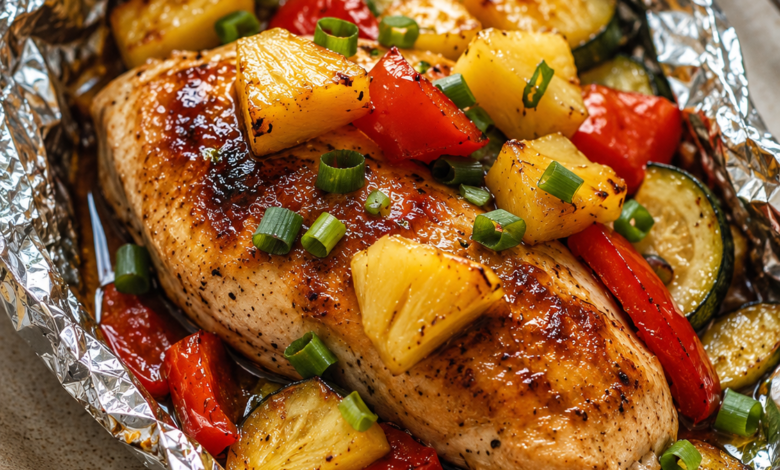
Teriyaki Chicken and Pineapple Foil Packets
Quick Answer
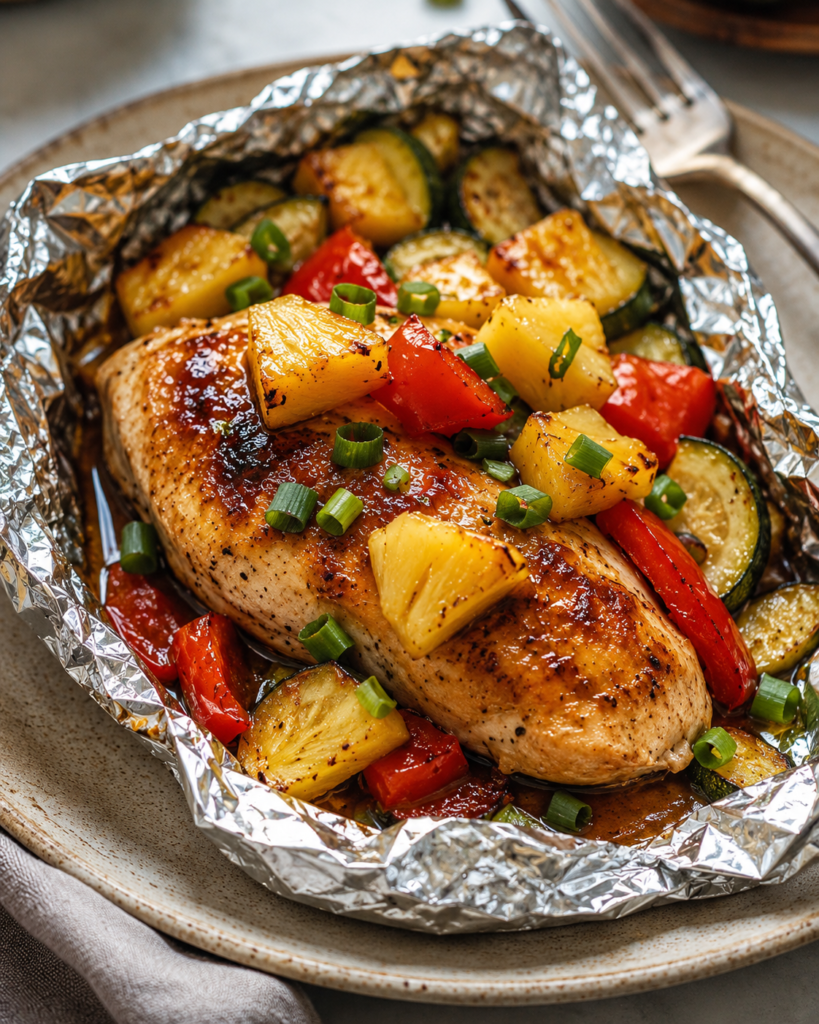
Teriyaki chicken and pineapple foil packets combine juicy chicken breasts, pineapple, zucchini, and red bell pepper with a homemade savory-sweet teriyaki glaze. The packets bake at 425°F for about 24–28 minutes, then open for a quick broil that caramelizes the glaze. Cook the chicken until the thickest part reaches 165°F.
These foil packets are especially useful when you want a colorful weeknight dinner without several pans to wash. The foil traps moisture around the chicken while the pineapple and vegetables soften in the teriyaki cooking juices.
The final broiling step is what gives this version its deeper color and lightly caramelized surface. Instead of leaving the chicken pale from enclosed cooking, you open the packets, brush on reserved glaze, and expose them briefly to high heat.
Easy Chicken Dinner Recipes
Why This Recipe Works
Foil packet cooking is naturally good at keeping lean chicken breast moist because the ingredients cook in a small enclosed environment. As the chicken, pineapple, zucchini, and peppers heat up, they release moisture that helps create gentle steam inside the packet.
That moisture is useful, but too much liquid can make the finished dish watery. This recipe uses a moderate amount of teriyaki glaze rather than pouring a large quantity into each packet. The sauce seasons the food while still allowing the chicken and vegetables to release their own juices.
The chicken breasts are also kept reasonably even in thickness. That matters because a very thick center may still be undercooked when the thinner edges are already dry.
Fresh pineapple adds sweetness and acidity while holding its shape well during baking. Red bell pepper contributes sweetness and color, while zucchini softens quickly enough to cook in roughly the same time as the chicken when it is sliced about 1/3 inch thick.
The most useful technique comes at the end. A sealed foil packet keeps food moist, but it does not create much browning. Opening the packets, adding a little reserved teriyaki glaze, and broiling for just 1–2 minutes gives the chicken a glossy, caramelized finish without requiring a separate skillet.
Recipe Summary
- Prep Time: 20 minutes
- Cook Time: 24–28 minutes
- Rest Time: 5 minutes
- Total Time: 49–53 minutes
- Servings: 4
- Course: Main Course
- Cuisine: American, Asian-inspired
- Difficulty: Easy
- Estimated Calories: About 390 per serving
- Oven Temperature: 425°F
- Chicken Doneness: 165°F at the thickest point
- Main Method: Sealed foil baking followed by a brief broil
Ingredients
Chicken and Vegetables
- 4 boneless, skinless chicken breasts, about 6 ounces each
- 2 cups fresh pineapple chunks, about 1-inch pieces
- 1 large red bell pepper, cut into 1-inch pieces
- 1 medium zucchini, sliced into 1/3-inch half-moons
- 2 teaspoons neutral cooking oil
- 1/2 teaspoon kosher salt
- 1/4 teaspoon freshly ground black pepper
- 3 green onions, thinly sliced, divided
Homemade Teriyaki Glaze
- 1/3 cup reduced-sodium soy sauce
- 1/4 cup pineapple juice
- 2 tablespoons packed light brown sugar
- 1 tablespoon honey
- 1 tablespoon rice vinegar
- 2 teaspoons toasted sesame oil
- 2 cloves garlic, finely minced
- 1 teaspoon freshly grated ginger
- 1 tablespoon cornstarch
- 1 tablespoon cold water
Ingredient Notes
Chicken breasts: Similar-size pieces cook most evenly. If one end is much thicker than the other, gently flatten the thickest section before assembling the packets.
Fresh pineapple: Fresh chunks keep a firmer texture and can develop attractive caramelized edges during the final broiling step.
Zucchini: Keep the slices about 1/3 inch thick. Very thin zucchini can become overly soft while the chicken finishes cooking.
Reduced-sodium soy sauce: This gives you more control over the final salt level because the sauce concentrates slightly as it cooks.
Cornstarch: Mix it with cold water before adding it to the sauce. Adding dry cornstarch directly to hot liquid can create lumps.
Equipment
- Small saucepan
- Whisk
- Large baking sheet
- Heavy-duty aluminum foil
- Instant-read thermometer
- Pastry brush or spoon
How to Make Teriyaki Chicken and Pineapple Foil Packets
1. Preheat the oven
Heat the oven to 425°F. Tear four large sheets of heavy-duty aluminum foil, approximately 12 × 16 inches, and arrange them on a baking sheet.
The sheets need to be large enough to hold the chicken and vegetables while still leaving room to fold the edges securely.
2. Make the teriyaki glaze
Combine the soy sauce, pineapple juice, brown sugar, honey, rice vinegar, sesame oil, garlic, and ginger in a small saucepan.
Bring the mixture to a gentle simmer over medium heat, stirring until the sugar has dissolved.
The sauce should smell savory, slightly sweet, and aromatic from the garlic and ginger without becoming thick yet.
3. Thicken the sauce
Whisk the cornstarch with 1 tablespoon cold water until smooth.
Slowly whisk the slurry into the simmering teriyaki mixture. Cook for about 1 minute, stirring constantly.
The glaze is ready when it lightly coats the back of a spoon but still pours easily. Avoid reducing it into a thick syrup because it will continue concentrating during baking and broiling.
4. Prepare the chicken
Pat the chicken breasts dry.
If any breast is dramatically thicker at one end, gently pound the thickest section until the piece is approximately 3/4 to 1 inch thick.
This small adjustment helps the center reach a safe temperature without overcooking the thinner edges.
5. Season the pineapple and vegetables
Combine the pineapple, red bell pepper, and zucchini with the neutral oil, salt, and black pepper.
Use a light hand with the seasoning. The teriyaki glaze will provide most of the final savory flavor.
6. Assemble the foil packets
Divide the pineapple and vegetables evenly among the four foil sheets.
Set one chicken breast over each portion, leaving some pineapple, peppers, and zucchini visible around the sides.
Spoon approximately 2 tablespoons of teriyaki glaze over each chicken breast and its vegetables. Keep the remaining glaze separate for finishing.
Do not flood the packets. Chicken, pineapple, and zucchini will all release additional moisture as they cook.
7. Seal the packets
Bring the long sides of the foil together over each chicken breast and fold them down several times.
Fold the shorter ends inward to close each packet securely.
Leave a little air space above the food instead of pressing the foil tightly against the chicken. That room allows hot steam to circulate.
8. Bake
Place the baking sheet in the oven and bake the packets for 20 minutes.
Carefully open one packet away from your face because hot steam will escape.
Insert an instant-read thermometer into the thickest part of the chicken.
9. Finish cooking
If necessary, reseal loosely and continue baking for another 4–8 minutes, checking until the thickest part of the chicken reaches 165°F.
The exact time depends more on chicken thickness than weight alone.
10. Caramelize the glaze
Carefully open all four packets.
Brush each chicken breast with a thin layer of the reserved teriyaki glaze.
Place the open packets under the broiler for 1–2 minutes, watching continuously.
The glaze should become glossy with a few darker caramelized patches. Remove the chicken before the sugary sauce begins to burn.
11. Rest and serve
Let the chicken rest for 5 minutes.
Spoon some of the flavorful juices from the bottom of each foil packet over the chicken, then finish with sliced green onions.
Serve directly in the foil packet or transfer the chicken and vegetables to plates.
How Long to Bake Chicken Foil Packets
For chicken breasts around 6 ounces and roughly 3/4 to 1 inch thick, these foil packets take approximately 24–28 minutes at 425°F.
Chicken thickness can vary significantly, so time alone should not determine doneness. Check the thickest part with an instant-read thermometer and continue cooking until it reaches 165°F.
Very thick breasts may require additional time, which is why evening out the thickness before cooking improves reliability.
How to Keep Chicken Juicy in Foil Packets
Start with evenly thick chicken breasts and avoid baking longer than necessary.
The foil should be securely closed during most of the cooking process so moisture remains trapped around the chicken. At the same time, avoid adding excessive sauce because the chicken, pineapple, and vegetables already release liquid.
Once the chicken reaches 165°F, remove it from prolonged heat. A 5-minute rest helps the meat retain its juices before serving.
How to Prevent Watery Foil Packets
A little cooking liquid in the bottom of the foil is normal and desirable. It should taste like a light teriyaki pan sauce rather than resemble soup.
Three details help control excess moisture:
- Don’t pour unnecessary sauce into the packets.
- Keep zucchini slices relatively thick.
- Open the packets during the final stage so some moisture can escape while the glaze caramelizes.
If a packet contains more liquid than you prefer, serve the chicken and vegetables with only as much of the cooking juice as you want.
Chef Tips
- Keep chicken thickness consistent. Even pieces finish at approximately the same time.
- Reserve glaze before assembling. The clean sauce can safely be used for the final brushing step.
- Don’t over-thicken the sauce. A pourable glaze blends better with the natural packet juices.
- Cut vegetables generously. Small pieces can become too soft before the chicken is finished.
- Use heavy-duty foil. It is less likely to tear while folding or opening.
- Leave room inside the packet. Steam circulates better when the foil isn’t pressed directly onto the chicken.
- Check doneness with a thermometer. Color alone is not a reliable guide.
- Watch the broiler continuously. Honey and brown sugar can darken very quickly.
- Add green onions after cooking. Their fresh flavor and color are better preserved.
- Spoon the packet juices over the chicken. They carry much of the pineapple-teriyaki flavor.
Common Mistakes to Avoid
Using chicken breasts with very different thicknesses
One piece may dry out before another reaches a safe temperature. Flatten unusually thick sections before cooking.
Adding too much teriyaki sauce
Extra sauce combines with moisture from the chicken and vegetables and can make the packets watery. Use the measured amount and save the rest for finishing.
Cutting zucchini too thin
Thin zucchini can become very soft. Keep slices approximately 1/3 inch thick.
Sealing the foil directly against the food
The packet should be closed, but a small amount of space above the chicken allows steam to circulate.
Cooking entirely by the clock
Ovens and chicken thickness vary. Use 24–28 minutes as a guide, then rely on a thermometer for final doneness.
Overcooking the chicken
Continuing well past 165°F can make lean chicken breast dry. Check toward the early end of the cooking range.
Walking away during broiling
Teriyaki glaze contains sugar, honey, and pineapple juice, so it can move from caramelized to burned quickly. Stay beside the oven during the final 1–2 minutes.
Variations
Spicy Teriyaki Chicken Foil Packets
Stir 1–2 teaspoons of sriracha or chili-garlic sauce into the teriyaki glaze. The cooking method stays the same, but the finished dish gains noticeable heat.
Chicken Thigh Version
Use boneless, skinless chicken thighs in place of chicken breasts. Their richer flavor works naturally with pineapple and teriyaki sauce. Cooking time may vary, so verify doneness with a thermometer.
Extra Vegetable Version
Add mushrooms or small broccoli florets while reducing some of the zucchini so the foil packets do not become overcrowded.
Gluten-Free Version
Replace conventional soy sauce with certified gluten-free tamari and confirm that the remaining packaged ingredients meet your dietary needs.
Storage Instructions
Room Temperature
Do not leave cooked chicken at room temperature for more than 2 hours.
Refrigerator
Transfer leftovers to an airtight container and refrigerate for up to 3–4 days.
Freezer
Freeze individual portions in freezer-safe containers for up to 2 months for best quality.
The chicken and sauce freeze reasonably well, but zucchini will become softer after thawing.
Best Storage Container
A shallow airtight food-storage container works better than leaving leftovers in opened foil. Store some of the cooking juices with the chicken to help protect it during reheating.
How to Reheat
For the best texture, place the chicken, vegetables, and a spoonful of cooking juices in a covered baking dish.
Warm at 325°F until heated through.
The lower oven temperature reduces the risk of drying out the chicken breast while the covered dish keeps moisture around the food.
For a faster option, microwave an individual portion at reduced power in short intervals. Cover it loosely and include a small spoonful of sauce or water.
Avoid prolonged high heat, which can make previously cooked chicken breast tough.
Make-Ahead Instructions
This recipe is easiest when the components are prepared separately and the foil packets are assembled close to baking time.
The teriyaki glaze can be prepared first and refrigerated in a covered container. The pineapple and vegetables can also be cut and kept chilled separately.
Keep raw chicken refrigerated on its own and assemble the packets shortly before cooking. This prevents the vegetables from sitting unnecessarily in the salty glaze and keeps preparation simple.
Serving Suggestions
These teriyaki chicken foil packets already contain protein, fruit, and vegetables, so a simple starch is usually all they need.
Good pairings include:
- Steamed jasmine rice
- Long-grain white rice
- Brown rice
- Coconut rice
- Steamed broccoli
- Garlic green beans
- Cucumber salad
- Asian-style cabbage slaw
For drinks, try unsweetened iced tea, sparkling water with lime, or lightly pineapple-infused water.
Frequently Asked Questions
Can I use chicken thighs instead of chicken breasts?
Yes. Boneless, skinless chicken thighs work well with teriyaki sauce and pineapple. Their cooking time may differ slightly, so use an instant-read thermometer rather than relying only on the time listed for chicken breasts.
Can I use canned pineapple?
You can, although the texture will be softer than fresh pineapple. Drain it thoroughly before adding it to the packets so you don’t introduce unnecessary liquid.
Why are my chicken foil packets watery?
Chicken, zucchini, peppers, and pineapple all release moisture while cooking. Adding too much sauce makes that problem worse. Use the recommended glaze quantity and open the packets during the final broiling stage.
Do I need to flip the chicken?
No. The chicken cooks inside a sealed packet where hot steam and oven heat circulate around it. Flipping isn’t necessary with this method.
How do I know when the chicken is done?
Insert an instant-read thermometer into the thickest section. The chicken should reach 165°F before serving.
Why broil the chicken after baking?
Sealed foil keeps chicken moist but limits browning. Briefly broiling the open packet caramelizes the reserved teriyaki glaze and creates a deeper, more appetizing surface.
Can I make these foil packets ahead?
You can prepare the glaze and chop the vegetables ahead, then keep them refrigerated separately. For the best texture, assemble the raw chicken packets closer to the time you plan to bake them.
What vegetables work well with teriyaki chicken?
Zucchini and red bell pepper work especially well here. Mushrooms and small broccoli florets are also practical additions as long as the packets are not overcrowded.
What should I serve with pineapple teriyaki chicken?
Rice is the simplest pairing. Jasmine rice, brown rice, coconut rice, broccoli, green beans, cucumber salad, and cabbage slaw all complement the savory-sweet glaze.
Key Takeaways
- Bake the foil packets at 425°F and cook the chicken to 165°F.
- Even chicken thickness helps prevent dry edges and undercooked centers.
- Use only enough teriyaki glaze to coat the food because the ingredients release additional moisture.
- A brief final broil creates the caramelized finish that sealed foil cooking cannot provide.
- Refrigerate leftovers for 3–4 days and reheat gently with some cooking juices.
Quick Recipe Summary
Teriyaki chicken and pineapple foil packets are an easy oven dinner made with boneless chicken breasts, fresh pineapple, red bell pepper, zucchini, and homemade teriyaki glaze. Divide the ingredients among four foil sheets, add about 2 tablespoons of glaze to each packet, seal, and bake at 425°F for approximately 24–28 minutes, or until the chicken reaches 165°F. Open the packets, brush the chicken with reserved glaze, and broil for 1–2 minutes to create a glossy caramelized finish. Rest for 5 minutes and serve with the packet juices and sliced green onions.
More Recipes
- Easy Chicken Dinner Recipes
- Delicious Shrimp and Sausage Foil Packet Dinner Recipe
- Teriyaki Lemon Pepper Wings
- Chicken Fried Rice Recipe with Juicy Chicken and Veggies
- Steak and Potato Foil Wraps: The Ultimate Grilled Delight
Useful links
- USDA Safe Minimum Internal Temperatures
- USDA Leftovers and Food Storage
- FDA Food Safety During Preparation
- Cooperative Extension Guide to Baking Potatoes
- MyPlate Vegetable Serving Guidance