Chicken Fried Rice Recipe
Quick Answer
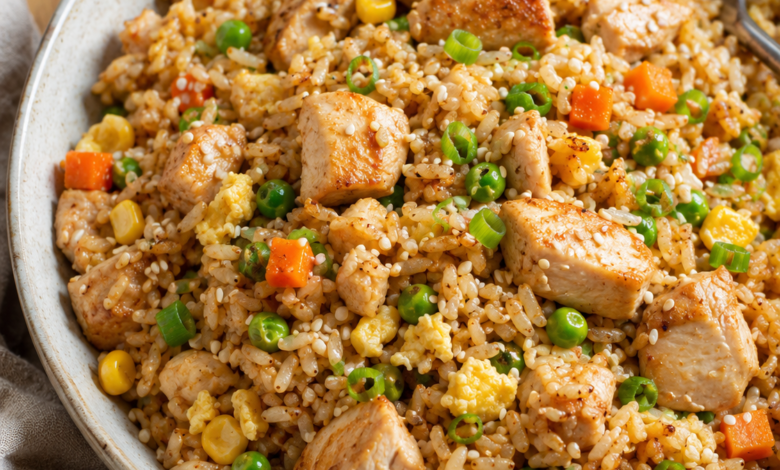
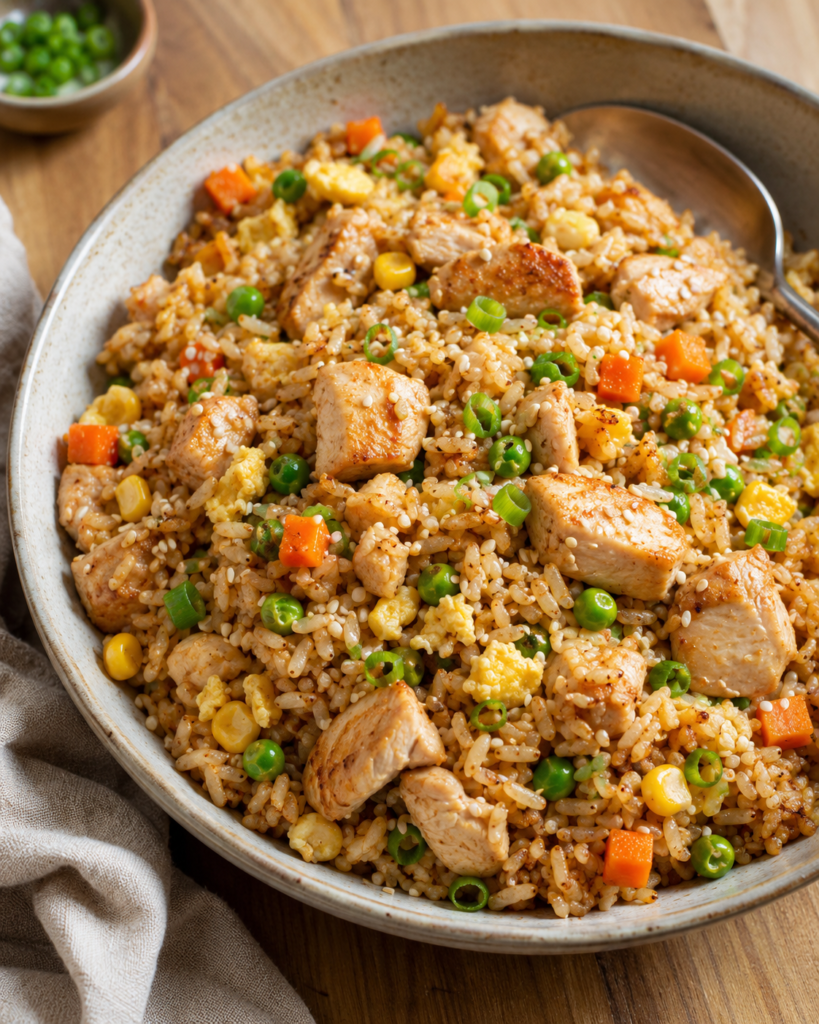
This chicken fried rice recipe combines cold long-grain rice with juicy browned chicken, scrambled eggs, peas, carrots, corn, green onions, and a simple soy-sesame sauce. Cooking the chicken, eggs, vegetables, and rice in stages keeps the chicken tender and the rice grains separated. It makes a practical 40-minute dinner and works in either a large skillet or wok.
Chicken fried rice is especially useful when you already have cooked rice in the refrigerator. Cold rice is easier to separate in a hot skillet, so it develops those lightly toasted edges instead of turning soft and clumpy.
The finished dish is savory without being overly sauced, with tender chicken, soft pieces of egg, colorful vegetables, and enough browning to give the rice real stir-fried flavor. If you’d like another chicken-and-rice dinner, see Teriyaki Chicken and Fried Rice.
The biggest difference between good homemade fried rice and a soggy batch isn’t a complicated ingredient. It’s managing moisture, heat, and pan space. Start with cold rice, use a sufficiently large skillet, and give the ingredients time to contact the hot surface.
Why This Chicken Fried Rice Recipe Works
Cold rice stays separate. Refrigerated rice has less surface moisture than freshly cooked hot rice. Once loosened before cooking, the grains fry more readily instead of sticking together.
The chicken is browned separately. One-inch pieces have enough surface area to develop golden edges while staying substantial and juicy. Removing them before frying the rice also prevents overcooking.
The eggs stay soft. Scrambling them briefly and removing them from the skillet preserves distinct yellow curds instead of letting the egg disappear into the rice.
The sauce is concentrated but controlled. Soy sauce, toasted sesame oil, a small amount of brown sugar, and black pepper season the rice without flooding it with liquid.
Short periods of undisturbed cooking add texture. Letting sections of rice sit against the hot skillet for 30–45 seconds creates scattered toasted grains while the majority of the rice stays tender.
Recipe Summary
- Prep Time: 20 minutes
- Cook Time: 20 minutes
- Total Time: 40 minutes
- Servings: 6
- Course: Main Course
- Cuisine: Asian-inspired American
- Difficulty: Easy
- Estimated Calories: About 570 per serving
Ingredients
For the Chicken
- 1 1/2 pounds boneless, skinless chicken breasts, cut into 1-inch pieces
- 1 tablespoon low-sodium soy sauce
- 1 teaspoon toasted sesame oil
- 1/4 teaspoon black pepper
- 1 tablespoon neutral cooking oil, such as avocado or vegetable oil
For the Fried Rice
- 6 cups cold cooked long-grain white rice, preferably refrigerated overnight
- 3 large eggs, lightly beaten
- 1 tablespoon neutral cooking oil
- 1 cup frozen green peas
- 1 cup carrots, cut into small dice
- 3/4 cup frozen or canned corn kernels, drained if canned
- 3 garlic cloves, finely minced
- 4 green onions, thinly sliced, white and green parts separated
- 2 tablespoons neutral cooking oil
For the Sauce
- 1/4 cup low-sodium soy sauce
- 1 tablespoon toasted sesame oil
- 1 teaspoon light brown sugar
- 1/2 teaspoon black pepper
For Garnishing
- 1 tablespoon sesame seeds
- Reserved sliced green onion tops
Ingredient Notes
Cold cooked rice: Day-old rice is ideal, but it isn’t mandatory. If you cook the rice the same day, spread it in a thin layer and cool it thoroughly before frying.
Long-grain rice: The grains remain distinct more easily than softer, stickier varieties, which suits the texture of this recipe.
Low-sodium soy sauce: Using a lower-sodium version gives you better control because soy sauce appears in both the chicken seasoning and the fried-rice sauce.
Chicken breast: Keep the pieces close to 1 inch. Tiny pieces can dry out before they develop much browning.
Frozen vegetables: Peas and corn can go into the skillet frozen. There’s no need to thaw them first.
Equipment
- Cutting board
- Chef’s knife
- Small mixing bowls
- Large wok or 12- to 14-inch skillet
- Spatula or wooden spoon
- Instant-read thermometer
A wok is useful, but it isn’t required. A large skillet works well as long as there is enough room for the rice to fry rather than steam.
How to Make Chicken Fried Rice
- Season the chicken. Toss the chicken with 1 tablespoon soy sauce, 1 teaspoon sesame oil, and 1/4 teaspoon black pepper. Leave it for about 10 minutes while you prepare the remaining ingredients. This short seasoning time adds flavor without leaving the chicken sitting in a salty marinade for too long.
- Loosen the cold rice. Use your fingers or a fork to break apart refrigerated clumps. Most of the grains should be separate before the rice reaches the skillet. Large compacted pieces are harder to separate once cooking begins.
- Mix the sauce. Combine 1/4 cup soy sauce, 1 tablespoon sesame oil, brown sugar, and 1/2 teaspoon black pepper. Having the sauce ready prevents the rice from sitting in the skillet while you stop to measure ingredients.
- Brown the chicken. Heat 1 tablespoon neutral oil over medium-high to high heat. Add the chicken in one layer and cook for about 5–7 minutes, turning occasionally. Look for light golden browning on several sides. The thickest pieces should reach 165°F internally. Transfer the chicken to a clean plate.
- Scramble the eggs. Add 1 tablespoon oil and pour in the beaten eggs. Gently move them around the skillet until soft curds form, about 45–60 seconds. Remove them while they’re still tender; they’ll cook briefly again when returned to the rice.
- Cook the vegetables. Add the remaining 2 tablespoons oil. Stir-fry the carrots and white parts of the green onions for about 2 minutes. Add the peas and corn and cook another 1–2 minutes. The vegetables should be hot and tender while still keeping their color.
- Add the garlic. Stir in the minced garlic for about 30 seconds. As soon as it smells fragrant, continue to the rice. Dark brown garlic can become bitter.
- Fry the rice. Add the cold rice and spread it across as much of the hot pan as possible. Leave it undisturbed for 30–45 seconds, toss, then allow another portion to contact the skillet. Continue for 4–5 minutes. You’re looking for hot, separated grains with scattered golden toasted spots.
- Add the sauce. Drizzle the prepared sauce around the hot skillet rather than pouring all of it into one mound of rice. Toss for 1–2 minutes, until the seasoning is evenly distributed and the rice looks lightly glossy but not wet.
- Return the chicken and eggs. Add both back to the skillet and toss gently for 1–2 minutes. Break up only very large egg pieces. The finished rice should still contain visible yellow curds and substantial pieces of chicken.
- Finish with green onions. Remove the skillet from the heat and fold in most of the green onion tops. Taste before adding any extra soy sauce.
- Serve. Spoon into a wide serving bowl and scatter the remaining green onions and sesame seeds over the top.
Chef Tips
- Prep everything before heating the skillet. Fried rice moves quickly once cooking begins.
- Use your widest skillet. More hot surface means more frying and less steaming.
- Work in batches if necessary. A crowded small skillet won’t behave like a large wok.
- Dry rice matters more than excessive oil. Adding more oil won’t rescue overly wet rice.
- Give the rice brief contact with the pan. Constant stirring prevents toasted spots from developing.
- Don’t chase a uniformly dark brown color. Fried rice can be well seasoned without soaking every grain in soy sauce.
- Keep the vegetables relatively small. Small dice distribute evenly and cook quickly.
- Remove the chicken once it’s cooked. Leaving it in the pan throughout the entire recipe is an easy way to dry it out.
- Taste at the end. Soy sauces vary in saltiness, so adjust only after all ingredients are combined.
- Keep the garnish restrained. Green onions and sesame seeds should complement the fried rice rather than cover it.
Common Mistakes to Avoid
1. Starting with hot, wet rice.
Warm rice releases more moisture and is prone to clumping. Cool it completely before frying. If you’ve just made it, spread it out instead of leaving it packed in a pot.
2. Overcrowding the skillet.
When too much food is packed into a small pan, released moisture becomes trapped and the rice steams. Use a large skillet or divide the rice between two batches.
3. Using too much sauce.
More soy sauce doesn’t necessarily mean more flavor. Too much liquid can make the rice salty, dark, and soggy. Measure the sauce before you start.
4. Cooking over low heat.
The rice needs a properly heated cooking surface to develop toasted areas. Low heat warms the ingredients but doesn’t create the same stir-fried texture.
5. Stirring without stopping.
Movement prevents sticking, but constant motion also prevents browning. Give sections of rice 30–45 seconds against the hot pan between tosses.
6. Overcooking the eggs.
Fully firm eggs become tougher when they return to the skillet. Remove them while they’re still soft.
7. Leaving the chicken in the skillet throughout cooking.
Chicken breast cooks faster than the complete fried-rice process. Cook it first, remove it, then return it near the end.
Variations
Chicken Thigh Fried Rice
Use 1 1/2 pounds boneless, skinless chicken thighs instead of breasts. The finished chicken will have a richer flavor and slightly juicier texture.
Spicy Chicken Fried Rice
Stir 1–2 teaspoons of chili-garlic sauce or sriracha into the prepared sauce. Start with the smaller amount if you’re serving people with different heat preferences.
Extra-Vegetable Fried Rice
Add up to 1 cup of finely diced bell pepper, mushrooms, or shelled edamame. Avoid adding several cups of extra vegetables at once because they release moisture and can crowd the skillet.
Gluten-Free Chicken Fried Rice
Replace regular soy sauce with certified gluten-free tamari and check the labels of any packaged seasonings you use. The basic cooking method stays the same.
Storage Instructions
Room temperature: Refrigerate the fried rice within 2 hours of cooking.
Refrigerator: Transfer cooled leftovers to an airtight container and refrigerate for up to 3–4 days.
Freezer: Divide into meal-size portions and freeze in airtight containers for up to 2 months for best quality.
Best container: A shallow airtight container helps the rice cool efficiently and prevents excessive drying in the refrigerator.
Store leftovers promptly rather than leaving a large warm bowl of rice on the counter for an extended period.
How to Reheat Chicken Fried Rice
The skillet is the best option when you want to restore some of the original fried-rice texture.
Heat a lightly oiled skillet over medium-high heat, add the refrigerated rice, and toss for about 4–6 minutes until thoroughly hot. If the rice seems unusually dry, add only a teaspoon or two of water rather than pouring in more sauce.
For individual portions, the microwave is faster. Cover the rice loosely and heat it in intervals, stirring halfway through so the center heats evenly.
Leftovers containing chicken should be reheated to 165°F.
Make-Ahead Instructions
This recipe is particularly well suited to partial make-ahead preparation.
Cook the rice up to 1–2 days ahead and refrigerate it in a covered container. You can also dice the carrots, slice the green onions, and mix the sauce a day ahead. Store each component separately in the refrigerator.
When you’re ready to cook, loosen the cold rice before heating the skillet. Cook the chicken, eggs, vegetables, and rice fresh for the best texture.
Serving Suggestions
Chicken fried rice can stand alone as a complete dinner, but simple sides work well when you want a larger meal.
Try it with steamed broccoli, stir-fried green beans, dumplings, egg drop soup, or a crisp cucumber salad. Botainfo’s Simple Cucumber Salad gives you a fresh, cool contrast to the warm savory rice.
For another skillet-style chicken meal, Garlic Chicken Stir Fry uses a similarly practical weeknight cooking style.
Unsweetened iced tea, sparkling water, or hot green tea pair easily with the savory soy and sesame flavors.
Frequently Asked Questions
What is the best rice for chicken fried rice?
Cold cooked long-grain white rice works especially well because the grains separate easily during frying. Rice that has been refrigerated overnight is ideal, but properly cooled same-day rice can also work.
Can I make chicken fried rice with freshly cooked rice?
Yes, but cool it first. Spread freshly cooked rice in a thin layer so heat and moisture can escape. Don’t add steaming-hot rice directly to the skillet or it is more likely to clump and soften.
Why is my chicken fried rice mushy?
The usual causes are wet or warm rice, an overcrowded skillet, too much sauce, or insufficient heat. Start with cool rice and give it enough room to make direct contact with the hot cooking surface.
Do I need a wok?
No. A 12- to 14-inch skillet gives this recipe enough surface area for home cooking. If your skillet is smaller, fry the rice in batches instead of crowding it.
Should chicken be cooked before adding it to fried rice?
For this recipe, yes. Browning the chicken first makes it easier to cook the pieces safely without overcooking the rice. Remove the chicken and return it during the final couple of minutes.
Can I use chicken thighs instead of chicken breasts?
Yes. Substitute the same weight of boneless, skinless chicken thighs. The texture will be slightly richer and juicier, but the basic method remains unchanged.
When should I add soy sauce to fried rice?
Add the prepared sauce after the rice has already heated and developed some toasted spots. Drizzling it around the hot pan helps distribute the seasoning without soaking one section of rice.
Can I freeze chicken fried rice?
Yes. Cool it promptly, divide it into airtight portions, and freeze for up to 2 months for best quality. A hot skillet is useful for reheating because it helps restore some of the fried texture.
How long does chicken fried rice last in the refrigerator?
Properly cooled chicken fried rice can be refrigerated in an airtight container for up to 3–4 days.
Key Takeaways
- Cold long-grain rice gives you a better chance of achieving distinct, fluffy grains.
- Cook the chicken and eggs separately so neither becomes overcooked while the rice fries.
- A large, properly heated skillet prevents steaming and improves browning.
- Use enough sauce to season the rice without leaving it wet.
- Refrigerate leftovers promptly and reheat them thoroughly.
Quick Recipe Summary
Chicken fried rice is made by stir-frying cold cooked long-grain rice with browned chicken breast, scrambled eggs, peas, carrots, corn, garlic, and green onions. A simple mixture of low-sodium soy sauce, toasted sesame oil, brown sugar, and black pepper seasons the rice without making it overly wet. For better texture, cook the chicken and eggs separately, use a large hot skillet, and allow the rice brief periods of direct contact with the pan. The recipe takes about 40 minutes, serves six, and leftovers can be refrigerated for 3–4 days.
More Recipes
- Teriyaki Chicken and Fried Rice
- Easy Hibachi Steak Bites and Fried Rice
- Garlic Chicken Stir Fry
- Kung Pao Chicken
- Simple Cucumber Salad
Useful Links
- USDA Safe Minimum Internal Temperatures
- USDA Leftovers and Food Storage
- FDA Food Safety During Preparation
- Cooperative Extension Guide to Baking Potatoes
- MyPlate Vegetable Serving Guidance