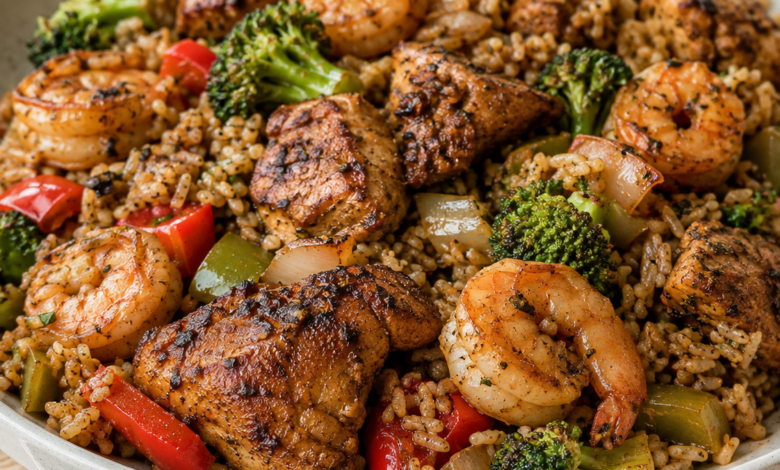
Jerk Shrimp and Chicken Stir Fry with Seasoned Rice
Quick Answer: Jerk shrimp and chicken stir fry is a hearty skillet dinner made with browned jerk-seasoned chicken, tender shrimp, seasoned rice, broccoli, bell peppers, and onions. Cooking the chicken and shrimp separately keeps both proteins at their best, while cold cooked rice gives the finished dish distinct grains instead of a soft, mushy texture.
This colorful chicken-and-shrimp dinner brings together warm jerk spices, caramelized chicken, plump shrimp, crisp-tender vegetables, and savory rice in one generous meal. It has plenty of flavor without relying on a heavy sauce, so you can still taste the individual ingredients.
It works especially well for weeknight dinners because most of the preparation can be done before the skillet gets hot. Once you start cooking, everything moves quickly.
The recipe is Caribbean-inspired rather than an attempt to replace traditional Jamaican jerk cooking. If you enjoy this flavor direction, Jollof-Style Jerk Chicken is another Botainfo recipe built around jerk-seasoned chicken.
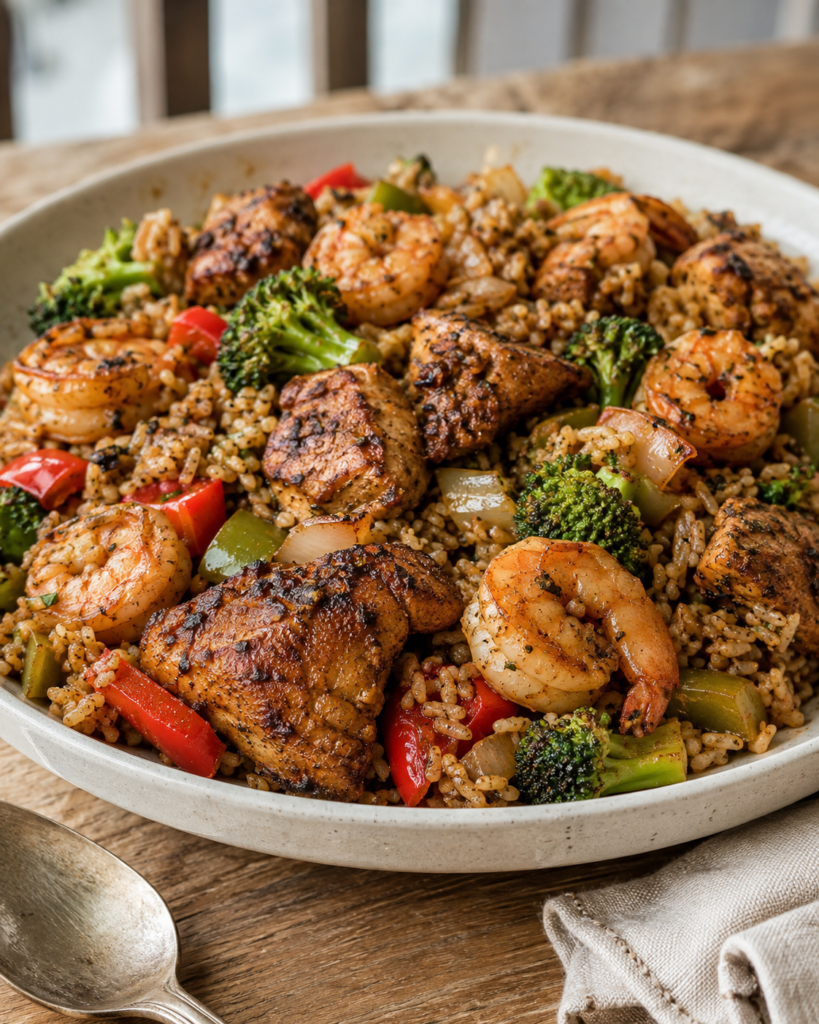
Why This Jerk Shrimp and Chicken Stir Fry Works
The biggest advantage of this method is that the chicken and shrimp aren’t forced to cook on the same schedule. Chicken thighs need enough time over high heat to brown and reach a safe internal temperature. Shrimp need only a few minutes. Cooking them separately gives you browned chicken without rubbery shrimp.
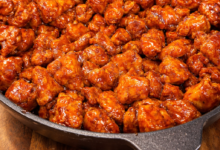
Cold rice is another important part of the recipe. Chilled cooked rice has a drier surface than freshly steamed rice, so the grains separate more readily in the skillet and absorb seasoning without turning pasty.
The vegetables are also cooked briefly over fairly high heat. Broccoli stays green and structured, the peppers soften while keeping some bite, and the onions develop lightly browned edges.
Finally, the jerk seasoning is balanced with lime and a modest amount of soy sauce. The goal is savory, aromatic rice with visible spices and caramelization—not rice swimming in sauce.
Recipe Summary
- Prep Time: 25 minutes
- Cook Time: 30 minutes
- Rest Time: 10 minutes
- Total Time: 1 hour 5 minutes
- Servings: 6
- Course: Main Course
- Cuisine: Caribbean-inspired American
- Difficulty: Intermediate
- Estimated Calories: About 560 per serving
- Primary cooking method: High-heat skillet cooking and stir-frying
- Spice level: Medium, easily adjustable
Ingredients You’ll Need
Homemade Jerk Seasoning
- 1 1/2 teaspoons ground allspice
- 1 1/2 teaspoons dried thyme
- 1 teaspoon smoked paprika
- 1 teaspoon garlic powder
- 1 teaspoon onion powder
- 3/4 teaspoon kosher salt
- 1/2 teaspoon ground black pepper
- 1/4 teaspoon cayenne pepper, or more to taste
- 1 teaspoon packed brown sugar
Chicken and Shrimp
- 1 1/4 pounds boneless, skinless chicken thighs, cut into 1 1/2-inch pieces
- 1 pound large shrimp, peeled and deveined
- 2 tablespoons fresh lime juice, divided
- 3 tablespoons neutral cooking oil, divided
Rice and Vegetables
- 4 cups cooked long-grain white rice, completely cooled
- 3 cups broccoli florets, cut into bite-size pieces
- 1 medium red bell pepper, cut into 1-inch pieces
- 1 medium green bell pepper, cut into 1-inch pieces
- 1 medium yellow onion, cut into chunky pieces
- 2 garlic cloves, minced
- 2 tablespoons low-sodium soy sauce
- 2 tablespoons water
- 1 teaspoon fresh lime juice, plus more to taste
Ingredient Notes
Chicken thighs: Thigh meat works particularly well here because it stays juicy during the high-heat browning needed to develop those dark, seasoned edges.
Shrimp: Large shrimp are easier to sear without overcooking than very small shrimp. Pat them thoroughly dry before seasoning.
Rice: Day-old refrigerated rice is ideal. If you’re cooking rice specifically for this recipe, spread it on a sheet pan so excess steam escapes before chilling it thoroughly.
Allspice: This is one of the defining flavors in jerk seasoning. Don’t confuse ground allspice with a mixed spice blend.
Cayenne: Start conservatively. You can always add more heat after cooking.
Soy sauce: Use low-sodium soy sauce so you can control the overall salt level.
Equipment
- Large 12-inch skillet or wok
- Two medium mixing bowls
- Cutting board
- Chef’s knife
- Measuring spoons
- Wide spatula or wooden spoon
- Instant-read thermometer
How to Make Jerk Shrimp and Chicken Stir Fry
1. Mix the jerk seasoning
Combine the allspice, thyme, smoked paprika, garlic powder, onion powder, kosher salt, black pepper, cayenne, and brown sugar.
Mix thoroughly so the salt and cayenne don’t remain concentrated in one area.
2. Season the chicken
Place the chicken thighs in a bowl with 2 teaspoons lime juice, 1 tablespoon oil, and about half of the jerk seasoning.
Toss until every piece has a thin, even coating. Let the chicken rest for 10 minutes while you finish preparing the vegetables.
3. Season the shrimp
Pat the shrimp very dry with paper towels. Toss them in a separate bowl with 1 teaspoon oil, 2 teaspoons lime juice, and roughly one-third of the remaining jerk seasoning.
Keep raw shrimp separate from raw chicken and use clean utensils when moving between them.
4. Brown the chicken
Heat 1 tablespoon oil in a large skillet over medium-high heat.
Arrange the chicken in one layer. Don’t immediately start stirring. Let the first side cook for about 3 minutes so the surface has time to brown.
Turn the pieces and continue cooking for another 4–6 minutes.
The chicken should have deep golden-to-mahogany patches and reach 165°F in the thickest pieces.
Transfer it to a clean plate.
5. Cook the shrimp
Place the shrimp in the hot skillet without crowding them.
Cook for about 1–2 minutes on the first side, turn, and cook briefly on the other side.
They’re ready when the centers are opaque, the exterior is lightly browned, and the internal temperature is about 145°F.
Remove them promptly. They’ll return to the skillet later, so avoid giving them extra cooking time now.
6. Stir-fry the vegetables
Add the remaining oil, followed by the broccoli, red bell pepper, green bell pepper, and onion.
Cook over medium-high heat for 4–5 minutes, tossing occasionally.
Look for broccoli that’s bright and tender-crisp, peppers that have softened without collapsing, and onion pieces with translucent centers and a few browned edges.
7. Add the garlic and spices
Stir in the minced garlic and remaining jerk seasoning.
Cook for about 30 seconds.
You should smell the garlic and spices almost immediately. Don’t leave the dry spices against the hot skillet long enough to scorch.
8. Add the cold rice
Add the chilled rice and gently break apart any clumps with your spatula.
Spread it across the skillet and let portions of the rice sit against the hot surface for about a minute before tossing.
Continue cooking for 3–4 minutes until the grains are hot, separated, and lightly toasted in spots.
For another skillet dinner built around this technique, see Botainfo’s Teriyaki Chicken and Fried Rice.
9. Season the rice
Mix the soy sauce with 2 tablespoons water.
Drizzle it around the hot perimeter of the skillet rather than pouring the entire mixture onto the center of the rice.
As the liquid hits the hot pan, it disperses quickly through the rice. Toss until the grains are evenly seasoned without becoming wet or saucy.
10. Return the chicken
Add the cooked chicken and any juices from the plate.
Fold it through the rice and vegetables and cook for about 1 minute.
11. Add the shrimp last
Return the shrimp and gently toss just until they’re hot.
This final addition should be brief. The shrimp are already cooked.
12. Finish with lime
Remove the skillet from the heat and stir in 1 teaspoon fresh lime juice.
Taste before adding more salt. Add extra lime or a small pinch of cayenne if you want more brightness or heat.
Serve while everything is hot.
The Secret to Better Stir-Fry Rice
Cold rice isn’t simply a convenience. It’s one of the easiest ways to improve the texture of a homemade rice stir-fry.
Freshly steamed rice contains a lot of surface moisture. When that moist rice goes directly into a crowded skillet, the grains can compress and stick together rather than fry.
Cooling the rice lets excess moisture escape and firms the grains. That makes them easier to separate and better able to handle high heat.
If you don’t have leftover rice, cook it earlier in the day, spread it in a thin layer, cool it promptly, and refrigerate it until thoroughly chilled.
How to Keep Chicken Juicy and Shrimp Tender
Don’t judge both proteins by the same cooking time.
Chicken needs time to develop browning and reach 165°F internally. Shrimp cook much faster and are typically ready around 145°F.
That’s why this recipe removes each protein after its initial cooking stage and returns it only near the end.
If seafood stir-fries are a regular part of your dinner rotation, Botainfo’s Chinese-Style Shrimp and Vegetables Stir Fry is another relevant option.
Chef Tips
- Dry the proteins thoroughly. Moist surfaces steam instead of browning.
- Don’t crowd the chicken. If your skillet is small, cook it in two batches.
- Use genuinely cold rice. This is much more reliable than trying to stir-fry freshly steamed rice.
- Cut vegetables into similar sizes. They’ll cook more evenly.
- Keep broccoli fairly small. Huge florets can remain raw inside before the peppers are finished.
- Cook shrimp only until done. They’ll get another brief exposure to heat when everything is combined.
- Season in layers. Seasoning the proteins separately gives the dish more depth than adding all the spices at the end.
- Use the skillet’s hot perimeter. Adding the soy mixture around the edge distributes flavor while limiting soggy rice.
- Taste before salting at the end. Jerk seasoning and soy sauce already contribute sodium.
- Use fresh lime as a finishing ingredient. A small amount added off the heat brightens the savory spices without making the dish taste sharply acidic.
Common Mistakes to Avoid
Using freshly steamed rice
Hot, moist rice tends to stick together. Cool it thoroughly before stir-frying.
Overcrowding the chicken
Crowding releases moisture faster than it can evaporate, so the chicken steams. Work in batches if necessary.
Cooking chicken and shrimp together
By the time the chicken is safely cooked and browned, the shrimp may be tough. Cook them separately.
Overcooking the shrimp
Remove shrimp as soon as they’re opaque and properly cooked. Return them only at the end.
Burning the jerk seasoning
Ground spices can scorch quickly. Once they go into the skillet with the garlic, keep things moving and add the rice shortly afterward.
Adding too much sauce
This isn’t meant to be a wet stir-fry. Too much liquid softens the rice and masks the jerk seasoning.
Stirring constantly
Some contact time against the hot skillet is necessary for browning. Give the chicken and rice short periods of undisturbed cooking.
Variations
Extra-Spicy Jerk Chicken and Shrimp
Increase the cayenne to 1/2 teaspoon or add a very small amount of minced Scotch bonnet or habanero pepper. The heat level will increase significantly, but the cooking method remains the same.
Chicken Breast Version
Use boneless, skinless chicken breast instead of thighs. Watch the temperature closely because breast meat has less fat and becomes dry more easily.
Brown Rice Version
Substitute 4 cups of chilled cooked long-grain brown rice. Expect a nuttier flavor and slightly firmer grains.
Gluten-Free Version
Use certified gluten-free tamari instead of regular soy sauce and verify that your individual seasonings are gluten-free.
Shrimp-Only Version
Omit the chicken and increase the shrimp to about 1 3/4 pounds. Cook the vegetables and rice before returning the shrimp at the very end.
Botainfo also has a 10-Minute Honey Garlic Shrimp and Broccoli recipe if you’d prefer a shrimp-centered dinner.
Storage Instructions
Room temperature: Don’t leave the cooked dish at room temperature for more than 2 hours.
Refrigerator: Transfer leftovers to a shallow airtight container and refrigerate promptly. Use within 3 days.
Freezer: Freeze airtight portions for up to 2 months. The rice and chicken freeze well, although the shrimp may become somewhat firmer after reheating.
Best container: A shallow airtight container allows leftovers to cool more efficiently than a very deep container.
How to Reheat
The skillet is the best option when you want to preserve the rice texture.
Place a portion in a skillet over medium heat with 1–2 teaspoons water. Cover briefly so the steam warms the center, then uncover and toss until the chicken and rice are hot and reach 165°F.
For individual portions, the microwave is convenient. Cover loosely and heat in short intervals, stirring between them. Avoid unnecessarily long heating because shrimp become firm quickly.
Make-Ahead Instructions
This dish is especially easy to organize ahead of time.
The rice can be cooked and refrigerated a day in advance. The vegetables can be chopped and stored separately in airtight containers.
You can also mix the dry jerk seasoning ahead and keep it sealed at room temperature.
For best texture and food safety, don’t mix raw chicken and shrimp together for storage. Keep them in separate containers and season them shortly before cooking.
Serving Suggestions
The recipe already includes protein, rice, and vegetables, so it can stand on its own as a complete dinner.
For a larger meal, serve it with a crisp cabbage slaw, sliced avocado, sautéed green beans, fresh pineapple, mango, or extra lime wedges.
Sparkling lime water, iced tea, fruit punch, or ginger beer all pair naturally with the warm spices.
For another easy chicken-and-vegetable dinner, try Botainfo’s Garlic Chicken Stir Fry.
Frequently Asked Questions
Can I cook chicken and shrimp together?
It’s possible, but cooking them separately is more reliable. Chicken takes considerably longer to brown and cook safely, while shrimp need only a few minutes.
What is jerk seasoning made from?
This version combines allspice, thyme, paprika, garlic, onion, black pepper, cayenne, salt, and a small amount of brown sugar. Jerk seasoning formulas vary, especially in their heat level.
Can I use store-bought jerk seasoning?
Yes. Because commercial blends vary in salt and heat, use a modest amount at first and adjust after tasting.
Why should rice be cold for stir-fry?
Cold rice has a drier surface and firmer grains, so it separates more easily in a hot skillet. Fresh hot rice is more likely to clump and become soft.
How do I keep shrimp from becoming rubbery?
Cook them separately and remove them from the skillet as soon as they’re opaque and properly cooked. Return them only during the final minute or so.
Can I use different vegetables?
Yes. Snap peas, carrots, green beans, or zucchini can work, but their cooking times vary. Add firmer vegetables first and quick-cooking vegetables later.
Can I make the recipe less spicy?
Reduce or omit the cayenne. You’ll still get plenty of jerk-style flavor from allspice, thyme, paprika, garlic, onion, and black pepper.
Can I freeze jerk shrimp and chicken stir fry?
Yes, for up to about 2 months in an airtight freezer-safe container. The chicken and rice hold up well, although thawed shrimp may be slightly firmer.
What’s the best way to reheat it?
A covered skillet with a teaspoon or two of water warms the rice without soaking it. Remove the lid toward the end so excess moisture can evaporate.
Key Takeaways
- Cook chicken and shrimp separately so each reaches the right texture.
- Use completely chilled rice for distinct, stir-fried grains.
- High heat and adequate pan space are essential for proper browning.
- Add shrimp back only at the end to reduce overcooking.
- Refrigerate leftovers promptly and reheat only until thoroughly hot.
Quick Recipe Summary
Jerk shrimp and chicken stir fry combines jerk-seasoned chicken thighs and large shrimp with chilled long-grain rice, broccoli, bell peppers, onions, garlic, lime, and a small amount of soy sauce. Brown the chicken first, quickly cook the shrimp, and remove both before stir-frying the vegetables and cold rice. Season the rice lightly, return the chicken, then add the shrimp only long enough to warm it through. The finished dish should have juicy browned chicken, tender shrimp, separated seasoned rice grains, and crisp-tender vegetables. Refrigerate leftovers for up to 3 days.
More Recipes
- Jollof-Style Jerk Chicken
- Garlic Chicken Stir Fry
- Teriyaki Chicken and Fried Rice
- Chinese-Style Shrimp and Vegetables Stir Fry
- 10-Minute Honey Garlic Shrimp and Broccoli
Useful Links
- USDA Safe Minimum Internal Temperatures
- USDA Leftovers and Food Storage
- FDA Food Safety During Preparation
- Cooperative Extension Guide to Baking Potatoes
- MyPlate Vegetable Serving Guidance